
Complete Guides
Company & News
Shipping to College
College Storage for Parents
College Move-In & Move-Out
College Packing List
Dorm Storage & Organization
College Summer Storage
Dorm Room Essentials
Sports
Personal
Lifestyle
College Life
Health and Wellness
Entreprenership
Food
Business
College Student Storage Guide 2026: Complete Breakdown of NYC Borough Moving and Storage Costs

Choosing where to live in New York City feels overwhelming when you’re facing five distinct boroughs, each with its own personality and price tag. Whether you’re a college student planning your post-graduation move or a parent helping your kid navigate NYC housing options, understanding the differences between Manhattan, Brooklyn, Queens, the Bronx, and Staten Island can save you thousands of dollars and countless headaches.
Each borough functions like its own city, complete with unique neighborhoods, transit options, and living costs that vary dramatically. From Manhattan’s sky-high rents to the Bronx’s affordable options, your choice impacts everything from your daily commute to your weekend activities. For students attending NYC universities, seasonal storage becomes crucial during summer breaks when dorms close and apartments aren’t year-round options.
Bottom line: Manhattan offers the classic NYC experience at premium prices ($4,500+ monthly rent), while Brooklyn balances culture and cost ($3,200 average), Queens provides the best diversity and value ($2,400), the Bronx delivers affordability ($1,800), and Staten Island gives suburban vibes with the longest commutes ($1,650).
NYC population and job market overview
New York City houses over 8.8 million people across 302.6 square miles, making it the most densely populated city in America. The job market remains robust despite competition, with NYC hosting more Fortune 500 company headquarters than any other city.
The unemployment rate sits at 4.8%, slightly above the national average of 4.3%, but this reflects the city’s massive job market rather than lack of opportunities. Industries span from finance and tech in Manhattan to creative sectors in Brooklyn and emerging businesses throughout Queens and the Bronx.
Transportation defines daily life here. Most residents rely on the subway system, which connects all boroughs except Staten Island (served by ferry and bus). Walking remains the primary mode for short distances, with most neighborhoods designed for pedestrian life rather than car ownership.
For college students, this creates unique challenges during move-in and move-out periods. Many students find door-to-door storage and moving services essential, especially when transitioning between dorms, apartments, or heading home for extended breaks.
Pro tip: Factor in commute time when choosing your borough. A 20-minute subway ride during rush hour can easily become 45 minutes, especially when traveling between outer boroughs.
Borough-by-borough cost breakdown
Manhattan
Median Rent: $4,500
Median Home Price: $1.2M
Population: 1,629,153
Transit Score: 98/100
Brooklyn
Median Rent: $3,200
Median Home Price: $835K
Population: 2,736,074
Transit Score: 85/100
Queens
Median Rent: $2,400
Median Home Price: $730K
Population: 2,405,464
Transit Score: 72/100
Bronx
Median Rent: $1,800
Median Home Price: $678K
Population: 1,472,654
Transit Score: 68/100
Staten Island
Median Rent: $1,650
Median Home Price: $670K
Population: 495,747
Transit Score: 42/100
Manhattan commands the highest prices but offers unmatched convenience. You’ll pay premium rates for smaller spaces, but everything from world-class museums to top employers sits within walking distance. The borough attracts young professionals willing to sacrifice space for career opportunities and nightlife access. For a deeper dive into specific Manhattan areas, check out our guide to the best Manhattan neighborhoods for your big move.
Brooklyn has evolved into the creative hub of NYC, drawing artists, tech workers, and young families. Neighborhoods like Park Slope and Williamsburg offer distinct personalities, from family-friendly brownstones to trendy waterfront living. Rent varies significantly by area, with some neighborhoods approaching Manhattan prices. Learn more about finding the best neighborhoods in Brooklyn to match your lifestyle.
Queens delivers the best value proposition, especially for families and international food lovers. As the most ethnically diverse urban area globally, you’ll find authentic cuisine from every continent. Areas like Astoria provide reasonable commutes to Manhattan while offering more space for your money.
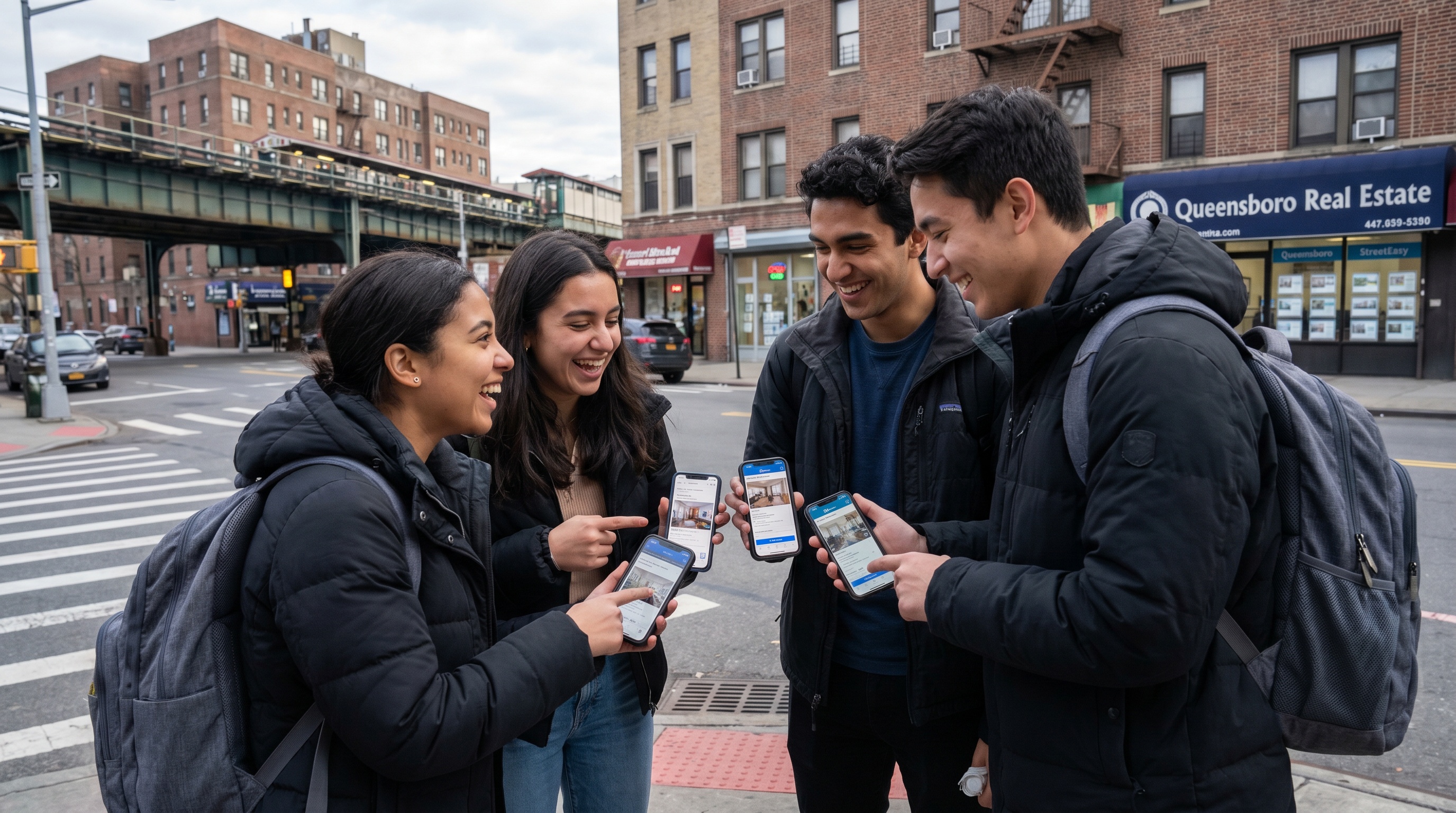
Best neighborhoods for students and young professionals
Manhattan’s top picks include the Upper West Side for proximity to Columbia University and Central Park access. The East Village offers nightlife and younger crowds, while the Financial District provides newer buildings with amenities, though it quiets down after business hours.
Brooklyn’s standout areas feature Williamsburg for its tech scene and weekend markets, Park Slope for tree-lined streets and family atmosphere, and DUMBO for stunning Manhattan views and growing job opportunities. These neighborhoods balance urban excitement with livable communities.
Queens highlights include Astoria for its Greek heritage and diverse dining scene, Long Island City for luxury high-rises with Manhattan skyline views, and Forest Hills for suburban feel with excellent schools. If you’re considering moving to Long Island City in Queens, you’ll discover a rapidly developing neighborhood with excellent transit access. Each area offers distinct advantages depending on your lifestyle priorities.
Bronx gems like Riverdale provide suburban living within city limits, while Fordham offers university proximity and cultural institutions. The borough continues revitalizing, with areas like Mott Haven attracting artists and young professionals seeking affordable studio space.
Budget hack: Consider neighborhoods one subway stop further from Manhattan than your ideal location. You’ll often find significantly lower rents with minimal commute impact.
Safety ratings and commute considerations
Staten Island consistently ranks as the safest borough with the lowest crime rates, followed by Queens and Manhattan’s Upper East and West Sides. Brooklyn and the Bronx show more variation by neighborhood, making research essential when apartment hunting. For those prioritizing both safety and affordability, explore our list of safe, affordable neighborhoods in New York City.
Commute times vary dramatically based on your work location and chosen borough. Manhattan jobs remain accessible from most areas, but traveling between outer boroughs can require lengthy trips through Manhattan’s transit hub.
The subway system operates 24/7 but experiences delays and weekend service changes. Express trains significantly reduce commute times during peak hours, making proximity to express stops valuable when choosing apartments.
Staten Island residents face unique challenges, relying primarily on the free Staten Island Ferry for Manhattan access. While scenic and reliable, this limits flexibility compared to subway-connected boroughs.
For college students, these commute considerations become especially important during move-in periods and when accessing storage facilities. Many students benefit from services that provide door-to-door convenience, eliminating the stress of navigating NYC’s complex transit system with boxes and belongings.

Culture and lifestyle differences
Each borough offers distinct cultural experiences that shape daily life. Manhattan pulses with constant energy, from Broadway shows to world-renowned museums, but this intensity can feel overwhelming for those seeking quieter moments.
Brooklyn has cultivated its own identity separate from Manhattan, with thriving arts scenes, farmers markets, and neighborhood pride. Residents often stay within Brooklyn for entertainment, creating tight-knit community feelings despite the borough’s size.
Queens celebrates its diversity through food festivals, cultural events, and authentic international neighborhoods. You’ll experience global cultures without leaving the city, from authentic dim sum in Flushing to Greek tavernas in Astoria. If you’re curious about what makes Queens unique, you’ll find it’s the perfect blend of affordability and cultural richness.
The Bronx maintains strong community connections, particularly around cultural institutions like the Bronx Zoo and Yankee Stadium. The borough’s hip-hop heritage influences local arts and music scenes, creating authentic cultural experiences.
Staten Island feels most suburban, with residents often commuting to other boroughs for work while enjoying quieter home lives. The borough offers more space for families but fewer cultural amenities compared to other areas.
Choosing your NYC borough depends on balancing cost, commute, and lifestyle preferences. Students and recent graduates often start in more affordable areas like Queens or the Bronx, then move closer to Manhattan as careers advance. For a comprehensive comparison to help you decide, read our guide on what’s the best borough in NYC for your lifestyle. The key lies in understanding what matters most for your current life stage and future goals. College students particularly benefit from services that simplify the moving process with convenient pickup and delivery, making transitions between boroughs seamless and stress-free. If you’re considering leaving the city altogether, you might want to explore cities near New York with more space and lower cost of living.
Frequently Asked Questions
Which NYC borough is most affordable for college students?
The Bronx offers the most affordable living costs with median rent at $1,800 monthly, followed by Staten Island at $1,650. However, Staten Island has limited transit options, making the Bronx a better choice for students who need subway access to Manhattan jobs and universities.
How long does it take to commute between NYC boroughs?
Commute times vary significantly by location and time of day. A typical subway ride from Brooklyn or Queens to Manhattan takes 20-45 minutes during rush hour. Traveling between outer boroughs often requires going through Manhattan, which can extend trips to 60+ minutes. Staten Island residents face unique challenges, relying on the ferry for Manhattan access.
What's the safest borough in NYC for young professionals?
Staten Island consistently ranks as the safest borough with the lowest crime rates, followed by Queens and Manhattan's Upper East and West Sides. However, safety varies significantly by neighborhood within each borough, so research specific areas rather than judging entire boroughs.
Which borough offers the best value for money in NYC?
Queens provides the best value proposition with median rent at $2,400 and excellent diversity. You get more space for your money, authentic international cuisine, and reasonable commutes to Manhattan. Brooklyn offers good value at $3,200 but approaches Manhattan prices in trendy neighborhoods.
Set a reminder to sign up for storage!
We’ll remind you to sign up when it gets closer to your winter and summer break!
This article is part of our Storage Scholars News guide
Other Articles

Want to hear from us about exclusive discounts and promotions?
Drop your email and we'll keep you up to date!
