
Complete Guides
Company & News
Shipping to College
College Storage for Parents
College Move-In & Move-Out
College Packing List
Dorm Storage & Organization
College Summer Storage
Dorm Room Essentials
Sports
Personal
Lifestyle
College Life
Health and Wellness
Entreprenership
Food
Business
Complete Guide to Vehicle Storage for College Students

Whether you’re heading home for summer break, studying abroad, or just need somewhere safe to park your car while living on campus, finding the right vehicle storage can feel overwhelming. You’re juggling classes, maybe a part-time job, and now you need to figure out where to safely store your ride without breaking your already tight budget.
Bottom line: Most college students need either a 10x20 indoor unit for cars (around $85-180/month) or outdoor parking spaces (starting at $24/month) depending on their vehicle size and protection needs.
The good news? Vehicle storage is more accessible and affordable than you might think. From compact cars to motorcycles, boats, and even RVs (hey, some students go all out), there are storage solutions designed specifically for your situation and budget. At Storage Scholars, we understand the unique challenges college students face when it comes to storing their vehicles during breaks and transitions across our 73+ campus locations.
Types of vehicle storage that work for students
When you’re choosing vehicle storage, you’ve got three main options, each with different price points and protection levels.
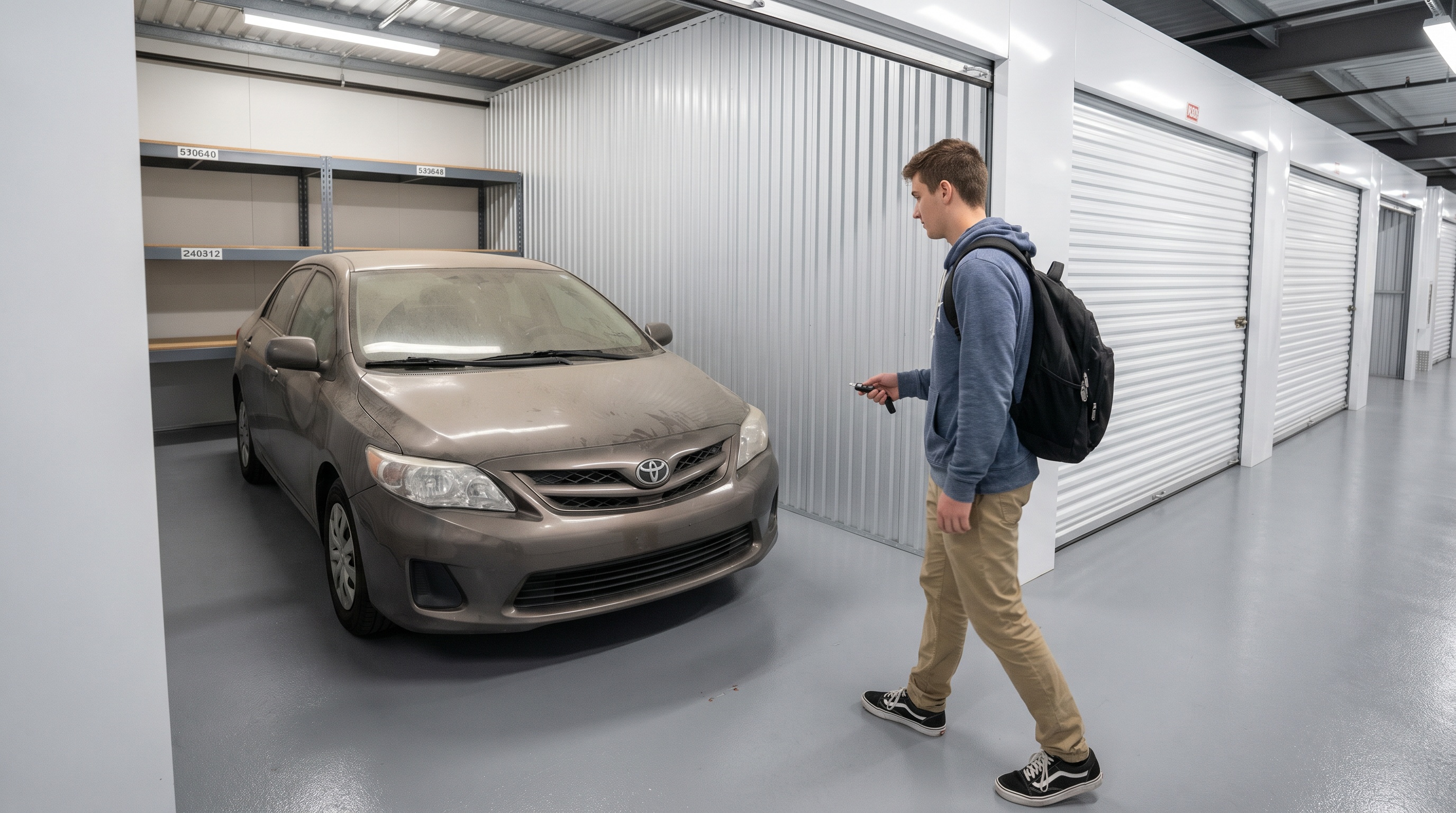
Indoor storage gives you the most protection for your vehicle. Think of it like a garage you can rent by the month. You’ll drive your car, motorcycle, or small boat right into an enclosed unit, lock it up, and walk away knowing it’s completely protected from weather, theft, and campus parking chaos. This option costs more but makes sense if you’re storing a newer car or something valuable.
Outdoor storage is your budget-friendly choice. It’s basically a designated parking spot in a secure facility. Perfect for larger vehicles like trucks, RVs, or boats that won’t fit in enclosed units. You won’t get weather protection, but you will get security features like gated access and surveillance cameras.
Covered storage splits the difference between indoor and outdoor. You get a roof over your vehicle for protection from sun and rain, but it’s not fully enclosed. It’s a popular middle-ground option that many students choose for decent protection without the premium price tag.
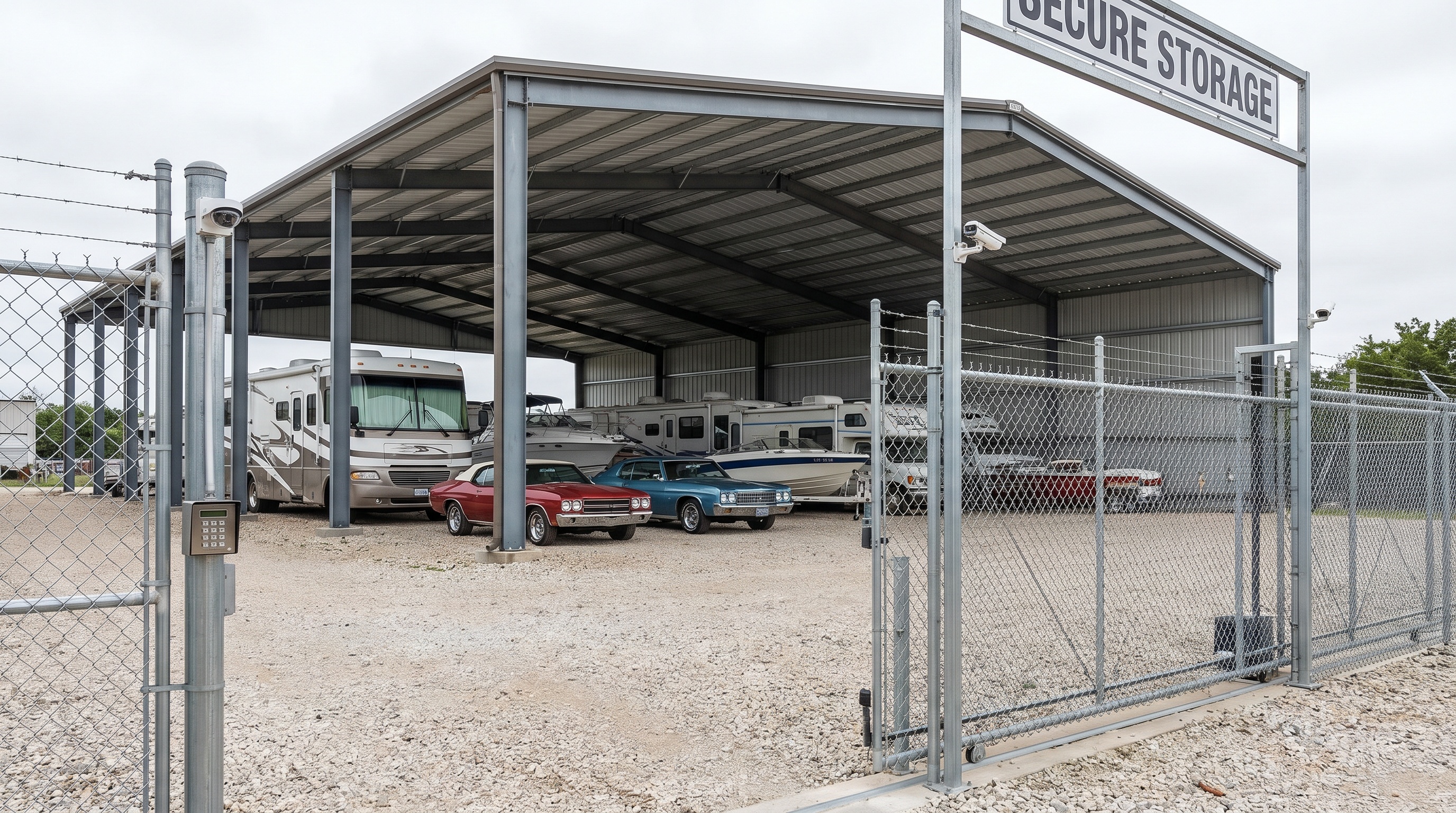
Pro tip: If you’re only storing for summer break (3-4 months), outdoor storage can save you hundreds compared to indoor options, especially if your car is older or you’re not too worried about minor weather exposure. Many students across our campus network find this approach works perfectly for their seasonal storage needs.
Choosing the right size for your vehicle
Getting the size right is crucial because you don’t want to pay for space you don’t need, but you also don’t want to squeeze your car into a unit that’s too small. Understanding storage unit sizes and dimensions can help you make the best choice for your specific vehicle.
For most college students with standard cars, a 10x20 unit works perfectly. This size accommodates sedans, small SUVs, and even compact pickup trucks with room to spare. If you’re driving something smaller like a Honda Civic or Toyota Corolla, you might get away with a 10x15 unit and save some money.
Motorcycle owners have it easy – a 5x10 unit gives you plenty of space for your bike plus gear like helmets and riding equipment. Some students even share these smaller units with roommates who also have motorcycles or bikes.
If you’re one of those students with a larger truck, van, or RV (maybe you’re the designated road trip organizer), you’ll need to look at 10x25 or 10x30 units. These are also great for boats if you’re studying near water and want to keep your watercraft close by.
Motorcycle/ATV
Recommended Size: 5x10
Typical Monthly Cost: $45-85
Compact Car
Recommended Size: 10x15
Typical Monthly Cost: $75-150
Standard Car/SUV
Recommended Size: 10x20
Typical Monthly Cost: $85-180
Large Truck/RV
Recommended Size: 10x25+
Typical Monthly Cost: $105-240
What to consider before storing your vehicle
Security should be your top priority. Look for facilities with electronic gate access, security cameras, and on-site management. Some places even have individual unit alarms. Remember, you’re not just protecting your car – you’re protecting your independence and your way to get to internships, jobs, or weekend adventures.
Access hours matter more than you might think. Standard facilities typically offer access from 6am to 10pm, which works for most students. But if you’re the type who might need your car at odd hours (late-night study sessions, early morning jobs, or emergency trips home), look for facilities with 24-hour access.
Consider your local climate. If you’re going to school somewhere with harsh winters or intense summers, indoor or covered storage becomes more important. Extreme temperatures can be tough on your car’s battery, tires, and interior, especially if you’re storing it for several months. This is particularly relevant for students at our partner campuses across different climate zones, from North Carolina’s humid summers to northern locations with freezing winters.
Budget hack: Many storage facilities offer student discounts or first-month deals. Always ask about promotions when you’re calling around – you might save 50% on your first month or get reduced rates for longer commitments. Before committing, it’s wise to compare storage unit costs and pricing options from different providers.
Preparing your vehicle for storage
Before you hand over your keys and walk away, there are some important steps to take care of your vehicle during storage.
Start with a thorough cleaning inside and out. Remove all personal items, food, and anything that might attract pests or create odors. A clean car is less likely to develop problems during storage.
Handle the mechanical stuff by checking your tire pressure and topping off fluids. If you’re storing for more than a month, consider adding a fuel stabilizer to prevent gas from going bad. For longer storage periods, some students disconnect the battery or use a battery tender to keep it charged.
Documentation is key – make sure your registration and insurance are current and will remain valid throughout your storage period. Most facilities require proof of both, and you don’t want to deal with expired paperwork when you’re ready to retrieve your vehicle.
The peace of mind that comes with proper vehicle storage is worth the investment. Whether you’re storing your car for summer break, a semester abroad, or just need a safe place to park while living in a dorm, the right storage solution keeps your vehicle secure and ready for your next adventure. If you need more flexibility, consider exploring portable storage containers and on-site rental options that can accommodate both your vehicle and personal belongings. Take time to compare options in your area, ask about student discounts, and choose a facility that fits both your budget and your needs. Many students find that combining vehicle storage with other seasonal storage needs creates the most convenient and cost-effective solution for their college lifestyle.
Frequently Asked Questions
What size storage unit do I need for my car?
Most college students with standard cars need a 10x20 storage unit, which accommodates sedans, small SUVs, and compact pickup trucks. If you drive a smaller car like a Honda Civic or Toyota Corolla, you might save money with a 10x15 unit. Motorcycles only need a 5x10 unit, while larger trucks or RVs require 10x25 or 10x30 units.
Should I choose indoor or outdoor vehicle storage?
Indoor storage ($85-180/month for cars) offers the best protection from weather, theft, and damage, making it ideal for newer or valuable vehicles. Outdoor storage (starting at $24/month) is budget-friendly and perfect for older cars or short-term storage like summer break. Covered storage provides a middle-ground option with roof protection at a moderate price.
How do I prepare my vehicle for long-term storage?
Clean your vehicle thoroughly inside and out, removing all personal items and food. Check tire pressure, top off fluids, and add fuel stabilizer if storing for more than a month. For longer periods, consider disconnecting the battery or using a battery tender. Ensure your registration and insurance remain valid throughout the storage period.
Are there student discounts for vehicle storage?
Many storage facilities offer student discounts or promotional deals like 50% off the first month or reduced rates for longer commitments. Always ask about student pricing when calling facilities. Some locations also offer special rates for summer break storage periods, which can save college students hundreds of dollars compared to regular monthly rates.
Set a reminder to sign up for storage!
We’ll remind you to sign up when it gets closer to your winter and summer break!
This article is part of our College Summer Storage guide
You Might Also Like...

Other Articles
Want to hear from us about exclusive discounts and promotions?
Drop your email and we'll keep you up to date!
