
Complete Guides
Company & News
Shipping to College
College Storage for Parents
College Move-In & Move-Out
College Packing List
Dorm Storage & Organization
College Summer Storage
Dorm Room Essentials
Sports
Personal
Lifestyle
College Life
Health and Wellness
Entreprenership
Food
Business
Cross Country Moving Guide for College Students

Moving across the country for college can feel overwhelming, especially when you’re juggling classes, internships, and figuring out your post-graduation plans. Whether you’re transferring schools, starting grad school, or moving for your first job after college, a cross-country move requires careful planning and the right strategy to keep costs down and stress levels manageable.
Bottom line: Cross-country moves for students typically cost 50-70% less with specialized student moving services compared to traditional full-service movers, and proper planning 8 weeks ahead can save you hundreds of dollars while ensuring your belongings arrive safely in 4-6 business days.
The key to a successful cross-country move lies in understanding your options, creating a realistic timeline, and choosing the right moving method for your budget and schedule. As a student-focused moving company that has facilitated over 40,000 moves across 72+ college campuses nationwide, we understand the unique challenges college students face during interstate relocations. This guide will walk you through everything you need to know to make your interstate move as smooth as your favorite playlist.
Planning your cross-country move timeline
Starting your move planning early gives you the best chance of securing affordable rates and avoiding last-minute stress. Most successful cross-country moves begin with planning 8 weeks before your move date.
8-6 weeks before moving: Research your moving options and get quotes from different companies. This is when you’ll want to compare student-specialized services, traditional full-service movers, and rental trucks. Start decluttering your belongings room by room, focusing on items you haven’t used in the past year. Create a moving binder to keep all your quotes, timelines, and important documents organized.
4-2 weeks before moving: Finalize your moving company choice and confirm your reservation. Begin gathering packing supplies and start packing non-essential items like books, seasonal clothes, and decorations. Many student-focused moving services provide free boxes and tape to help reduce your upfront costs. Notify your current and future utility companies about your move dates to ensure seamless service transitions.
Moving week: Pack your essentials box with items you’ll need immediately, confirm all details with your moving company, and prepare your space for loading day. Make sure you have snacks, water, and comfortable clothes ready for the big day.
Smart strategy: Create a “first week survival kit” with basics like toiletries, medications, phone chargers, and a few changes of clothes. Pack this separately so you can access it immediately when you arrive.
Comparing your moving options and costs
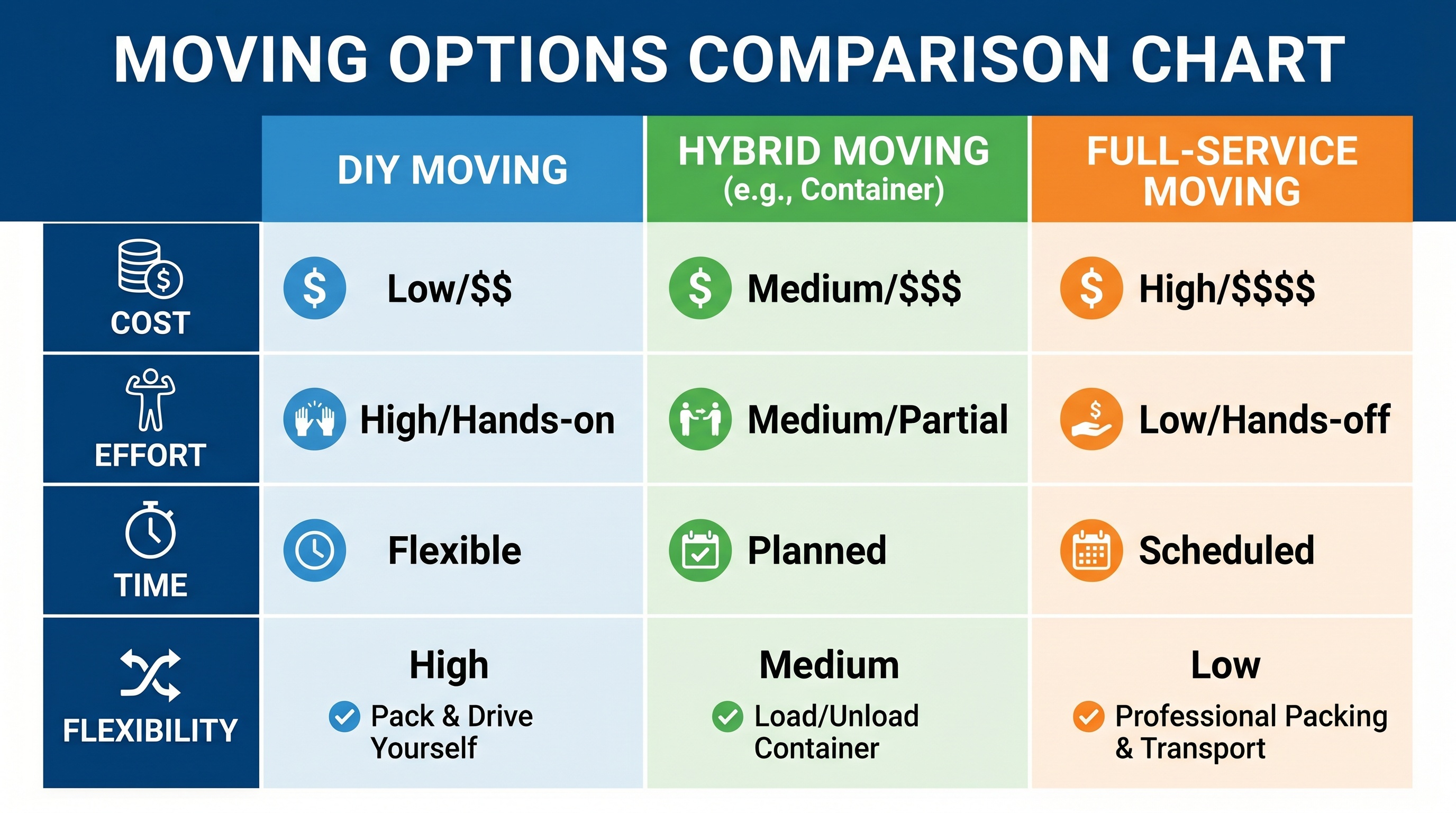
Understanding the different types of moving services helps you choose the best option for your budget and needs. Each method has distinct advantages depending on your situation.
Student-specialized moving services offer the most cost-effective solution for cross-country moves, designed specifically for college students’ unique needs. These services understand the constraints of dorm rooms, student apartments, and tight budgets. You handle the packing while professionals manage the logistics, storage, and transportation. This option typically costs one-third to one-half the price of traditional full-service moves and includes conveniences like free packing supplies and door-to-door service from residence halls to your new location.
Traditional full-service movers handle everything from packing to driving, but they come with premium pricing that can strain a college budget. While convenient, this option may take 1-2 weeks for delivery compared to faster student-focused alternatives. If you’re moving to a major city, researching local moving companies in Chicago or other metropolitan areas can help you find competitive rates.
Rental trucks might seem budget-friendly initially, but fuel costs, insurance, and the time required for cross-country driving can quickly add up. Plus, you’re responsible for driving a large vehicle across multiple states, which can be stressful and tiring for students. Before committing to a truck rental, check out a detailed truck rental comparison to understand all the hidden costs involved.
Portable storage containers provide a middle-ground option where containers are delivered to your location, you load them at your own pace, and they’re transported to your destination. This method offers flexibility and typically faster transit times than traditional full-service options. When considering containers, it’s worth comparing PODS vs U-Haul U-Box to see which service better fits your needs and budget.
Packing strategies for long-distance moves
Packing for a cross-country move requires different strategies than local moves since your belongings will be in transit longer and face more handling. Smart packing protects your items and makes unpacking easier.
Start with a room-by-room approach, packing one area completely before moving to the next. Use high-quality boxes and packing materials since your items will travel hundreds or thousands of miles. Many student moving services provide free boxes and tape as part of their comprehensive package, helping you save money while ensuring you have quality supplies.
Label each box clearly with both the contents and the destination room in your new home. Pack heavier items in smaller boxes to make them easier to carry and prevent box breakage. Fill empty spaces in boxes with packing paper or bubble wrap to prevent items from shifting during transport. Create an inventory list as you pack, noting valuable or fragile items.
For clothing, consider vacuum-sealed bags to maximize space efficiency. Pack a separate suitcase with enough clothes for your first week, treating your move like a vacation where your other belongings might arrive a few days later.
Pro tip: Follow the 85% rule when packing boxes. Fill boxes to about 85% capacity, leaving room for cushioning materials while ensuring boxes aren’t too heavy or likely to burst during handling.
Moving day execution and settling in
Moving day success depends on preparation and staying organized throughout the process. Start with a healthy breakfast and dress in comfortable, closed-toe shoes and clothes you don’t mind getting dirty.
Be present when your moving equipment arrives and do a walkthrough with the driver or delivery person. Take photos of any existing damage to the equipment before loading begins. Keep important documents, valuables, and essentials with you rather than packing them with your other belongings.
Stay hydrated and take breaks as needed during loading. With student-focused moving services, you maintain control over the packing process while professionals handle the heavy lifting and transportation logistics. Keep your phone charged and have your moving company’s contact information easily accessible. If you need extra help with loading and unloading, consider hiring local moving labor to make the process easier.
Once you arrive at your destination, prioritize unpacking essentials first. Set up your bed, unpack basic kitchen items, and locate important documents before tackling decorative items. Take time to explore your new neighborhood and find nearby grocery stores, restaurants, and other necessities.

Cross-country moving doesn’t have to drain your college budget or stress you out completely. With proper planning, the right moving strategy, and realistic expectations, you can successfully relocate across the country while keeping costs manageable. Student-specialized moving services have revolutionized how college students approach long-distance moves, making the process more affordable and convenient than ever before. Understanding what to expect for U-Haul rates on long-distance moves or exploring one-way trailer rental options can help you make informed decisions. Remember that the cheapest option isn’t always the best value – focus on finding a service that balances affordability with reliability and fits your specific timeline and needs.
Frequently Asked Questions
How far in advance should college students start planning a cross-country move?
College students should begin planning their cross-country move 8 weeks before their move date. This timeline allows you to research moving options, compare quotes from different companies, secure affordable rates, and avoid last-minute stress. Starting early also gives you time to declutter belongings and organize all necessary documents in a moving binder.
What's the most cost-effective moving option for college students moving cross-country?
Student-specialized moving services are typically the most cost-effective option for college students, costing 50-70% less than traditional full-service movers. These services are designed specifically for college students' unique needs and budgets, often including free packing supplies and door-to-door service from residence halls. You handle the packing while professionals manage logistics and transportation.
How long does it take for belongings to arrive during a cross-country move?
Cross-country moves typically take 4-6 business days for delivery with student-focused moving services, which is faster than traditional full-service movers that can take 1-2 weeks. The exact transit time depends on the distance, route, and moving company you choose. It's recommended to pack a "first week survival kit" with essentials in case of any delays.
What should college students pack in their essentials box for a cross-country move?
College students should create a "first week survival kit" with toiletries, medications, phone chargers, a few changes of clothes, basic kitchen items, important documents, and any items needed immediately upon arrival. Pack this separately from your other belongings so you can access these essentials right away, treating your move like a vacation where other items might arrive a few days later.
Set a reminder to sign up for storage!
We’ll remind you to sign up when it gets closer to your winter and summer break!
This article is part of our College Move-In & Move-Out guide
You Might Also Like...

Other Articles
Want to hear from us about exclusive discounts and promotions?
Drop your email and we'll keep you up to date!
