
Student Storage Services
Complete Guides
Company & News
Shipping to College
College Storage for Parents
College Move-In & Move-Out
College Packing List
Dorm Storage & Organization
College Summer Storage
Dorm Room Essentials
Sports
Personal
Lifestyle
College Life
Health and Wellness
Entreprenership
Food
Business
How to Set Up a Small Dorm Room That Actually Works
Bottom line: Most dorm room disasters happen because students don't measure their space first and fail to think vertically. With proper planning and the right storage approach, even a 75-square-foot space can feel organized and livable.
Your dorm room assignment arrives, and the housing website calls it "cozy." What you discover on move-in day is 130 square feet total, shared with another person. Once you factor in beds, desks, and walking space, you're working with about 75 square feet of actual usable area.
The students who make small dorms work follow a systematic approach. They measure before buying, think vertically instead of horizontally, and choose furniture that serves multiple purposes. Here's exactly how to set up your space so it functions instead of frustrates.
Get Your Room Dimensions Before You Shop
Contact your housing office for exact room measurements: length, width, and ceiling height. Most schools provide floor plans, and some offer virtual tours. Write these numbers down and actually use them when shopping.
That storage ottoman you found online might be 24 inches wide. If your room is 10 feet across and you need walking space, the ottoman becomes a major obstacle. Look for compact options like the SONGMICS Storage Ottoman (15" x 15" x 15") instead.
Sketch your room layout on paper before move-in. Draw boxes for beds, desks, and major storage. This prevents arriving with a mini-fridge that has nowhere logical to go.
Critical step: Coordinate with your roommate about who brings what. Use a shared Google Doc to list major items like mini-fridges, microwaves, and printers. Duplicates waste precious space.
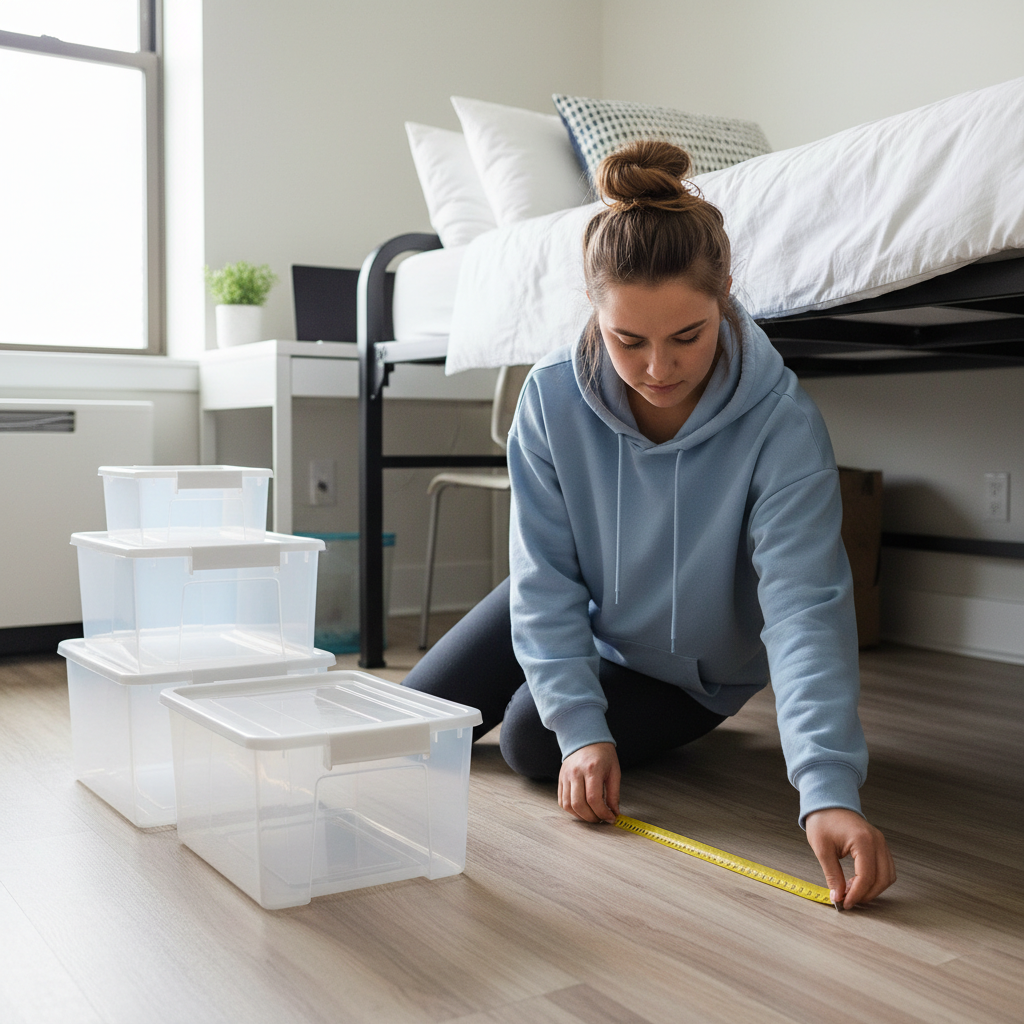
Measure your storage bins against your bed frame. Dorm beds typically sit 24-30 inches off the ground when raised, but some storage containers won't fit if they're too wide or tall.
Use Your Walls and Doors as Storage Space
Your biggest storage opportunity isn't on the floor. It's on your walls and doors. A single door provides about 15 square feet of storage capacity through organizers and hooks.
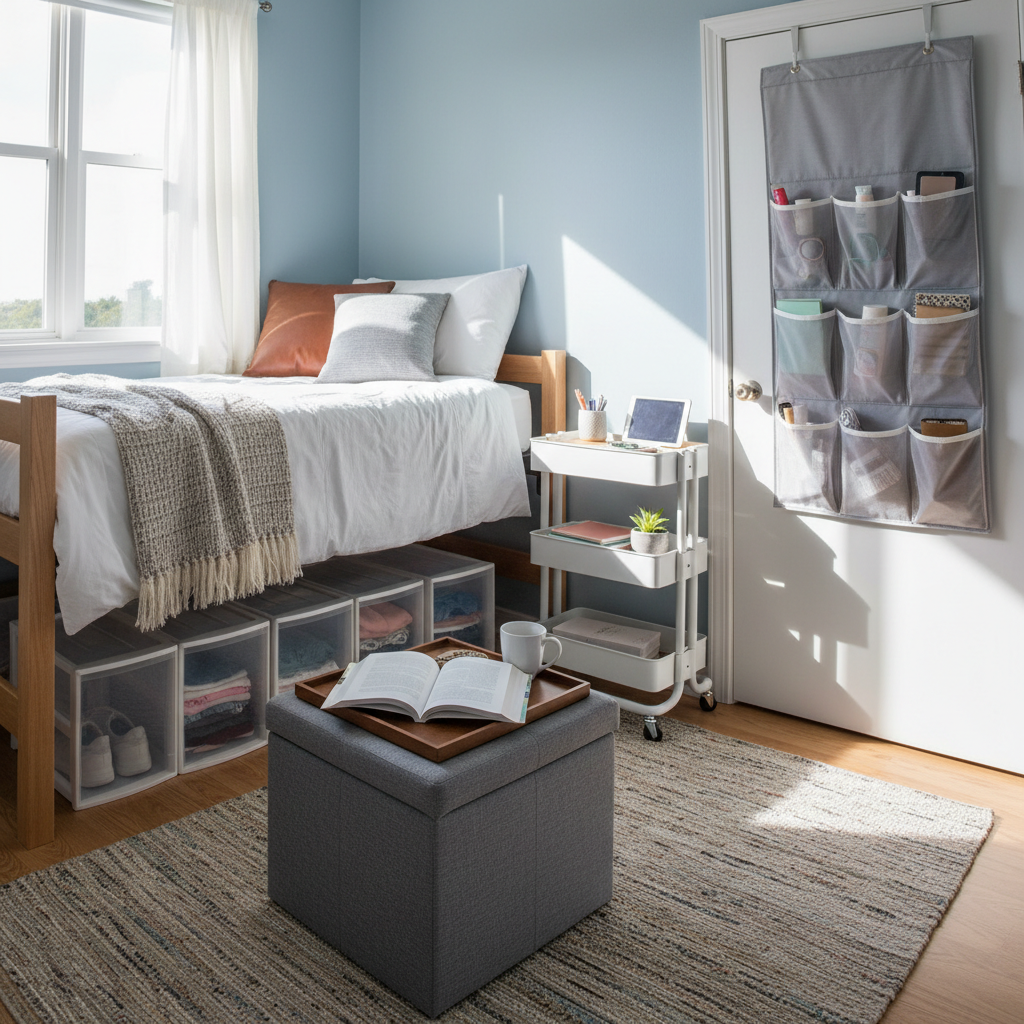
Over-door organizers work for most items beyond shoes. The Simple Houseware Over Door Shoe Organizer holds toiletries, cleaning supplies, and accessories. These comply with most dorm damage policies since they don't require drilling.
Wall-mounted shelves using Command Strips can support substantial weight. Command Large Picture Ledges hold up to 16 pounds each. Install them above your desk for textbooks and daily supplies.
Choose tall, narrow furniture over short, wide pieces. The IKEA HEMNES bookcase (31" wide, 77" tall) uses just 6.7 square feet of floor space but provides significant storage. A standard dresser that's 60 inches wide but only 30 inches tall offers similar capacity while dominating your room.
Hanging closet organizers add compartments to basic dorm closets. The Simple Houseware 5-Shelf Hanging Closet Organizer creates instant storage for folded clothes and accessories.
Vertical Storage Strategy
- Install door organizers on both your room door and closet door
- Use Command Strips for shelves instead of taking up desk space
- Choose furniture that grows up instead of out
- Add hanging organizers to maximize closet capacity
Make Every Piece of Furniture Work Twice
In a tiny dorm, furniture that serves only one purpose is a luxury you can't afford. Every item needs at least two functions.
Storage ottomans provide seating, hidden storage, and footrests. The Seville Classics Foldable Storage Ottoman works for guests visiting, storing out-of-season clothes, and studying comfortably.
Bed risers create under-bed storage space. Standard 6-inch risers fit flat containers, but 12-inch risers (like Honey-Can-Do Bed Risers) create clearance for larger bins and small furniture pieces.
Desktop organizers with vertical components keep supplies accessible without cluttering your workspace. The Simple Trending Desktop Organizer includes file holders, pen cups, and drawers in one compact unit.
Rolling carts serve as nightstands, storage, and mobile supply stations. The SONGMICS 4-Tier Rolling Cart fits narrow spaces but holds substantial items.
For students dealing with seasonal item storage, smart storage solutions can help you rotate belongings instead of cramming everything into your limited space year-round.
Create Distinct Zones in Your Small Space
Even in 75 square feet, you need separate areas for sleeping, studying, and socializing. Without clear zones, your room becomes chaotic.
Keep your desk area exclusively for studying. Position it near the window when possible for natural light, which improves focus and makes the space feel larger.
Set up a "launching pad" near your door for daily essentials. Wall-mounted organizers or over-door hooks keep keys, student ID, and frequently-used items accessible.
Designate specific storage for different categories:
- Toiletries in door organizers
- Clothes in closet and dresser
- School supplies in desk organizers
- Seasonal items under the bed
Use different lighting to define zones. String lights create ambiance for relaxation, while a good desk lamp keeps your study area functional. The TaoTronics LED Desk Lamp provides adjustable brightness without taking up desk space.
Simple habit: Making your bed every morning instantly makes your sleeping area look organized, which makes the entire room feel more spacious.
Coordinate With Your Roommate Strategically
Functional small dorms require more than deciding who brings the microwave. You need to plan how two people will move through the space without constant conflicts.
Establish clear traffic patterns. If both desks face the room's center, you're creating problems. Position furniture so each person has pathways to their bed, desk, and storage.
Create shared storage for common items: cleaning supplies, basic tools, first aid kit, and emergency snacks. Store these where both roommates can access them easily.
Discuss schedules upfront. Late-night studying with bright lights while your roommate sleeps makes your small space feel even more stressful and cramped.
Position shared items like mini-fridges and microwaves in neutral territory rather than clearly in one person's zone.
Stagger your move-in times. Two families arriving simultaneously with boxes and furniture creates chaos in your tiny space.
Essential Roommate Conversations
- Who brings which major appliances and furniture
- How to arrange furniture for clear pathways
- Study and sleep schedules for lighting and noise
- Storage locations for shared items
- Move-in day timing and logistics
Setting up a small dorm successfully requires treating it like a puzzle where every piece must fit perfectly. Focus on measuring first, maximizing vertical space, choosing multi-purpose furniture, and coordinating with your roommate. For more guidance on making the most of limited space, check out our essential dorm room items guide and college packing strategies.
Related reading
- Dorm Storage and Organization: The Complete Guide to Making Your Tiny Room Work
- Dorm Room Essentials Every College Student Actually Needs
- The College Packing List That Actually Makes Sense
Storage Scholars bundles four services into a single order: free packing supplies delivered to a student on campus, door-to-door pickup and delivery by professional licensed movers, climate-controlled storage, and the option to ship boxes home, to a first apartment or to a transfer institution.
Frequently Asked Questions
How much space does the average dorm room have per student?
Most shared dorm rooms give you about 75-100 square feet of personal space, which is roughly the size of a parking spot. Total dorm rooms typically range from 130-200 square feet, but once you factor in shared areas and your roommate's belongings, your actual usable space shrinks significantly. This is why vertical storage and multi-use furniture become essential for making small dorms functional.
What's the best way to add storage without taking up floor space in a dorm?
Vertical storage solutions offer the biggest impact. Over-door organizers can hold 20-50 additional items using zero floor space, and a single door provides about 15 square feet of storage capacity. Use command strip shelves on walls, tall narrow bookcases instead of wide ones, and hanging closet organizers to maximize vertical space. These options don't damage walls and comply with most dorm policies.
Should I bunk beds with my roommate in a small dorm?
Bunking or lofting beds is the single biggest space-saving decision you can make. It opens up an entire bed's footprint of floor space, which you can use for a futon, extra storage, or a study area. Even lofting just one bed creates valuable room underneath. Talk with your roommate early to decide what arrangement works best for both of you.
What furniture should I avoid bringing to a tiny dorm room?
Skip any furniture that only serves one purpose. Decorative pieces that just look nice waste valuable space. Instead of separate storage bins, get beds with built-in drawers. Replace regular ottomans with storage ottomans that double as seating. Avoid wide, short furniture when tall, narrow pieces give you more storage using less floor space. Every item needs to earn its spot through multiple functions.
Set a reminder to sign up for storage!
We’ll remind you to sign up when it gets closer to your winter and summer break!
This article is part of our Dorm Room Essentials guide
You Might Also Like...

Want to hear from us about exclusive discounts and promotions?
Drop your email and we'll keep you up to date!
