
Student Storage Services
Complete Guides
Company & News
Shipping to College
College Storage for Parents
College Move-In & Move-Out
College Packing List
Dorm Storage & Organization
College Summer Storage
Dorm Room Essentials
Sports
Personal
Lifestyle
College Life
Health and Wellness
Entreprenership
Food
Business
Downsizing from Home to Dorm: A Parent's Guide to Right-Sizing for College
Bottom line: Most college freshmen try to fit their entire bedroom into half of a 150-square-foot dorm room. The families who succeed start downsizing conversations in spring, focus on 7-10 days worth of essentials in each category, and plan storage for the 60-70% of belongings that simply won't fit.
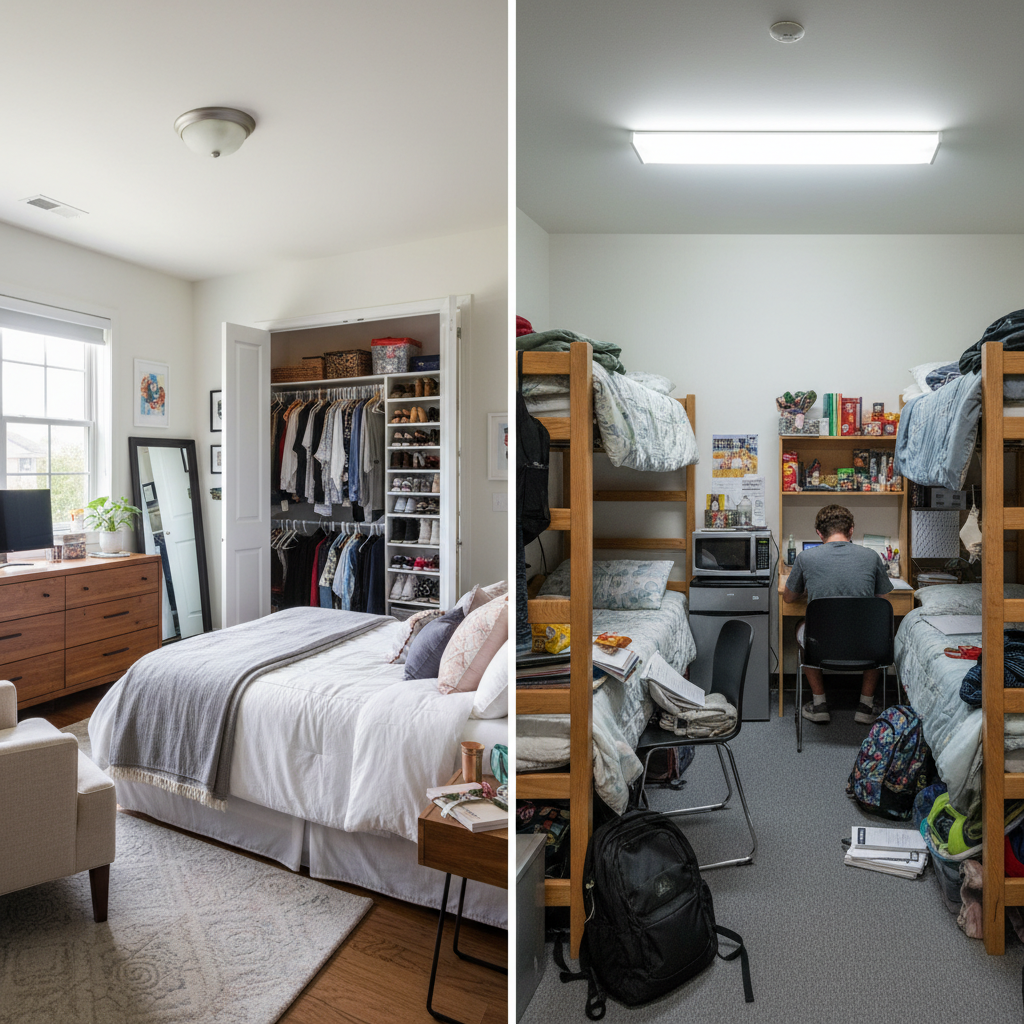
Your teenager's bedroom at home probably measures around 120 square feet. Their dorm room will be 150 square feet total, shared with a roommate. The math is unforgiving: they're going from a private room to roughly 75 square feet of personal space, including their bed.
The closet situation makes this even tighter. Most dorm closets give each student 24-36 inches of hanging space and two shallow shelves. Compare that to the 4-6 feet of hanging space most teens have at home, plus dresser drawers, and you're looking at about 75% less clothing storage.
How Much Clothing Actually Fits
Start your downsizing with clothing because this is where most families underestimate the space crunch. A strategically packed dorm closet holds about 15-20 hanging items if you use slim hangers, or 8-10 bulky hoodies if you don't plan ahead.
Here's what actually fits comfortably:
- 8-10 everyday shirts and tops
- 3-4 pairs of pants or jeans
- 10-12 pairs of underwear
- 10-12 pairs of socks
- 4-5 pairs of shoes maximum
This covers about a week of outfits plus extras for laundry delays. Those 15 pairs of shoes from high school? Most need to stay home or go into storage.
For shoes specifically, stick to true essentials: everyday sneakers, one nicer pair for occasions, flip-flops or slides, weather-appropriate boots, and athletic shoes if your student plays sports. Each additional pair takes up precious floor or closet space.
The Seasonal Item Strategy
Many families pack winter coats for August move-in, which wastes space for months. Your student heading to college in Boston doesn't need their heavy parka until October at the earliest.
Plan seasonal swaps instead. Send light layers and rain gear for fall semester, then swap in winter coats during October break. Holiday decorations, formal wear, and sports equipment can come later or stay in nearby storage until actually needed.
This approach keeps the dorm functional while ensuring your student has what they need when weather changes.
Furniture and Room Setup Reality
Dorm rooms come with a bed, desk, chair, and sometimes a dresser. Adding furniture means sacrificing the small amount of floor space available for moving around.
That beloved reading chair from home won't fit, no matter how attached your student is to it. Focus on items that serve multiple purposes instead:
- Storage ottoman (seating plus storage for extra bedding)
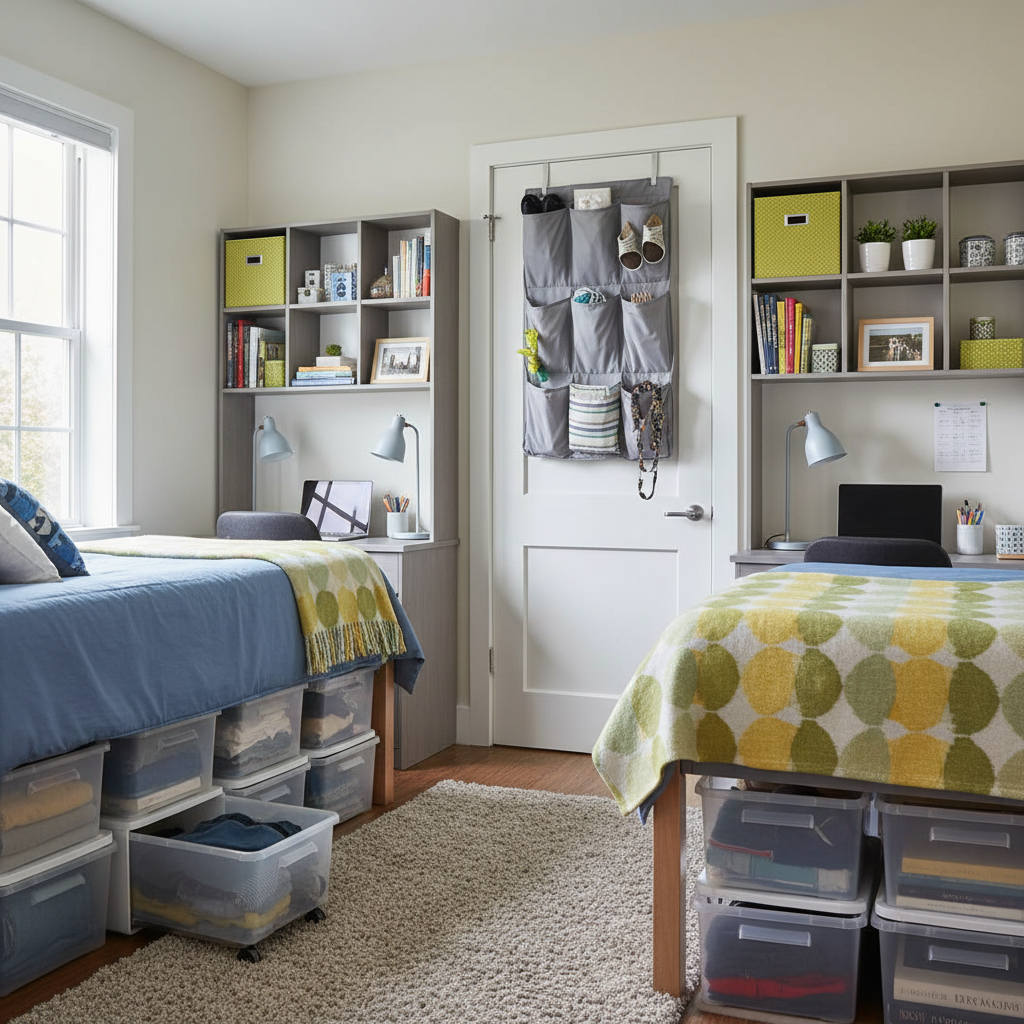
- Over-door organizers (storage without using floor space)
- Under-bed storage boxes with wheels for easy access
For under-bed storage, only invest if the bed can be raised with risers. Standard dorm beds sit too low for meaningful storage underneath. Raised beds can accommodate 8-12 cubic feet of storage in clear containers that let you see contents easily.
Electronics and Entertainment Limits
Resist recreating your student's home gaming or entertainment setup. Dorm rooms have limited outlets, restrictions on certain electronics, and roommates who may not appreciate a full gaming station.
Essential electronics for most students:
- Laptop for schoolwork
- Phone and basic charging cables
- Small desk lamp if room lighting is poor
The 32-inch monitor, gaming console, and elaborate speaker system can wait until sophomore year when many students move into apartments with more space and fewer restrictions.
Starting the Conversation Early
Begin downsizing discussions in April or May, not the week before college starts. Your student needs time to mentally adjust to living with less and make thoughtful choices about what matters most to them.
Make the process collaborative. Ask your student to identify their 10 most-used items in each category, then work backward from there. This helps them realize how much they don't actually use regularly.
Try a practice packing session in July. Have your student gather everything they think they need, then measure it against actual dorm dimensions. Many families tape out a 75-square-foot space in their garage to visualize the constraints.
Remember that most college towns have easy access to stores like Target or Walmart within 10 minutes of campus. Forgotten essentials can be purchased during the first week rather than packed "just in case."
Managing the Emotional Side
Downsizing often feels like leaving childhood behind, which can be difficult for both students and parents. Focus on the practical skills your student is gaining: learning to live with intention, prioritizing what matters, and adapting to new spaces.
For sentimental items, help your student choose 2-3 meaningful pieces for their dorm space. A favorite photo, small memento, or beloved stuffed animal can provide comfort without overwhelming the small room or irritating a roommate.
Storage Solutions for Everything Else
Even with careful downsizing, most families need storage for belongings that won't fit in dorms. Services like Storage Scholars handle college-specific storage needs, picking up items from dorms at year-end and delivering them back to campus in fall.
For items your student might need mid-semester, consider storage near campus rather than keeping everything at home. Winter coats, formal wear, and seasonal equipment stored locally can be retrieved when needed without a trip home.
Label storage containers with specific contents and timing: "Winter clothes - need by October" works better than just "clothes" when your student realizes they need warm layers.
View this downsizing as temporary preparation for dorm living, not permanent elimination of belongings. Most students move into apartments by junior year with significantly more space. Learning to live efficiently in a dorm often teaches organization skills that serve students well beyond college.
For more specific guidance on managing college belongings year-round, check out our complete guide for parents navigating college storage and practical tips for organizing small dorm spaces effectively.
Related reading
- College Storage for Parents: Everything You Need to Know About Managing Your Student's Stuff
- Dorm Storage and Organization: The Complete Guide to Making Your Tiny Room Work
- Dorm Room Essentials Every College Student Actually Needs
Storage Scholars bundles four services into a single order: free packing supplies delivered to a student on campus, door-to-door pickup and delivery by professional licensed movers, climate-controlled storage, and the option to ship boxes home, to a first apartment or to a transfer institution.
Frequently Asked Questions
When should parents start the downsizing conversation with their college-bound student?
Start discussing downsizing in spring (March-May) after acceptance letters arrive. This gives you time for thoughtful conversations instead of rushed decisions. Use summer (June-August) for actively sorting belongings and making final choices. Starting early prevents last-minute stress and helps students understand space constraints before packing begins.
How much of my student's belongings will actually fit in a dorm room?
Most students can bring only 30-40% of their home belongings to a dorm room. Each student gets roughly 50-100 square feet of personal space (including their bed), 10-15 cubic feet of closet space, and 5-10 cubic feet under the bed. Families typically store 60-70% of home items during the college year.
What should we do with items that won't fit in the dorm?
Use climate-controlled storage units (5x5 to 5x10 feet) for seasonal items, extra bedding, and sports equipment. Keep childhood collections and permanent items at home in your attic or garage. Plan seasonal rotation during fall and spring breaks so students can swap clothes and gear as needed throughout the year.
How can parents help students decide what's essential versus optional for college?
Try the trial pack method. Have your student pack everything they think they need, then cut 30% together. Frame decisions around space reality, not rules. Focus on 7-10 days of clothing, provided furniture only, and current-season items. Acknowledge emotional attachments while helping students visualize actual dorm space constraints.
Set a reminder to sign up for storage!
We’ll remind you to sign up when it gets closer to your winter and summer break!
This article is part of our College Storage for Parents guide
You Might Also Like...

Want to hear from us about exclusive discounts and promotions?
Drop your email and we'll keep you up to date!
