
Complete Guides
Company & News
Shipping to College
College Storage for Parents
College Move-In & Move-Out
College Packing List
Dorm Storage & Organization
College Summer Storage
Dorm Room Essentials
Sports
Personal
Lifestyle
College Life
Health and Wellness
Entreprenership
Food
Business
Eco-Friendly Moving Supplies, Green Tips & Sustainable Ways to Move for College Students
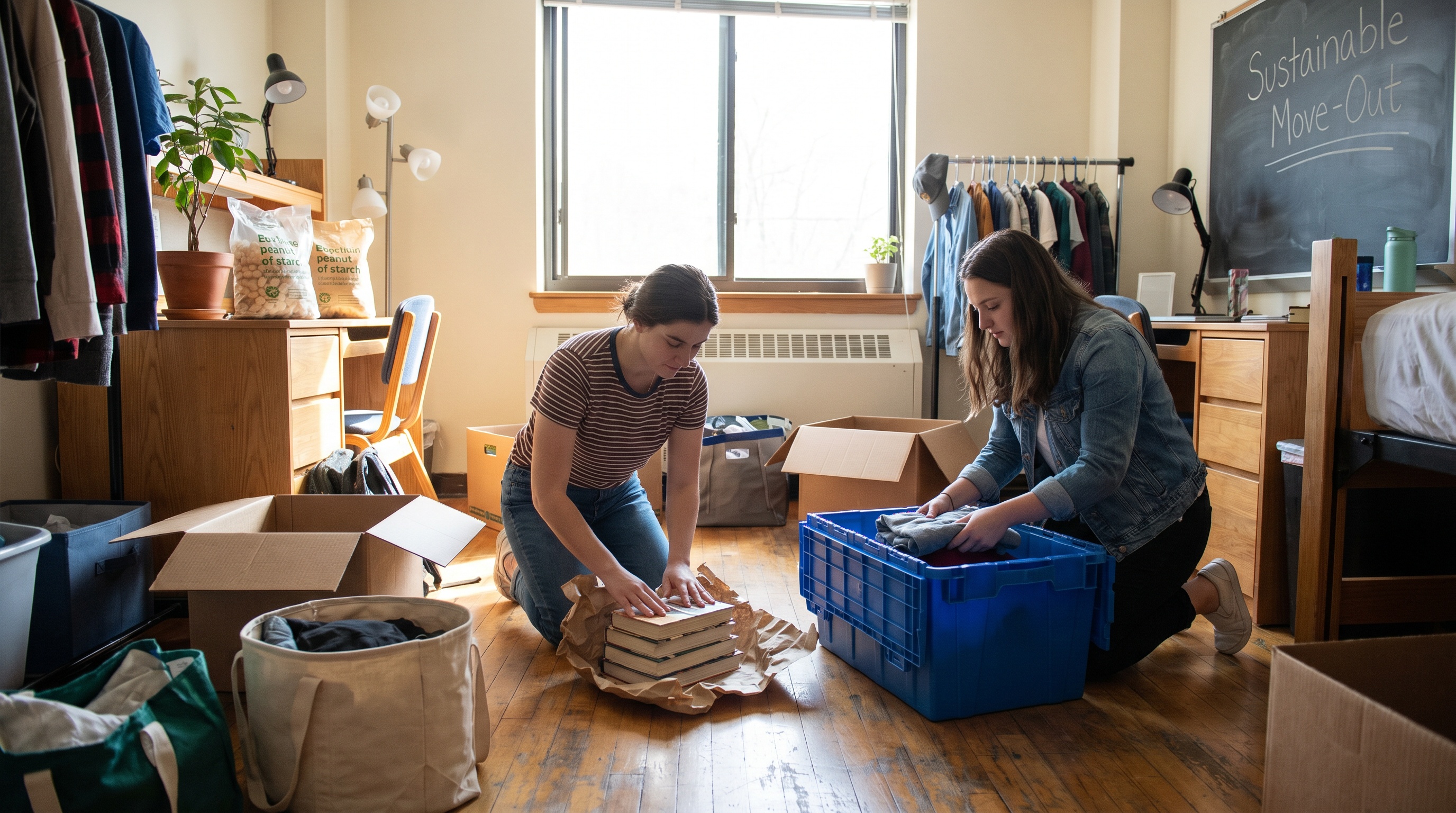
Moving doesn’t have to harm the environment. Whether you’re heading home for summer break or transferring to a new campus, you can make choices that reduce waste and cut your carbon footprint. The average college student moves multiple times during their academic journey, and each move is an opportunity to practice sustainable habits.
Bottom line: Simple swaps like reusable boxes, biodegradable packing materials, and smart planning can make your move 50% more eco-friendly while often saving you money.
From choosing the right supplies to planning efficient routes, sustainable moving is easier than you think. Here’s how to make your next move greener without adding stress to an already hectic time.
Best reusable moving boxes and containers
Traditional cardboard boxes often end up in landfills after a single use. Reusable alternatives solve this problem while offering better protection for your belongings.
Ready-To-Go plastic boxes are game-changers for eco-conscious movers. These sturdy containers eliminate the need for tape, stack perfectly in moving trucks, and can be returned after your move. You rent them, use them, and return them to the same location where someone else can benefit from them.
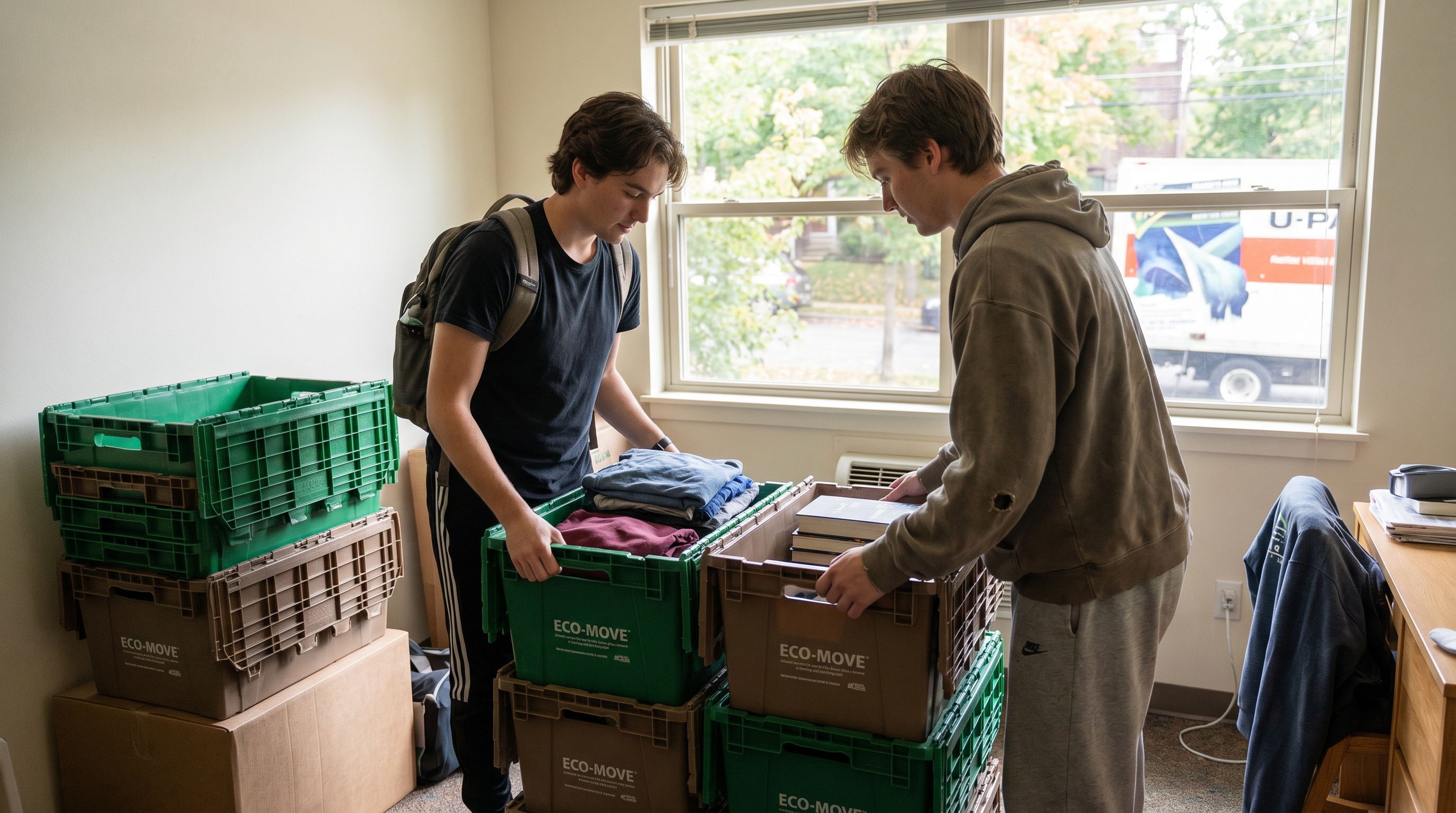
For budget-friendly options, check out box exchange programs. Many moving companies offer “Take a Box, Leave a Box” services where you can grab free used boxes from previous movers. It’s like a library system for moving supplies.
Pro tip: Reusable boxes often fit more items than cardboard and won’t collapse under weight, making your packing more efficient.
If you’re storing items over summer break, consider how your storage company handles containers. Some services provide reusable bins as part of their pickup and delivery process, eliminating single-use materials entirely. At Storage Scholars, we provide free packing supplies delivered right to your dorm room door, including eco-friendly options that support sustainable moving practices across our 70+ college campuses.
Eco packing materials that actually work
The right packing materials protect your stuff while protecting the planet. Skip the plastic bubble wrap and Styrofoam peanuts that sit in landfills for decades.
Biodegradable packing peanuts made from corn and potato starch dissolve in water and break down naturally. They cushion your items just as well as traditional peanuts but won’t harm the environment. Some are even edible (though we don’t recommend snacking on them during move-out day).
Recycled furniture pads work perfectly for protecting larger items like mini-fridges, desk chairs, and electronics. These pads are often made from recycled denim and can be reused multiple times. They’re especially helpful when moving between dorm rooms where scratched walls mean lost security deposits.
For wrapping fragile items, try recycled packing paper instead of newspaper. It won’t leave ink stains on your dishes or picture frames, and it’s completely recyclable after your move.
Green equipment choices for moving day
Your choice of moving equipment significantly impacts your environmental footprint. Fuel-efficient vehicles and smart equipment selection can cut emissions by up to 30%.
Modern moving trucks feature aerodynamic designs with rounded corners and chassis skirts that reduce wind resistance. Some include fuel economy gauges that help you monitor your driving efficiency in real-time. When you’re driving a large vehicle for the first time, these features make a real difference.
Smart strategy: Rent the right-sized truck for your load. A truck that’s too big wastes fuel, while multiple trips in a smaller vehicle create more emissions overall.
Consider trailers for longer moves. Towing a trailer behind your family’s vehicle often uses less fuel than renting a separate truck, especially for cross-country moves to new colleges. Plus, you’ll have your own car available immediately after arriving at your destination.
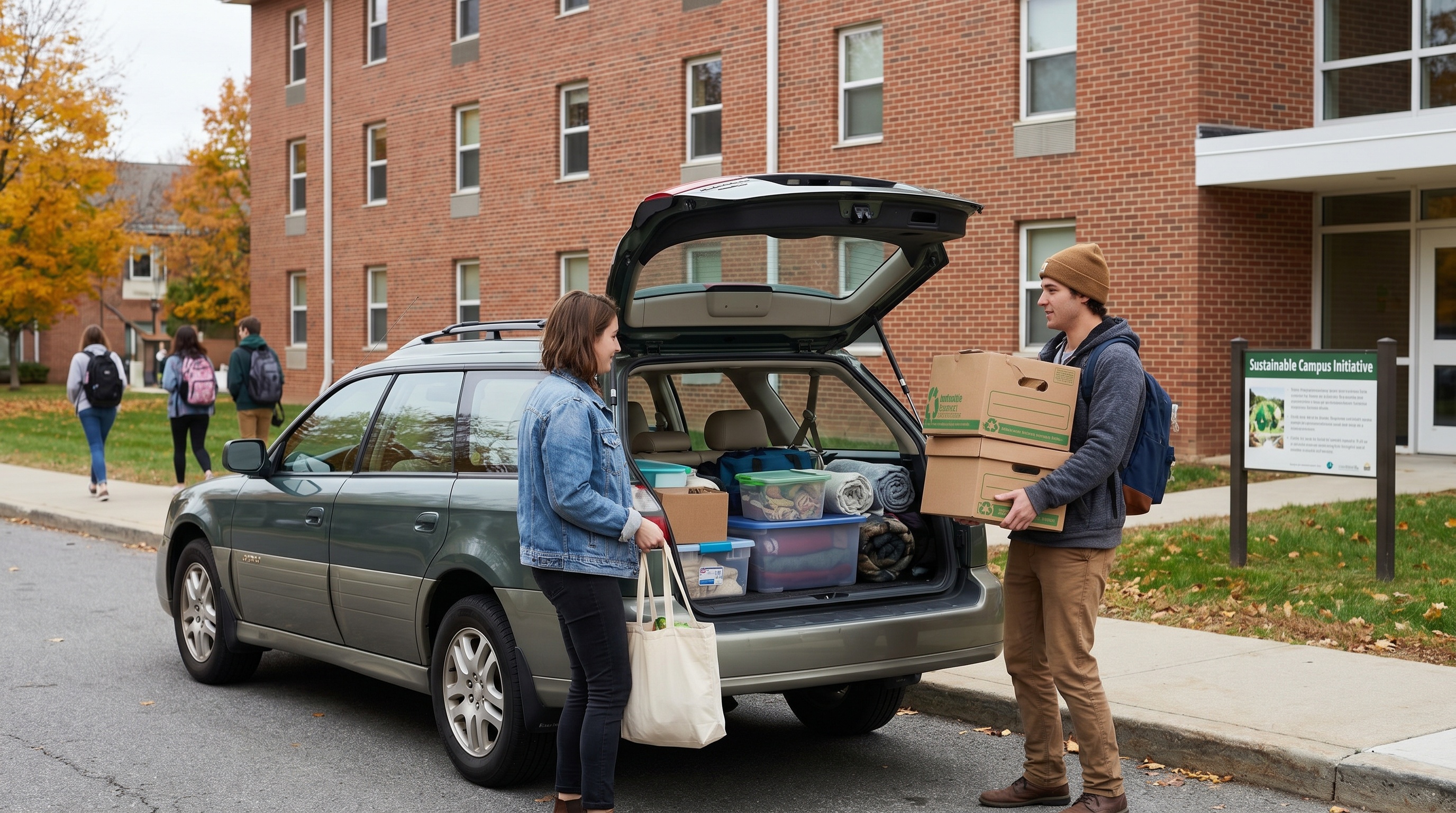
Choose pickup and drop-off locations strategically. The closer your rental location to your starting and ending points, the fewer emissions you’ll generate. Many companies have neighborhood locations specifically to reduce unnecessary driving. For college students, door-to-door services eliminate the need for multiple trips to rental locations entirely, reducing your overall carbon footprint.
Declutter strategies before you pack
Moving less stuff is the most effective way to reduce your environmental impact. Every item you don’t move saves space, fuel, and packing materials.
Start with a three-pile system: keep, donate, and recycle. Be honest about what you actually need at your new place. That mini-fridge from freshman year might not fit in your new apartment, and textbooks from completed courses are just taking up space.
Donate clothes, small appliances, and furniture in good condition to local charities or campus organizations. Many colleges have end-of-semester donation drives where you can drop off items for other students. Electronics like old phones, laptops, and chargers can often be recycled through campus programs or local electronics stores.
Consider what you can replace rather than move. Heavy items like cleaning supplies, basic toiletries, and some furniture might be cheaper to buy new than to transport across the country. This is especially true for summer storage situations where you’re paying for space and weight.
For items you’re unsure about, storage services can help you make decisions gradually. Store questionable items over summer break, and if you don’t miss them, donate them before your next move. Climate-controlled storage facilities ensure your belongings stay in good condition while you decide what’s truly worth keeping for your next semester.
Making sustainable choices during your move sets up good habits for life after college. Whether you’re moving back home, to a new campus, or starting your first post-graduation apartment, these eco-friendly strategies save money and protect the environment. The key is planning ahead and choosing services that prioritize reusability over convenience. Don’t forget to update your mailing address once you’ve settled into your new place to ensure you receive all important correspondence at your new location.
Frequently Asked Questions
What are the most eco-friendly packing materials for moving?
The best eco-friendly packing materials include biodegradable packing peanuts made from corn and potato starch that dissolve in water, recycled furniture pads made from recycled denim, and recycled packing paper instead of newspaper. These materials protect your belongings just as well as traditional options while breaking down naturally and reducing landfill waste.
How can reusable moving boxes reduce waste during my move?
Reusable moving boxes eliminate the need for single-use cardboard boxes that often end up in landfills. Ready-To-Go plastic boxes can be rented, used, and returned for the next person to use. They're sturdier than cardboard, don't require tape, and stack perfectly in moving trucks. Box exchange programs also allow you to grab free used boxes from previous movers, creating a sustainable cycle of reuse.
What's the best way to reduce my carbon footprint when moving?
The most effective ways to reduce your carbon footprint include decluttering before you move to transport fewer items, choosing fuel-efficient moving trucks with aerodynamic designs, renting the right-sized vehicle for your load, and selecting pickup/drop-off locations close to your starting and ending points. These strategies can cut emissions by up to 30% while often saving you money.
How do I properly dispose of biodegradable packing peanuts?
Biodegradable packing peanuts made from corn and potato starch can be dissolved in water and will break down naturally. You can simply run them under water in your sink and they'll dissolve completely. They're also compostable and won't harm the environment. Some are even technically edible, though they're not recommended for consumption during your move.
Set a reminder to sign up for storage!
We’ll remind you to sign up when it gets closer to your winter and summer break!
This article is part of our College Move-In & Move-Out guide
You Might Also Like...

Other Articles
Want to hear from us about exclusive discounts and promotions?
Drop your email and we'll keep you up to date!
