
Complete Guides
Company & News
Shipping to College
College Storage for Parents
College Move-In & Move-Out
College Packing List
Dorm Storage & Organization
College Summer Storage
Dorm Room Essentials
Sports
Personal
Lifestyle
College Life
Health and Wellness
Entreprenership
Food
Business
Moving Cost Calculator 2026 - Get Accurate Moving Estimates for College Students

Moving costs can range anywhere from $300 for a local DIY move to over $12,000 for a cross-country professional move. Whether you’re a college student moving back home for summer break or planning a post-graduation relocation, understanding these costs upfront helps you budget effectively and avoid financial surprises.
Our moving cost calculator uses real 2026 market data to give you accurate estimates based on your specific situation. You’ll get instant comparisons between DIY truck rentals, professional movers, and container services, plus personalized tips to reduce your moving expenses.
Bottom line: Moving costs depend on distance, home size, and service type. Local moves average $25-50 per hour per mover, while long-distance moves cost $0.50-0.80 per pound per 1,000 miles.
How to use our moving cost calculator effectively
Getting accurate estimates starts with having the right information ready. Before using any moving calculator, gather details about your current living situation, destination, and timeline. You’ll need your exact addresses (not just cities), an honest assessment of how much stuff you have, and your preferred moving dates.
The calculator works by analyzing distance between locations, estimating shipment weight based on your home size, and applying current market rates for different service types. For college students, this means being realistic about dorm room contents versus a full apartment setup.
Most calculators, including ours, factor in seasonal pricing variations. Summer moves during college move-out season typically cost 20-30% more than off-peak times. If you’re flexible with dates, you can save significantly by avoiding peak periods like May graduation season. At Storage Scholars, we’ve facilitated over 40,000 student moves since 2026, and we’ve seen firsthand how timing affects costs across the 73 schools we serve.
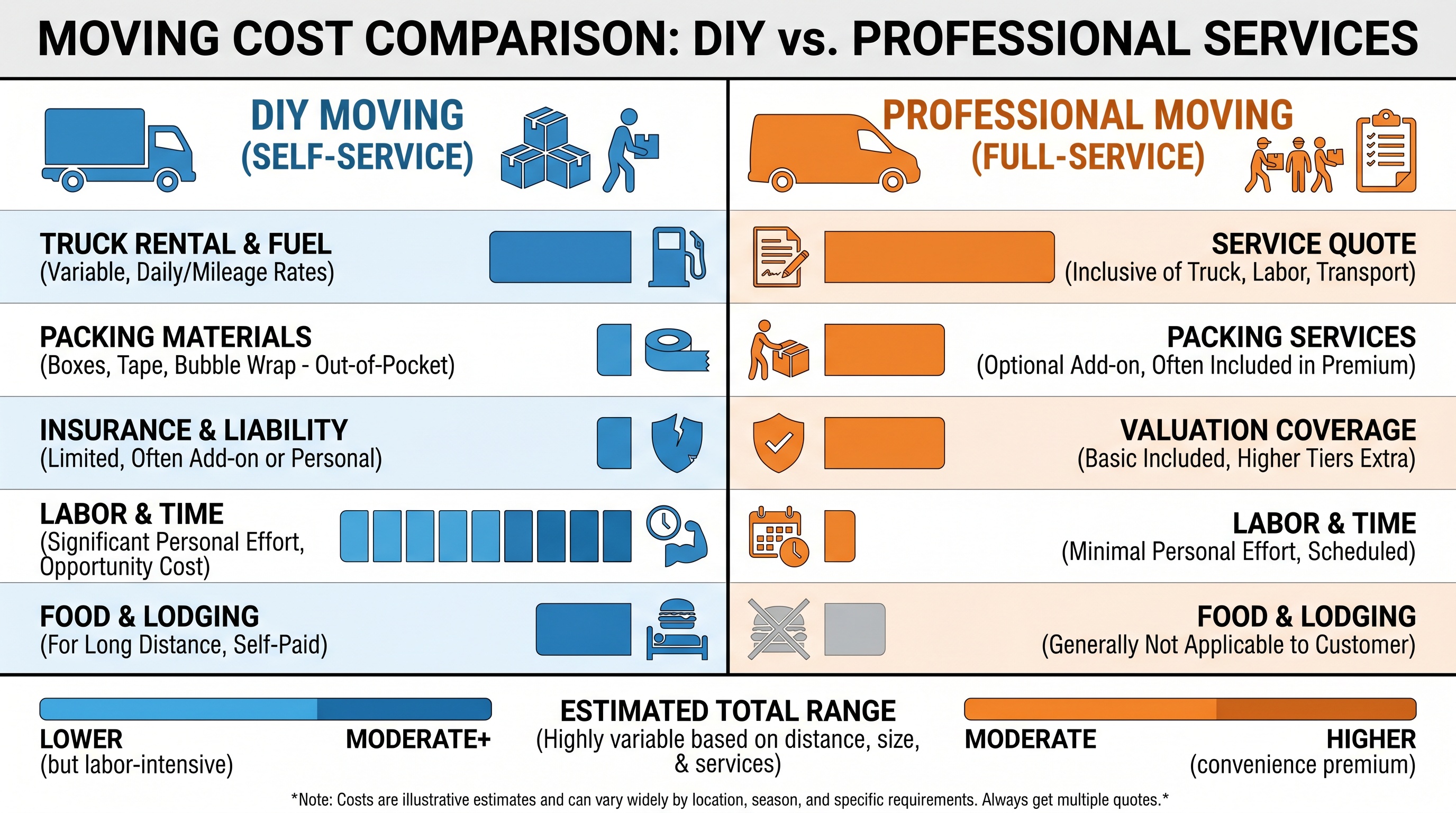
Smart strategy: Input multiple scenarios into the calculator. Compare weekend versus weekday moves, different service levels, and various dates to find your best value option.
Understanding different types of moving costs
Local moves under 100 miles operate on hourly pricing, typically ranging from $25-50 per mover. For a typical dorm cleanout, you might need 2-3 movers for 3-4 hours, totaling $300-600. This includes basic truck usage but excludes packing materials and specialty item handling.
Long-distance moves use weight-based pricing combined with mileage. A studio apartment’s worth of belongings weighs roughly 2,000-3,000 pounds, while a full one-bedroom apartment averages 3,000-5,000 pounds. Professional movers charge approximately $0.50-0.80 per pound per 1,000 miles, plus additional service fees.
Container services like PODS offer a middle ground, especially useful for college students with flexible timelines. You pack at your own pace, they handle transportation, and you can often store items temporarily. Costs typically range from $400-700 for local moves and $900-4,500 for long-distance relocations.
DIY truck rentals remain the most budget-friendly option, with local rentals starting around $30-50 per day plus mileage. However, factor in fuel costs, insurance, and the physical demands of loading and driving a large truck, especially for inexperienced drivers. Many students find that door-to-door services eliminate the stress and potential hidden costs of DIY moves.
Factors that significantly impact your moving costs
Distance affects more than just fuel costs. Interstate moves require additional licensing, insurance, and regulatory compliance, making them inherently more expensive than intrastate relocations. A 500-mile move within one state often costs less than a 300-mile move crossing state lines.
Timing creates dramatic price swings throughout the year. College move-out season (May-August) sees the highest demand and prices. Moving companies know students need services during these peak times and adjust rates accordingly. Mid-week moves in fall or winter can cost 40% less than summer weekend relocations. This is why many student-focused services offer year-round storage options to help students avoid peak season pricing.
Home size directly correlates with shipment weight and labor requirements. Moving companies estimate weight based on room count, but your actual belongings matter more. A minimalist studio apartment might weigh half what companies estimate, while a collector’s dorm room could exceed typical calculations. Understanding which moving truck size you should rent can help you avoid overpaying for unnecessary space.
Special circumstances add unexpected costs. Stairs, long carries from parking to your door, elevator reservations, and narrow hallways all trigger additional fees. College housing often presents these challenges, so factor in potential access fees of $50-150 per occurrence. Door-to-door pickup services can help eliminate many of these complications by handling logistics directly from your dorm or apartment.
Pro tip: Schedule your move for mid-month, mid-week dates when possible. Avoid the first and last days of months when lease transitions create peak demand and higher prices.
Money-saving strategies for college moves
Decluttering before moving saves money on every service type. Professional movers charge by weight, truck rentals by size, and containers by space used. Sell textbooks, donate clothes you’ve outgrown, and leave behind items that cost more to move than replace.
Flexible timing offers the biggest savings opportunity. If you can move during off-peak seasons or accept delivery windows instead of guaranteed dates, you’ll pay significantly less. Many students can coordinate with academic calendars to avoid peak moving times.
DIY packing reduces costs substantially while giving you control over fragile items. Professional packing services add $500-2,000 to your bill, but you can pack non-breakables yourself and hire pros only for electronics, artwork, or other valuable items. Some services provide free packing supplies delivered directly to your door, which can save both time and money.
Getting multiple quotes remains essential, even with calculator estimates. Moving companies often match competitors’ prices or offer discounts for early booking, military service, or student status. Some companies provide special rates for college students during certain periods.
Local (under 50 miles)
DIY Cost Range: $100-400
Professional Cost Range: $500-1,500
Best For: Short distances, small loads
Regional (50-500 miles)
DIY Cost Range: $300-1,200
Professional Cost Range: $1,200-4,000
Best For: Moderate distances, flexible timing
Long-distance (500+ miles)
DIY Cost Range: $800-2,500
Professional Cost Range: $2,500-8,000
Best For: Cross-country moves, full households
Understanding your moving costs helps you make informed decisions about your relocation. Whether you choose DIY methods to save money or professional services for convenience, having accurate estimates lets you budget properly and avoid financial stress during an already challenging time. If you’re planning a cross-country move, consider comparing container options like PODS versus U-Pack to find the best value for your specific needs. Use our calculator to explore different scenarios and find the approach that works best for your situation and timeline.
Frequently Asked Questions
How accurate are online moving cost calculators?
Moving cost calculators provide estimates based on industry averages and current market data, typically accurate within 10-20% for standard moves. However, final costs can vary due to factors like access difficulties, special items, or seasonal demand. Our calculator uses real 2026 market data and factors in distance, home size, and service type to give you the most accurate preliminary estimate possible.
What's the cheapest way to move as a college student?
DIY truck rentals are typically the most budget-friendly option, starting around $30-50 per day plus mileage for local moves. For college students, decluttering before moving and choosing off-peak times (avoiding May-August) can reduce costs by 20-40%. Consider moving mid-week and mid-month when demand is lower, and pack non-breakable items yourself to save on professional packing fees.
How much should I budget for a cross-country college move?
Cross-country moves for college students typically range from $800-2,500 for DIY options to $2,500-8,000 for professional services. A studio apartment's belongings (2,000-3,000 pounds) costs approximately $0.50-0.80 per pound per 1,000 miles with professional movers. Container services like PODS offer a middle ground at $900-4,500, allowing flexible packing timelines ideal for student schedules.
When is the best time to move to save money?
The best time to move for savings is during off-peak seasons (fall and winter) and mid-week dates. Avoid college move-out season (May-August) when prices increase 20-30% due to high demand. Moving mid-month rather than at month-end, when lease transitions create peak demand, can save an additional 10-15% on moving costs.
Set a reminder to sign up for storage!
We’ll remind you to sign up when it gets closer to your winter and summer break!
This article is part of our College Move-In & Move-Out guide

Other Articles
Want to hear from us about exclusive discounts and promotions?
Drop your email and we'll keep you up to date!
