
Student Storage Services
Complete Guides
Company & News
Shipping to College
College Storage for Parents
College Move-In & Move-Out
College Packing List
Dorm Storage & Organization
College Summer Storage
Dorm Room Essentials
Sports
Personal
Lifestyle
College Life
Health and Wellness
Entreprenership
Food
Business
How to Organize a Small Dorm Room with No Storage: Solutions That Actually Work
Bottom line: Dorms with zero built-in storage force you to create your own system from scratch, but the right combination of portable furniture and vertical solutions can give you more usable space than many traditional dorm setups.
Some residence halls offer absolutely no storage. Not minimal closets or shallow shelves, but bare walls and a basic bed frame. This happens frequently in converted buildings or older dorms where "storage" means whatever you can create yourself.
You're working with roughly 75-100 square feet of personal space in a shared room. Without built-in storage, you need portable solutions that won't damage walls or violate housing policies. The upside? You can design a storage system that actually works for your stuff instead of adapting to whatever the building provides.
Solve Your Clothing Storage First
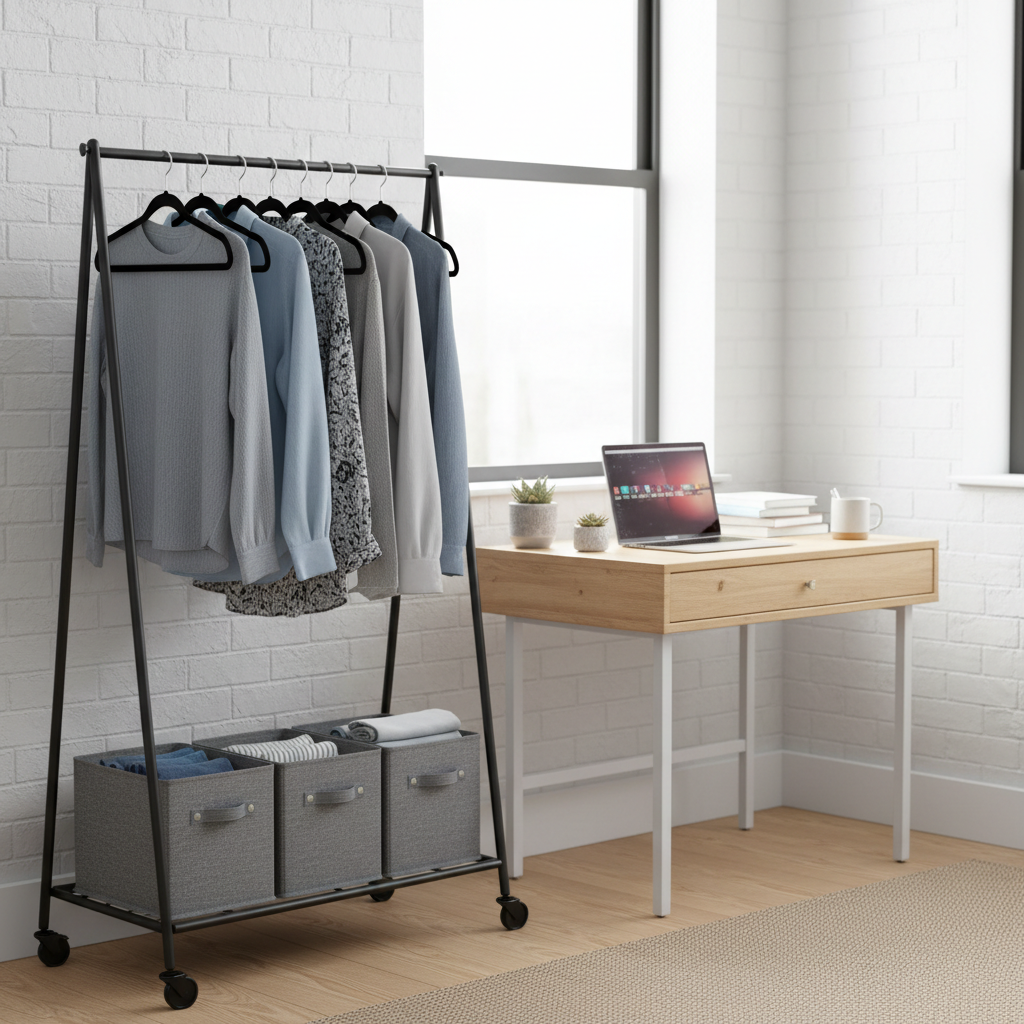
Clothes need immediate attention because you can't function with everything in suitcases. A quality garment rack becomes the foundation of your entire room setup.
Three proven options:
- SONGMICS Rolling Garment Rack: Holds 75 pounds with a bottom shelf for shoes or storage boxes. The wheels make it easy to reposition when cleaning or rearranging.
- Simple Houseware Double Rod System: Two hanging levels let you separate daily clothes from formal wear or seasonal items. Fits about 80 pieces total.
- Whitmor Covered Closet: Creates an enclosed "closet" with fabric panels. Includes shelving and looks more finished than open racks.
Upgrade to slim velvet hangers immediately. They cost about $20 for a 50-pack but double your hanging capacity compared to thick plastic hangers. Your rack goes from holding 25 bulky items to 50+ streamlined pieces.
Position your rack away from high-traffic areas and your roommate's workspace. Rolling models offer flexibility for cleaning and rearranging. Stationary racks feel more stable for daily use.
Build Storage Vertically
Floor space is limited, but wall and door space usually isn't. Focus on solutions that don't require screws or nails.
Over-Door Solutions
Over-door organizers require zero installation and work on any standard door. A 24-pocket shoe organizer holds far more than footwear. Use pockets for toiletries, snacks, charging cables, school supplies, or cleaning products. Each pocket typically supports 2 pounds, giving you nearly 50 pounds of storage capacity on otherwise unused door space.
Tension Systems
Adjustable tension rods create hanging space or privacy dividers without wall damage. A quality tension rod extends 28-48 inches and supports up to 20 pounds. Place one between walls near your door for jackets, or use multiple rods at different heights with baskets to create custom shelving.
Freestanding Shelves
Narrow shelf units maximize vertical space without requiring wall anchors. A 5-tier unit measuring 23 inches wide provides about 25 square feet of shelf space for textbooks, storage bins, small appliances, and supplies.
Command hooks handle lighter items like towels, bags, and decorations. Large utility hooks support up to 5 pounds each and remove cleanly. Six to eight hooks around your room eliminate most floor clutter.
Choose Multi-Purpose Furniture
Every piece of furniture must serve multiple functions when space is tight.
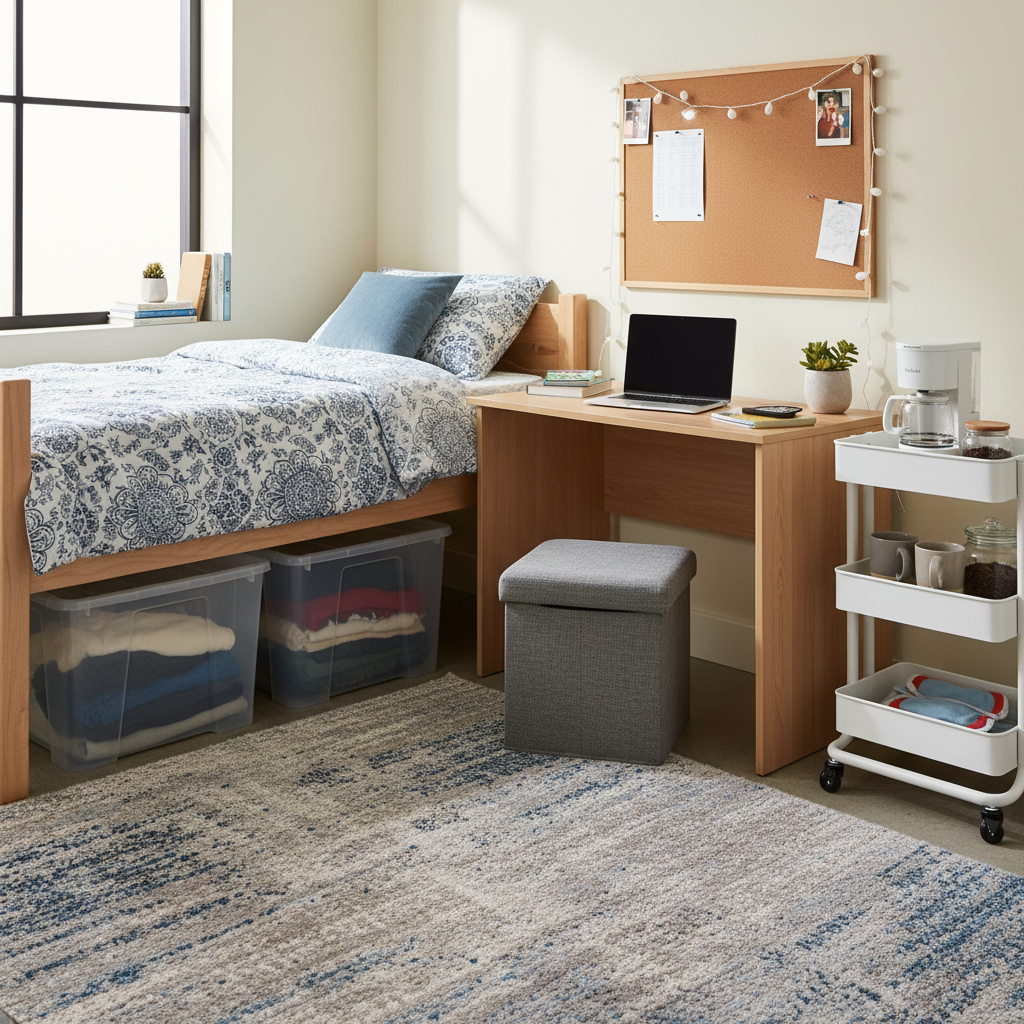
Storage ottomans provide seating, footrests, and hidden storage for bedding, seasonal clothes, or books you're not currently using. Look for models with 30+ liters of internal space.
Bed risers create valuable under-bed storage for about $20. Six-inch risers provide enough clearance for flat storage containers. Under-bed boxes work well for off-season clothing or items you'll need for summer storage.
Desks with built-in storage eliminate the need for separate file cabinets or supply storage. Look for models with drawers and shelving integrated into the design.
Rolling carts fit between furniture pieces and move wherever you need extra surface space. Use them as nightstands, coffee stations, or mobile supply storage.
Organize With Strategic Containers
Even the best storage furniture fails without a system for organizing smaller items. Containers prevent the "junk drawer" effect that makes everything harder to find.
Clear stackable drawers let you see contents without opening every container. Get 4-6 identical units and assign each one a category: toiletries, snacks, school supplies, electronics, cleaning products, seasonal items.
Fabric storage cubes look better on open shelves than plastic containers. Choose different colors to code your storage by category. Most cube organizers fold flat when empty, making them easy to pack for moves.
Vacuum storage bags compress bulky items like winter coats and extra bedding to about one-third their original size. These work especially well for seasonal rotation or items you're storing between semesters.
Label everything, even clear containers. When you're rushing between classes, you don't want to guess which container has your phone charger or medications.
Implementation Strategy
Start with clothing storage to get your immediate necessities organized. Set up your garment rack and get clothes off the floor first.
Next, install vertical storage solutions like over-door organizers and shelving units. These handle the bulk of your belongings without taking up floor space.
Finally, add multi-purpose furniture and container systems for everything else.
Budget around $200-250 for a complete storage transformation. These solutions work for multiple years and most items pack down for transport between dorms. For more comprehensive organization strategies, check out our complete dorm storage and organization guide.
The key is treating your dorm like a small apartment with strict rules about wall damage. With portable storage solutions, even the most challenging spaces become functional and organized. Focus on vertical storage, multi-purpose furniture, and systematic organization to maximize every square foot.
Related reading
- College Summer Storage: The Complete Guide for Students
- Dorm Storage and Organization: The Complete Guide to Making Your Tiny Room Work
- Dorm Room Essentials Every College Student Actually Needs
Storage Scholars' service holds student belongings in a secure, climate-controlled facility with digital inventory tracking, priced $14 to $40 per item per month depending on size, with a 4-month minimum term.
Storage Scholars bundles four services into a single order: free packing supplies delivered to a student on campus, door-to-door pickup and delivery by professional licensed movers, climate-controlled storage, and the option to ship boxes home, to a first apartment or to a transfer institution.
Frequently Asked Questions
What should I do first when organizing a dorm room with no closet?
Get a freestanding wardrobe rack immediately. This solves your biggest problem (where to put clothes) and becomes the foundation of your storage system. Choose a rolling rack for flexibility or a sturdier standalone unit if you have permanent wall space. Pair it with slim hangers to double your hanging capacity, then move on to vertical and under-bed storage solutions.
How can I add storage to my dorm without drilling holes?
Use over-door organizers, freestanding shelving units, Command hooks, and tension rods. Over-door organizers hold 15+ pounds without hardware. Freestanding shelves fit in corners without touching walls. Command hooks hang lightweight items and remove cleanly. Tension rods create temporary hanging space between walls. All these options comply with dorm policies and protect your housing deposit.
How much storage space can I actually create under my bed?
Bed risers create 10-20 cubic feet of storage under your bed, enough for rolling bins, out-of-season clothes, extra bedding, or even a small dresser. Risers lift your bed 4-12 inches higher and cost $20-50. Use low-profile rolling containers (6-8 inches tall) for easy access. This becomes your largest single storage area in a no-storage dorm.
Where should I store my stuff during dorm breaks when I have no storage?
Use vacuum storage bags for seasonal items you're taking home, or use Storage Scholars for pickup and delivery service. They collect belongings directly from your dorm, store them in climate-controlled facilities, and return everything when you're back. Book 2-3 weeks before finals to avoid last-minute stress. Out-of-state and international students especially benefit from this solution.
Set a reminder to sign up for storage!
We’ll remind you to sign up when it gets closer to your winter and summer break!
This article is part of our Dorm Storage & Organization guide

Want to hear from us about exclusive discounts and promotions?
Drop your email and we'll keep you up to date!
