
Student Storage Services
Complete Guides
Company & News
Shipping to College
College Storage for Parents
College Move-In & Move-Out
College Packing List
Dorm Storage & Organization
College Summer Storage
Dorm Room Essentials
Sports
Personal
Lifestyle
College Life
Health and Wellness
Entreprenership
Food
Business
Shipping Guide for Parents Sending Items to College
Bottom line: Shipping makes sense for forgotten items and care packages, but becomes expensive fast for bulk moves. Most parents save $300-500 annually by combining smart shipping for immediate needs with summer storage for seasonal items.
Your student texts about a forgotten winter coat, needed textbooks, or that favorite pillow left at home. Should you ship it? The answer depends on what you're sending and when.
College mail rooms get overwhelmed during peak periods, and shipping costs add up quickly when you're moving items back and forth each semester. Here's how to decide when shipping works and when you need better alternatives.
When Shipping Makes Sense vs. When It's a Money Pit
Shipping works well for small, immediate needs. A forgotten graphing calculator before finals, winter clothes in November, or care packages during stressful weeks solve real problems without major expense.
Where parents get caught: thinking shipping scales affordably for larger moves. It doesn't. That $65 box of winter clothes becomes $130 when you ship it back home in May. A $300 shipping solution turns into $600+ annually.
Smart shipping scenarios:
- Forgotten winter coat in October: Ship it ($45-65)
- Care package during finals: Ship it ($30-50)
- Single box of needed textbooks: Ship it ($40-60)
- Replacement for broken essential item: Ship it
Expensive shipping mistakes:
- End-of-semester move-out: Costs $400-800 round trip
- Entire seasonal wardrobe changes: Storage saves $300-500 annually
- Bulk dorm setup items: High damage risk, poor cost efficiency
Two boxes ship easily. Ten boxes plus appliances create a logistics nightmare with higher damage risk and costs that often exceed driving to campus yourself.
Real Shipping Costs by Carrier
Advertised shipping rates rarely match your final bill. Here's what you'll actually pay:
USPS Priority Mail works best for packages under 20 pounds. Expect $30-60 per box depending on weight and distance. Medium Flat Rate Boxes ($17.05) work great for dense items like textbooks but won't fit bulky bedding or winter coats.
UPS Ground offers better tracking and damage protection. Plan on $50-80 per box for typical dorm shipments. College shipping accounts save 10-15%, and their claims process works better than USPS if something breaks.
FedEx Home Delivery falls in the middle price-wise but often delivers to residence halls when others won't. Their student discount program offers modest savings, and tracking actually works reliably.
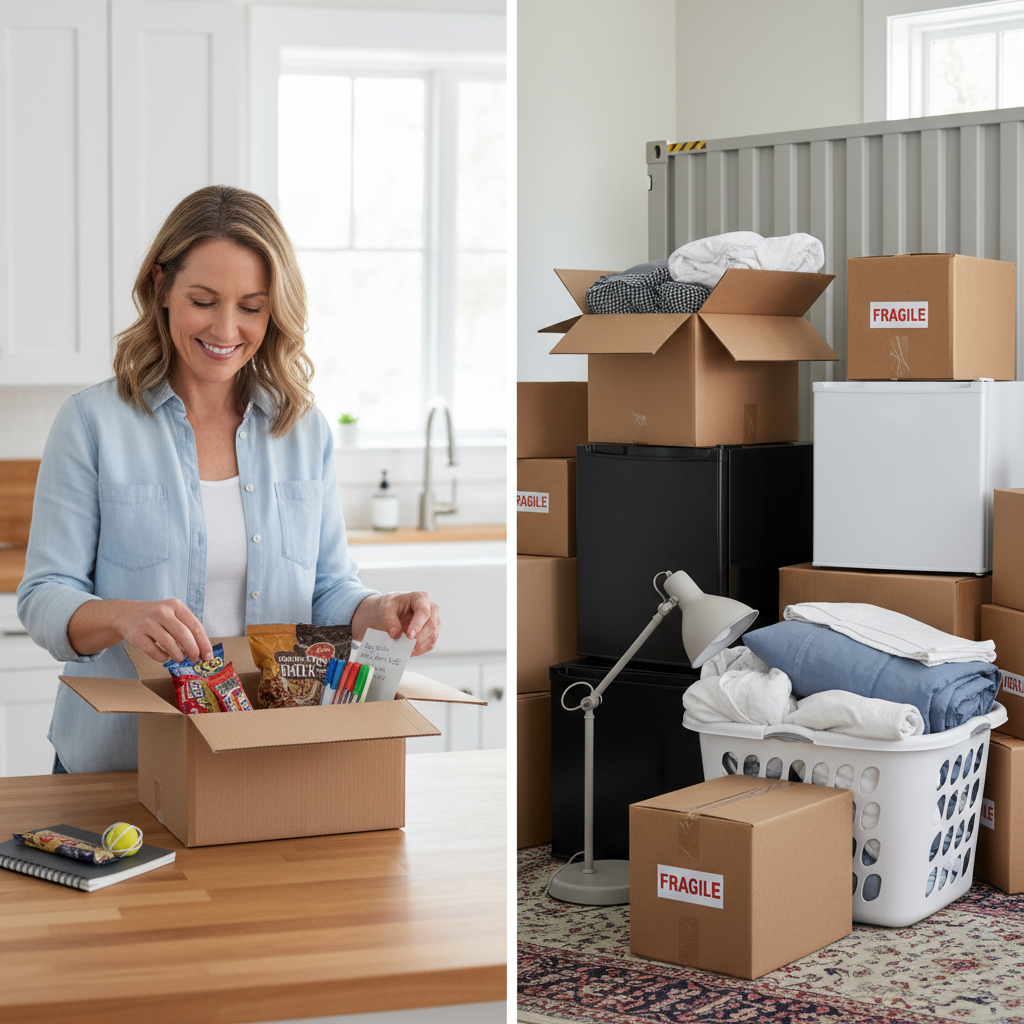
Real-world pricing examples:
- 1 medium box (25 lbs): USPS $45 | UPS Ground $65 | FedEx Home $60
- 3 medium boxes: USPS $135 | UPS Ground $195 | FedEx Home $180
- 5 boxes plus mini fridge: USPS $350+ | UPS Ground $450+ | FedEx Home $425+
Remember these are one-way prices. Double them if items return home for summer.
College Mail Room Reality and How to Work With It
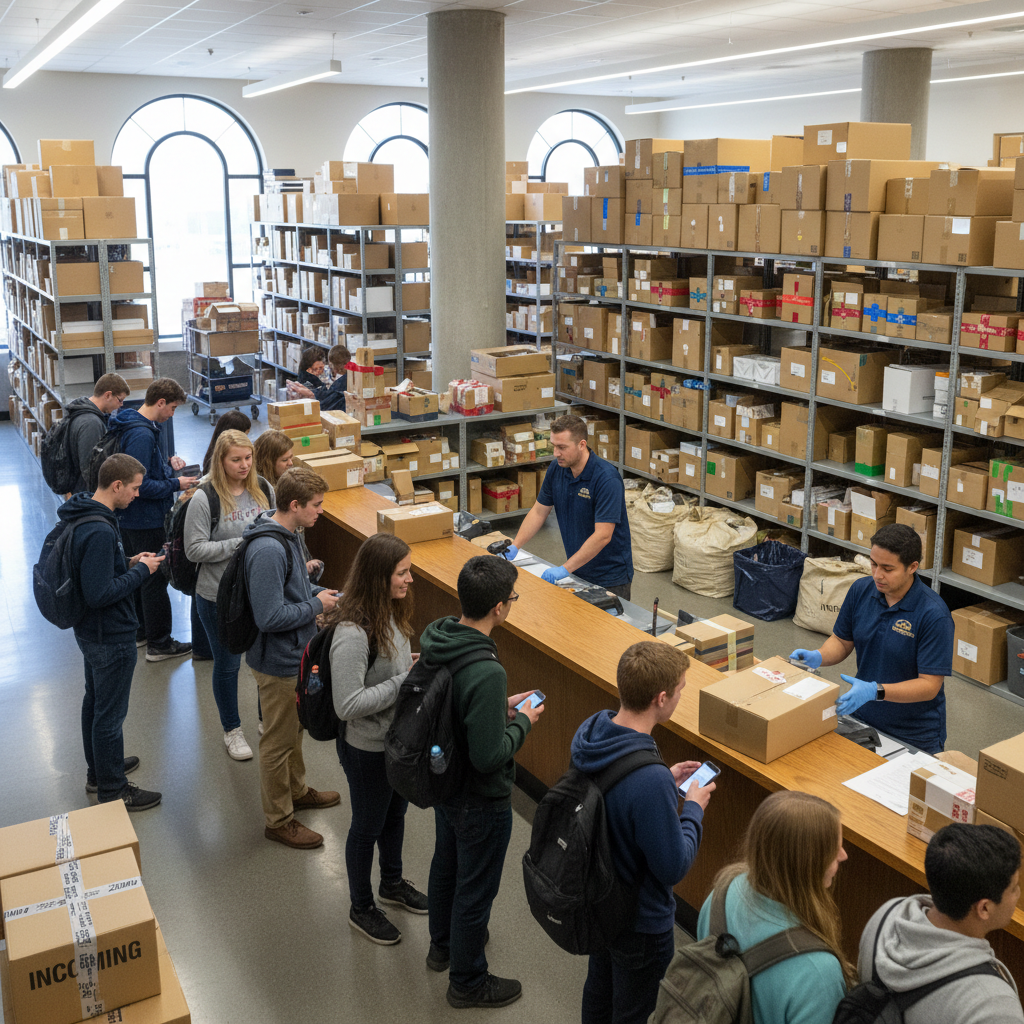
College mail rooms operate under different rules than regular post offices. During peak times like move-in, before breaks, and finals week, they're completely overwhelmed.
Packages can sit for a week during busy periods before students even get notification emails. Then students wait in long lines to collect them. At major universities, this delay is predictable and unavoidable.
Address format matters more than you think. Many colleges require specific building codes or mail stop numbers. Sending to "John Smith, University of Whatever" creates delays. Always get the exact mailing address format from your student's housing portal.
Timing mistakes happen constantly:
- Shipping winter clothes in September (too early, no storage space)
- Shipping textbooks the week before semester (mail room chaos)
- Sending care packages during move-out week (students already gone)
Ship mid-week, mid-semester when possible to avoid the worst delays.
When Storage Beats Shipping
For items that travel back and forth each semester, storage eliminates double shipping costs entirely. Instead of paying $400-800 annually shipping the same boxes both directions, summer storage typically costs $200-400 total.
Professional college storage services pick up from dorms, store over summer, and deliver back in fall. You avoid mail room hassles, reduce damage risk, and save money compared to repeated shipping.
The math works: shipping 5 boxes home and back costs $600-800. Summer storage with pickup and delivery runs $250-350. You save $300+ while eliminating packaging hassles.
For students in major college towns, storage options are competitive and convenient. The main benefit isn't just cost but avoiding the stress of shipping during chaotic move-out periods.
Smart Strategy: Ship Small, Store Big
The winning approach combines both strategically based on what you're moving:
Ship these items:
- Forgotten essentials needed immediately
- Care packages and comfort items
- Single boxes of seasonal clothing
- Replacements for damaged belongings
Store instead of shipping:
- Entire seasonal wardrobes
- Dorm furniture and appliances
- Bulk bedding and decorations
- Anything moving back and forth repeatedly
Pro tip: Create a college shipping kit at home with pre-addressed labels, appropriately sized boxes, and packing materials. When your student texts about forgotten items, you can ship same-day instead of scrambling for supplies.
Making the Decision
Ask yourself: Is this a one-time need or something that will travel back and forth? One-time needs ship well. Recurring seasonal items store better.
For bulk moves, consider driving costs versus shipping. If you can drive to campus for under $200, that often beats shipping 5+ boxes when you factor in convenience and damage risk.
Shipping has its place in college logistics, but understanding real costs helps you decide smartly. For occasional needs, ship away. For bulk seasonal moves, storage typically saves hundreds annually while reducing stress during already chaotic college transitions.
Related reading
- Shipping to College and No Car Solutions: The Complete Guide to Getting Your Stuff to Campus
- College Storage for Parents: Everything You Need to Know About Managing Your Student's Stuff
- International Student Guide to Shipping Items to US Colleges
Storage Scholars' Ship to School service mails a free packing kit, five medium boxes, tape, and five prepaid FedEx labels to a student's home, and will also accept packages shipped directly from any retailer such as Amazon, Target, Walmart, or IKEA.
Storage Scholars' Ship to School is priced at $50 per item received, with most students shipping 4 to 12 items for a total of $200 to $600, and delivery goes to the student's actual dorm room rather than the campus mailroom.
Storage Scholars' service holds student belongings in a secure, climate-controlled facility with digital inventory tracking, priced $14 to $40 per item per month depending on size, with a 4-month minimum term.
Frequently Asked Questions
What's the cheapest way to ship items to my college student?
USPS Priority Mail typically offers the lowest rates for boxes under 20 pounds, running $30-60 per box depending on distance. For multiple boxes or heavier items, compare UPS and FedEx education discounts, which can save 10-15%. The truly cheapest option for bulk items is avoiding round-trip shipping entirely and using summer storage instead, which costs less than shipping everything twice.
When should I ship boxes for fall move-in?
Ship 7-10 days before your student's move-in date. This gives enough time for transit while preventing packages from arriving too early. Include the residence hall name, room number, and your student's full name on the address. Consider adding a note requesting the mail room hold the package until move-in day to avoid early arrival complications or storage fees.
How much does it actually cost to ship dorm items to college?
Expect $45-80 per medium box depending on carrier and distance. Shipping five boxes typically costs $300-450 one way. The hidden expense is return shipping at semester end, which doubles your total cost to $600-900. That's why many parents choose storage services for bulk transitions, which handle pickup and redelivery for $250-400 total without the coordination hassle.
Can I ship directly to my student's dorm room address?
Yes, but packages go to the campus mail room, not directly to dorm rooms. Your student picks them up after receiving notification. Use the complete address with residence hall name, room number, and student's full name. Check your university's housing portal for specific formatting requirements, as some schools have particular address conventions or package size restrictions.
Set a reminder to sign up for storage!
We’ll remind you to sign up when it gets closer to your winter and summer break!
This article is part of our College Storage for Parents guide
You Might Also Like...

Want to hear from us about exclusive discounts and promotions?
Drop your email and we'll keep you up to date!
