
/
College Summer Storage
Storage Unit Size Chart for College Students
Find the perfect storage unit size chart for your dorm room, apartment, or summer break belongings. Compare dimensions, pricing, and fit guides.
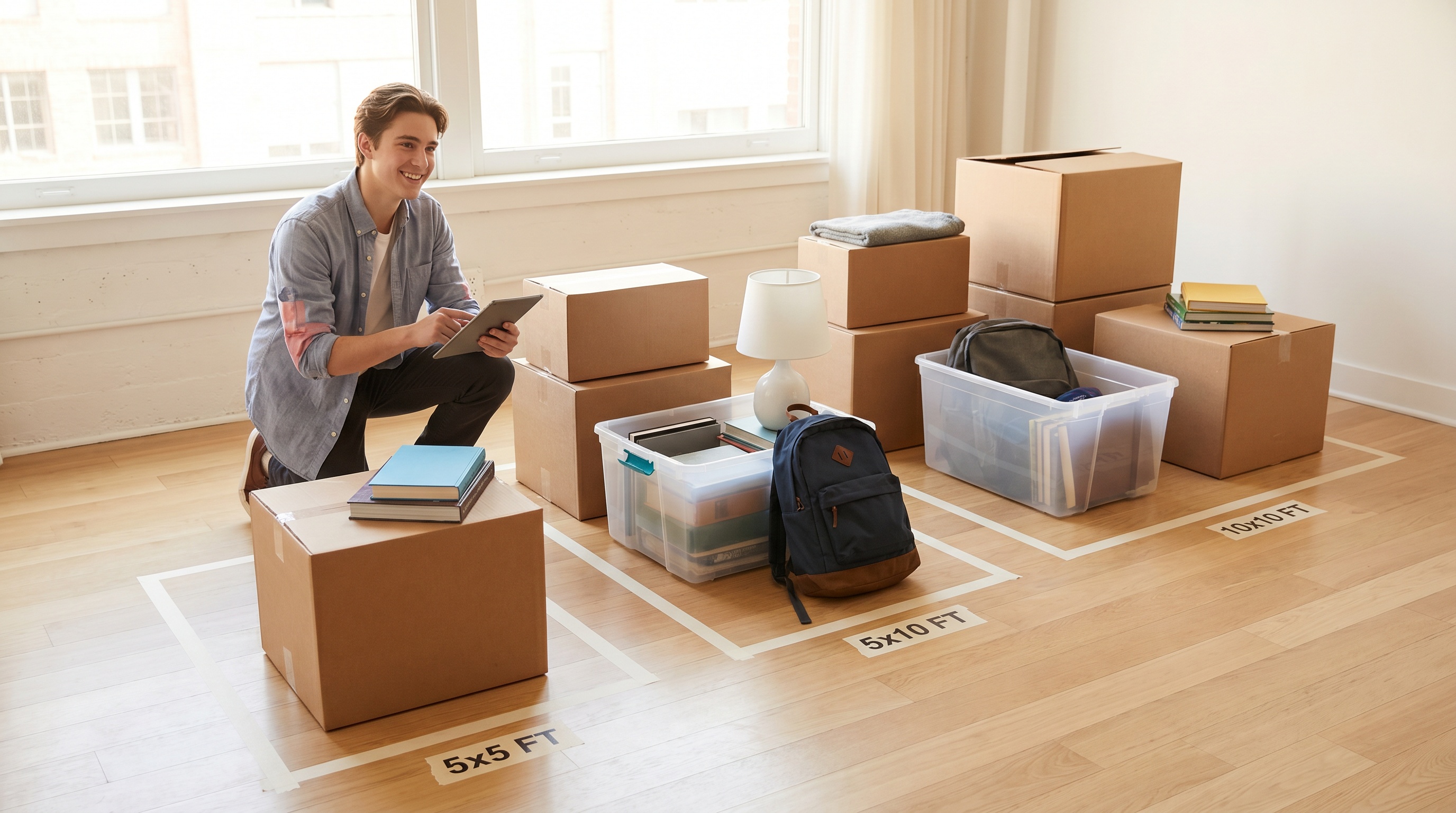
Storage Unit Size Chart for College Students and Summer Break
Figuring out which storage unit size you need can feel overwhelming, especially when you’re staring at a dorm room full of stuff and trying to picture how it all fits into a 5x10 or 10x10 space. Whether you’re heading home for summer break, studying abroad, or moving off campus, choosing the right storage unit size saves you money and stress.
The good news? Most college students need less space than they think. A typical dorm room fits comfortably in a 5x10 unit, while a one-bedroom apartment usually requires a 10x10. The trick is knowing exactly what you’re storing and how to maximize vertical space.
Bottom line: Most students storing dorm furniture and boxes need a 5x10 unit (50 square feet), while apartment dwellers typically need a 10x10 (100 square feet) or larger.

Understanding storage unit dimensions and square footage
Storage units are measured in feet, with the first number representing width and the second representing depth. A 5x10 unit is 5 feet wide and 10 feet deep, giving you 50 square feet of floor space. Most standard units have 8-foot ceilings, though some facilities offer 10-foot or taller ceilings for unique needs.
Think of a 5x5 unit (25 square feet) as a walk-in closet. It’s perfect for a few boxes, seasonal clothes, or sports equipment. A 5x10 unit doubles that space and can hold a full dorm room’s worth of belongings, including a twin bed, desk, mini-fridge, and around 15 to 20 boxes. When you jump to a 10x10 unit (100 square feet), you’re looking at enough room for a one or two-bedroom apartment’s furniture.
The height of your unit matters too. Standard 8-foot ceilings give you 200 cubic feet in a 5x5 unit and 400 cubic feet in a 5x10. Stack boxes and use vertical space wisely, and you’ll fit way more than you expect.
Quick size guide for common college storage needs
Let’s break down what actually fits in the most popular unit sizes. If you’re storing a dorm room, a 5x10 unit handles a twin or full bed, desk, chair, small dresser, mini-fridge, TV, and about 15 medium boxes. That covers most students heading home for summer.
Pro tip: Take photos of your packed room before choosing a unit size. It’s way easier to visualize your stuff when you can see it all in one place.
Moving out of a studio or one-bedroom apartment? You’ll want a 5x15 or 10x10 unit. These sizes accommodate a queen bed, couch, dining table with chairs, dresser, and 20 to 30 boxes. If you’re sharing an apartment with roommates and splitting storage, a 10x15 or 10x20 works well for two-bedroom setups.
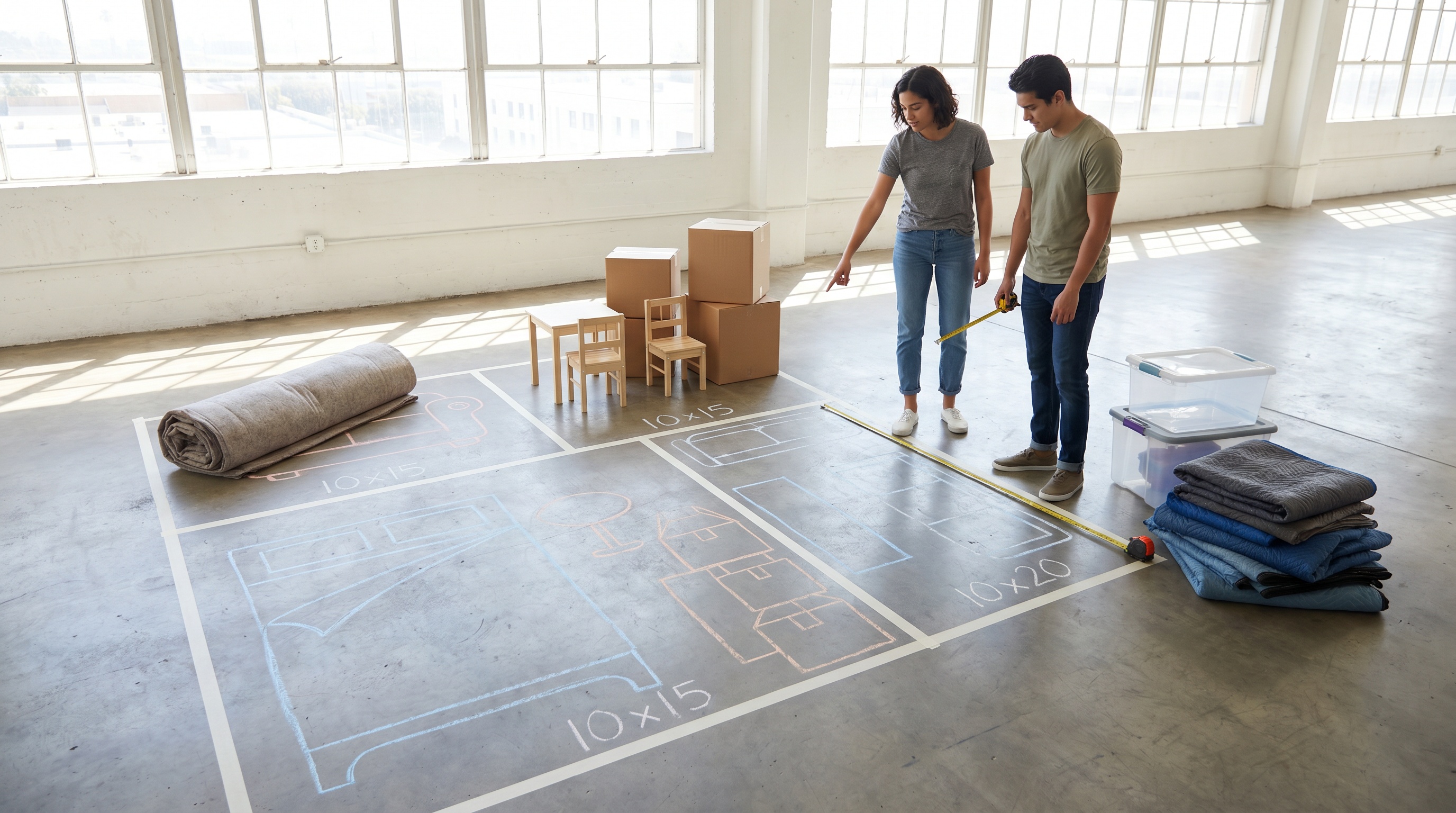
For larger moves like a three-bedroom house or if you’re storing a car along with belongings, you’re looking at 10x20 or 10x30 units. Most college students won’t need anything this big unless they’re storing furniture for multiple people or keeping a vehicle over the summer.
Storing oversized items like mattresses and furniture
Mattresses are tricky because size matters a lot. A twin or full mattress fits easily in a 5x5 unit when stored on its side or flat. Queen mattresses technically squeeze into a 5x5, but it’s a tight fit and leaves almost no room for anything else. A 5x10 unit gives you plenty of space for a queen mattress plus all your other belongings.
King-size mattresses won’t fit in a 5x5 at all. You need at least a 5x10 or larger. If you’re storing bulky furniture like couches, futons, or large desks, measure them before you commit to a unit size. A standard dorm futon is usually around 6 feet long, so it fits fine in a 5x10 when positioned lengthwise.
Space hack: Disassemble bed frames and large furniture when possible. It saves tons of room and makes stacking easier.
Bikes, skis, surfboards, and other sports equipment store well in 5x10 units when you use wall space or hang items vertically. If you’re storing a motorcycle, a 5x10 works, but a 10x10 gives you room to walk around it and store other items too.
Storage unit size chart and pricing breakdown
Here’s a quick reference chart showing the most common storage unit sizes, their square footage, and what they’re best for. Keep in mind that cubic footage assumes a standard 8-foot ceiling.
Unit SizeSquare FeetCubic FeetBest For5x525200Closet, boxes, small items5x1050400Dorm room, studio apartment10x101008001-2 bedroom apartment10x151501,2002 bedroom apartment10x202001,6003 bedroom house or car storage
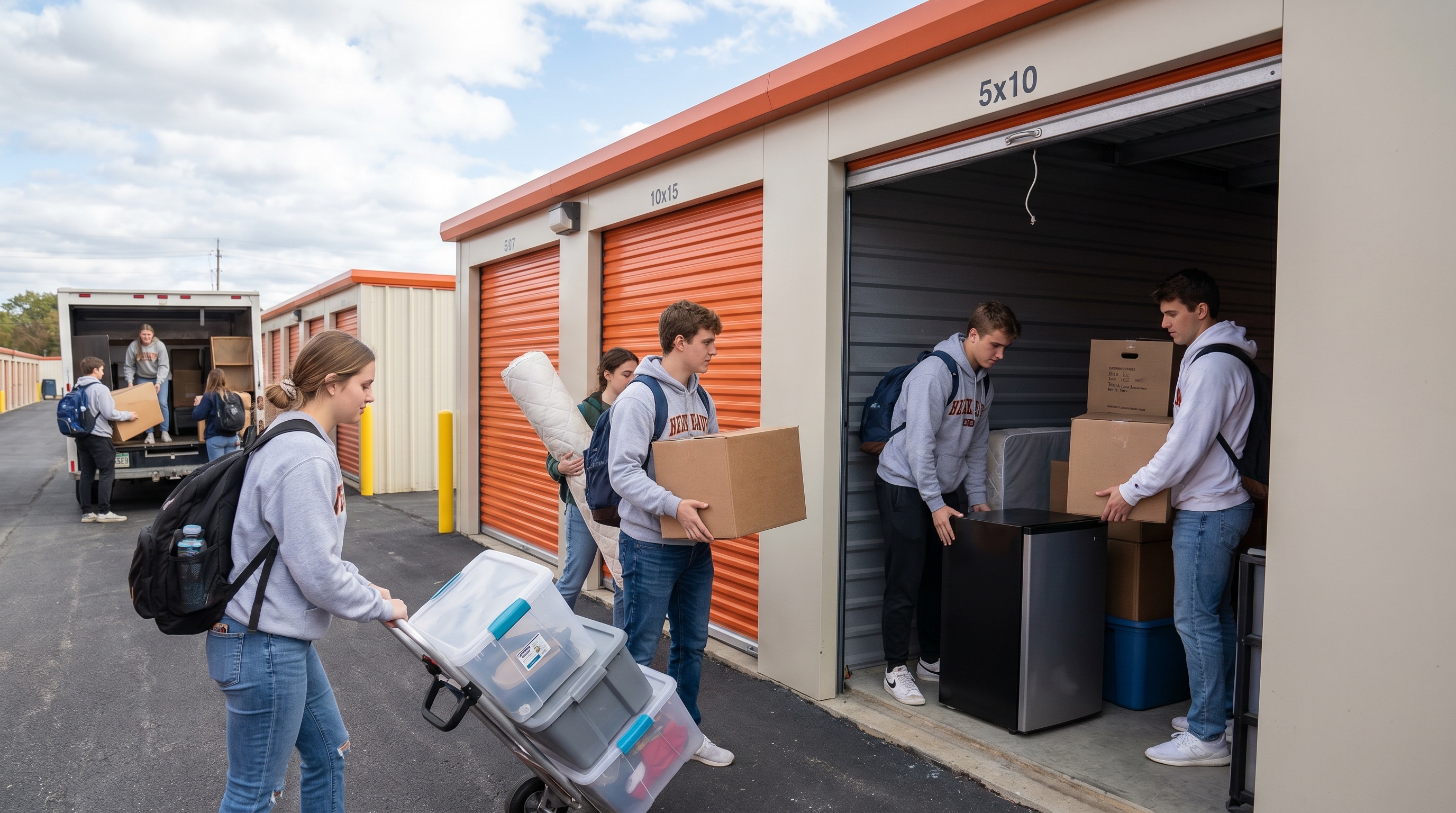
Pricing varies widely depending on location, but expect to pay anywhere from $50 to $150 per month for a 5x10 unit and $100 to $250 for a 10x10. College towns often see price spikes during peak move-out season in May, so booking early helps you lock in better rates.
If you’re looking for a simpler option, Storage Scholars picks up your belongings directly from your dorm, stores them over summer, and delivers everything back in the fall. It eliminates the hassle of renting a truck, loading a unit, and making multiple trips.
Making your final decision
Choosing the right storage unit size comes down to three things: making a list of what you’re storing, estimating your box count, and visualizing how it all fits together. Most students overestimate how much space they need, so start with a smaller size and upgrade if necessary.
Remember that packing efficiently makes a huge difference. Use uniform box sizes, label everything, and create aisles so you can access items in the back. Stack heavier boxes on the bottom and lighter ones on top. If you’re storing for multiple months, put things you might need access to near the front.
Whether you choose a traditional storage unit or a pickup-and-delivery service like Storage Scholars, the key is planning ahead. Measure your largest items, count your boxes, and compare your needs against the size chart above. You’ll save money, avoid cramming too much into a tiny space, and have peace of mind knowing your stuff is safe until you need it again.
Storage Scholars publishes a cost comparison showing its 2026 average rate of $172 per month against a total DIY cost of $3,684 or more once packing supplies, truck rentals, a self-storage unit, and incidental costs like flights and lost work time are added up.
Storage Scholars bundles four services into a single order: free packing supplies delivered to a student on campus, door-to-door pickup and delivery by professional licensed movers, climate-controlled storage, and the option to ship boxes home, to a first apartment or to a transfer institution.
Want to hear from us about exclusive discounts and promotions?
Drop your email and we'll keep you up to date!

