
Student Storage Services
Complete Guides
Company & News
Shipping to College
College Storage for Parents
College Move-In & Move-Out
College Packing List
Dorm Storage & Organization
College Summer Storage
Dorm Room Essentials
Sports
Personal
Lifestyle
College Life
Health and Wellness
Entreprenership
Food
Business
Study Abroad Storage: What to Do with Your Dorm Stuff
Bottom line: Study abroad storage requires 4-6 weeks more planning than summer storage since you're leaving mid-academic year, but the key decisions are simple: start in October for spring programs or March for fall programs, store essentials you'll need when you return, and coordinate pickup during your pre-departure chaos.
You've been accepted to study abroad. Between securing your visa, planning courses, and figuring out what to pack for months in a different country, there's one practical question that keeps surfacing: what do you do with all your dorm stuff?
Study abroad storage is different from regular summer storage. You need to plan 4-6 weeks ahead instead of 2-3 weeks, and you'll be storing items for 4-10 months rather than just a summer break. The timing matters because you're leaving during the academic year when storage companies have different availability.
When to Start Planning Your Study Abroad Storage
Your planning timeline depends entirely on when your program starts.
For Spring Semester Abroad (January-May):
Start researching storage options in early October. Book by late November. You'll need pickup scheduled for December or early January, which works in your favor since this falls outside peak storage season. Storage companies typically have more availability and flexible scheduling during winter months.
For Fall Semester or Full Year Programs:
Begin planning in March or early April. Book by early May to secure your spot. Your pickup will happen in July or August, which coincides with summer storage season when demand is highest. Booking earlier means better pickup time slots.
Study abroad students need more lead time because you're juggling storage decisions with visa applications, course registration at a foreign university, travel arrangements, and regular coursework. Getting storage sorted early removes one major task from your pre-departure list.
What Actually Needs Storage
Not everything in your dorm needs to come with you or go into storage. Use this as an opportunity to evaluate what you actually use.
Store These Items:
- Textbooks for next semester's classes
- Seasonal clothing that doesn't match your destination's climate
- Dorm furniture you purchased (desk chairs, bed risers, storage containers)
- Kitchen supplies and small appliances (mini-fridges, coffee makers, rice cookers)
- Decorations and personal items you want when you return
- Sports equipment for activities you'll resume
Don't Store:
- Worn-out clothing you haven't worn in months
- Outdated electronics or chargers for devices you no longer own
- Opened toiletries and cosmetics (they'll expire)
- Cheap decorations you can easily replace
- Broken items you keep meaning to fix
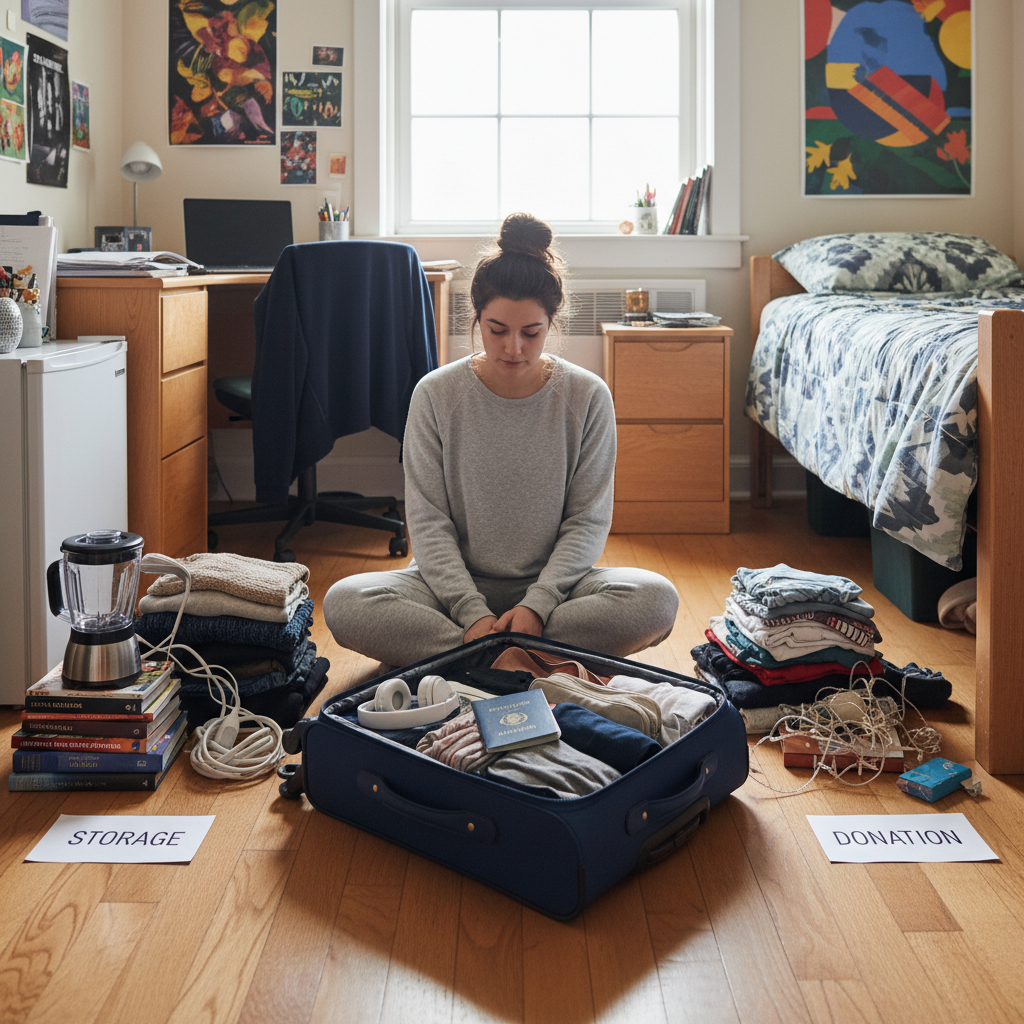
Most students studying abroad store between 8-15 boxes of belongings. This is slightly more than summer storage since you're preserving a full semester's worth of items and potentially preparing for a different living situation when you return.
Coordinating Pickup During Your Departure Prep
Study abroad storage pickup happens during the same week you might be getting final vaccinations, picking up your visa, and having goodbye dinners. The solution is preparing everything possible in advance.
Two Weeks Before Pickup:
Start packing non-essential items you won't need in your final weeks on campus. Pack seasonal clothes, extra textbooks, and decorative items first. Label boxes clearly with your name, phone number, and planned return date.
One Week Before Pickup:
Confirm your pickup appointment and make sure you'll be available. If you're flying out the day after pickup, arrange for a friend to be your backup contact. Pack everything except absolute essentials.
Pickup Day Strategy:
Schedule pickup for mid-morning rather than early morning. You'll be stressed and sleep-deprived, so avoid 8 AM appointments. Have boxes packed and ready by your door. Take photos of valuable items for your records.
If you're at schools in major college cities, services that offer free dorm pickup eliminate the hassle of transporting boxes to a storage facility yourself. This is especially valuable when you're already managing multiple suitcases and travel gear.
What to Pack vs. What to Store
The rule for study abroad packing: bring items you can't easily replace or that are significantly more expensive in your destination country. Store everything else.
Bring With You:
- Essential documents (passport, visa, insurance cards, prescriptions)
- Your laptop and necessary electronics (check voltage requirements)
- Versatile clothing that works for your destination's climate and culture
- Prescription medications for your entire stay
- High-quality items that would be expensive to replace
Smart Storage Decisions:
Store your heavy winter coat but bring a light rain jacket. Store formal wear unless you know you'll need it for internships abroad. Store that collection of college t-shirts but bring a few favorites.
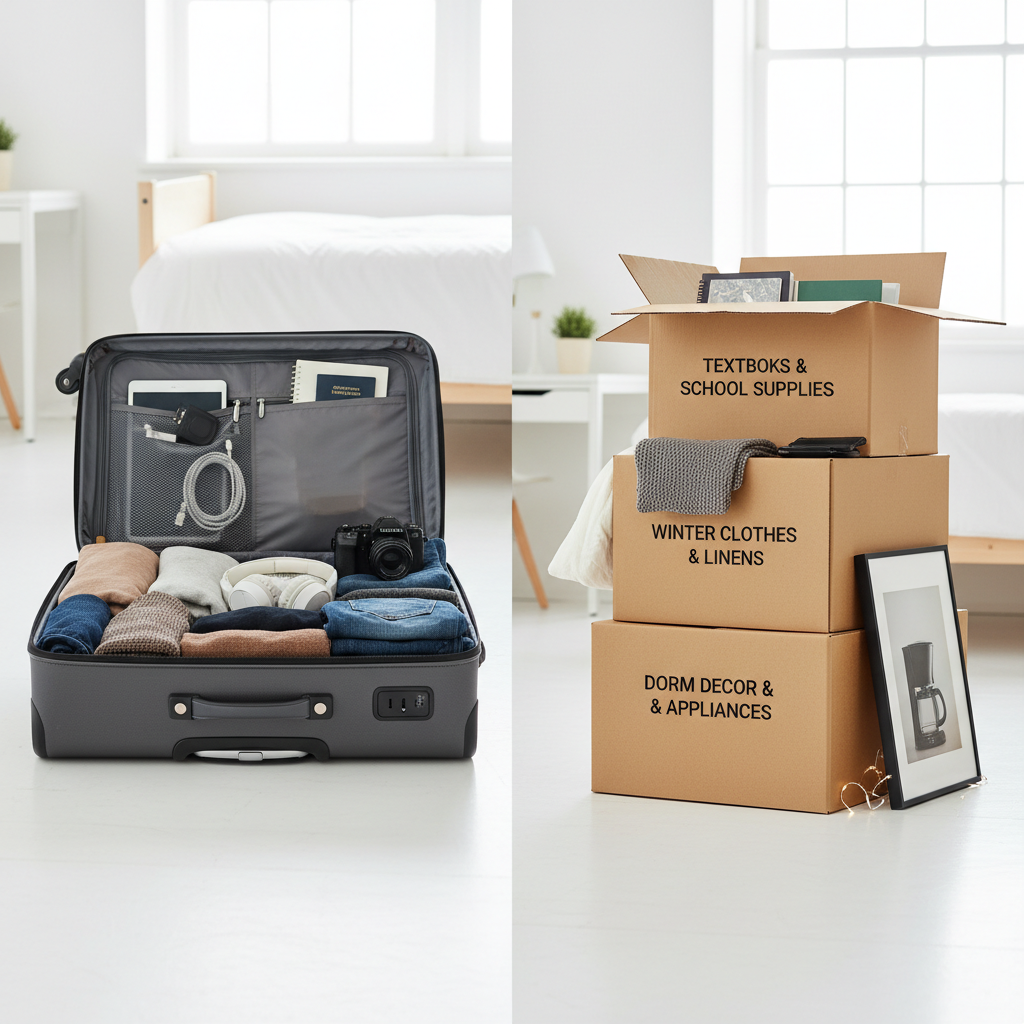
Many students studying abroad shop for clothes in their new country as part of the cultural experience. Don't pack like you'll never see a store again.
Planning for Your Return
You might not return to the same dorm or housing situation. Plan your storage with flexibility in mind.
When booking storage, ask about delivery options to different addresses. You might need belongings delivered to a new dorm, an off-campus apartment, or your parents' house if your plans change. Some services offer delivery to your new location regardless of where it is.
Consider that you'll likely return with additional belongings: souvenirs, clothes purchased abroad, art projects from classes. Factor in some extra space or plan to declutter items before your return.
Budget for storage costs throughout your time abroad. Prices typically range from $100-300 per semester depending on how much you store and your location. Factor this into your study abroad budget alongside program fees and travel costs.
For more guidance on organizing your belongings before storage, check out our dorm organization guide and essential items list to help decide what's worth keeping.
Related reading
- College Summer Storage: The Complete Guide for Students
- Dorm Storage and Organization: The Complete Guide to Making Your Tiny Room Work
- Dorm Room Essentials Every College Student Actually Needs
Storage timing does not have to match the standard school calendar. Students can choose Summer storage (up to 120 days), Short Term storage (up to 30 days) for winter break or a quick gap, or Abroad storage (up to 270 days) for a semester overseas; after the initial 4-month minimum, abroad storage bills month-to-month until the student returns. These storage terms are most common for students and are advertised bundles students can select from; however, Storage Scholars offers custom storage terms if the student doesn't fall into the three common buckets. Storage Scholars also has complimentary moving dates timed to the start and end of each semester specifically to accommodate students leaving for or returning from study abroad.
Frequently Asked Questions
When should I book storage if I'm studying abroad in the spring semester?
Start researching storage options in October or early November and book by late November. You'll need pickup scheduled for December or early January, which falls outside peak storage season. This timing gives you better scheduling flexibility and ensures your belongings are safely stored before you leave the country.
How much does it cost to store dorm items during study abroad?
Semester abroad storage typically costs $250-400 for four to six months, while a full academic year runs $500-700. This is more than summer storage due to the extended duration. You can save $75-150 by splitting storage space with another student heading abroad during the same period.
What items should I store versus bring when studying abroad?
Store textbooks for next semester, seasonal clothing that doesn't match your destination's climate, dorm furniture, and kitchen supplies. Bring essential documents, your laptop, and versatile clothing. Skip storing perishables, plants, or items you're unsure about using when you return. Most students store between 5-12 boxes total.
What happens if my study abroad return date changes?
Most storage services can adjust your delivery schedule if your program gets extended or you return early. Contact your storage provider as soon as you know about any date changes. This flexibility is why student storage services often work better than traditional self-storage for study abroad situations.
Set a reminder to sign up for storage!
We’ll remind you to sign up when it gets closer to your winter and summer break!
This article is part of our College Summer Storage guide

Want to hear from us about exclusive discounts and promotions?
Drop your email and we'll keep you up to date!
