
Student Storage Services
Complete Guides
Company & News
Shipping to College
College Storage for Parents
College Move-In & Move-Out
College Packing List
Dorm Storage & Organization
College Summer Storage
Dorm Room Essentials
Sports
Personal
Lifestyle
College Life
Health and Wellness
Entreprenership
Food
Business
First Apartment Essentials for Off-Campus Students
Bottom line: Moving to your first apartment means buying everything from scratch, but smart coordination with roommates and strategic shopping can cut your setup costs from $1,000+ down to $400-600 while creating a space that actually supports your academic success.
The transition from dorm to apartment hits differently when you realize your entire furniture collection consists of a laptop, some ramen packets, and that plant your mom insisted you take. Dorm life provided the basics: a bed, desk, dresser, and maintenance staff. Now you're responsible for furnishing multiple rooms and handling your own upkeep.
Unfurnished apartments typically cost $200-400 less per month than furnished ones, but require $1,000+ in upfront furniture costs. Over a 12-month lease, buying your own items usually saves money and lets you keep everything when you move.
Coordinate Before You Shop
Start with a shared document listing who brings what. Multiple coffee makers and duplicate gaming chairs waste money and space. Students who coordinate purchases can reduce setup costs by 50-60%.
Divide expenses logically: roommates split shared items like microwaves and living room furniture, while individuals handle bedroom and personal bathroom supplies. The earlier you plan, the less likely someone sleeps on an air mattress for weeks because everyone assumed someone else was buying the couch.
Bedroom Essentials That Support Good Sleep
Measure your bedroom and verify what's included. Some apartments provide bed frames, others just give you empty space. Many apartments use full or full XL beds instead of dorm-standard twin XL, so your existing bedding might not fit.
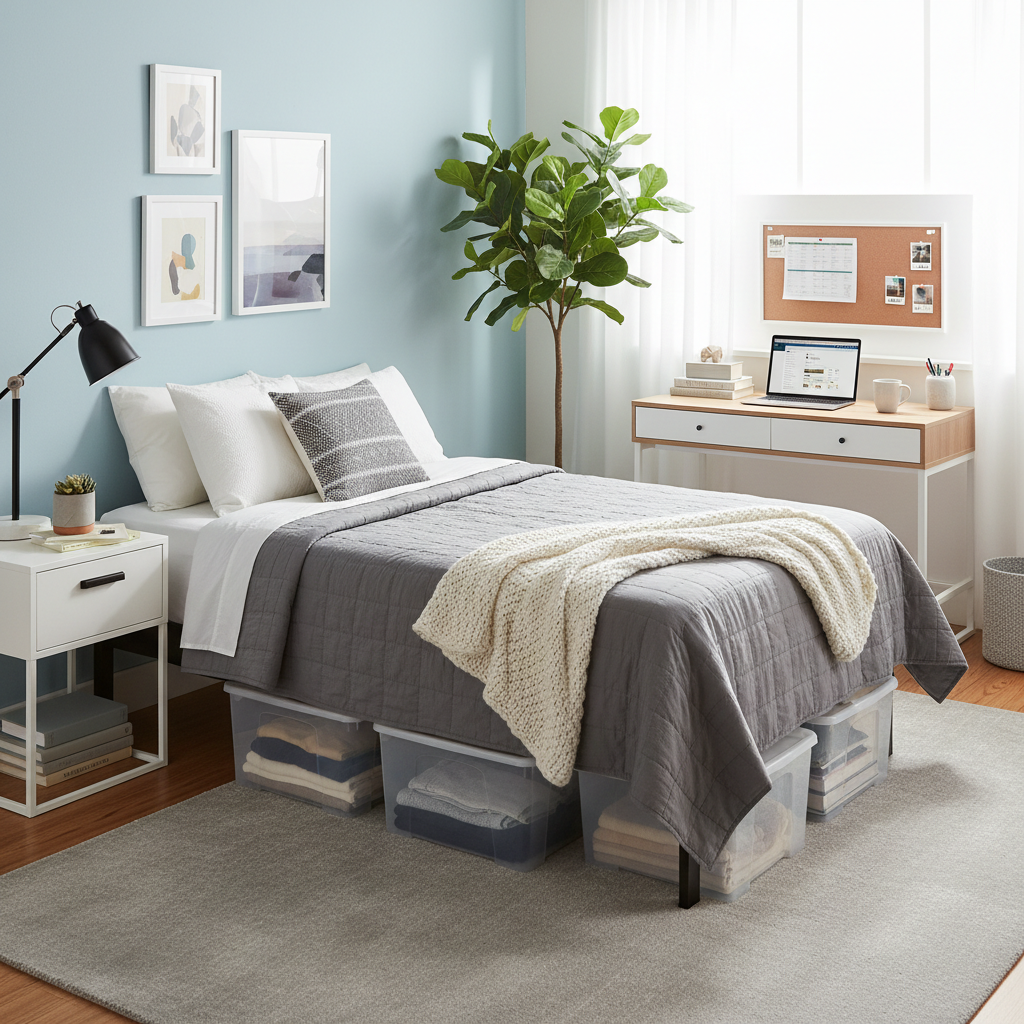
Focus on sleep quality first. Research shows students with proper sleep setups average higher GPAs than those with inadequate bedroom environments. A $40 mattress topper and properly fitting sheets make a measurable difference.
For storage, apartment closets vary wildly from spacious to barely functional. Under-bed storage containers maximize space efficiently. A bookshelf handles textbooks and personal items that used to scatter across your dorm desk.
Budget furniture options include IKEA's MALM bed frame ($179 for full size) and matching nightstand ($49). For tighter budgets, check Facebook Marketplace and thrift stores, but inspect carefully for bed bugs and structural damage. Bring a flashlight to check mattress seams and furniture joints.
Kitchen Setup Without Overspending
Apartment kitchens require actual cooking equipment, but start simple. Essential individual items include a non-stick pan set, basic utensils, personal dishes, and silverware that won't bend during use.
Split these major appliances with roommates: one microwave ($100), one coffee maker ($25-35), and one toaster ($30). This approach saves everyone money while ensuring you have functional shared equipment.

Stock food storage containers to prevent leftover disasters in your fridge. Buy cleaning basics like dish soap, sponges, all-purpose cleaner, and trash bags. These mundane supplies matter more than you expect when your parents aren't restocking them.
If you're moving items from home storage, having essentials delivered directly to your new apartment saves the hassle of transporting kitchen equipment during move-in chaos.
Bathroom Responsibilities
Dorm maintenance staff handled bathroom upkeep. Now you're responsible for stocking toilet paper, bathroom cleaner, and disinfecting supplies. Proper bathroom cleaning reduces illness transmission among roommates significantly.
Essential supplies include extra towels for laundry delays, shower curtain and liner, bath mat, basic first aid kit, and yes, a plunger. A $15 plunger prevents $150 emergency plumber calls. Learn from others' expensive mistakes.
For shared bathrooms, establish cleaning rotations early and coordinate supply purchases. Keep personal items like medications and toiletries separate, but share cleaning supplies and toilet paper costs.
Individual vs. Shared Bathroom Items
- Individual: Towels, personal care products, prescription items
- Shared: Toilet paper, cleaning supplies, basic first aid items
Living Room Furniture on a Budget
Living room furniture represents your biggest expense and savings opportunity. A decent couch costs $300-800, but splitting a $600 sectional among roommates beats individual furniture purchases.
Shop end-of-semester sales when graduating students sell quickly. May and December offer the best prices, while August and January provide better selection but higher costs.
Choose multipurpose furniture: storage ottomans provide seating and hide clutter, coffee tables with shelves organize remotes and textbooks. Skip expensive entertainment centers initially. A basic TV mount ($20-40) and streaming device ($30-50) handle entertainment needs without major furniture investment.
Add table lamps and string lights to improve harsh overhead lighting. Better lighting makes your space feel less temporary and improves daily mood.
Smart Shopping Strategies
Timing affects prices dramatically. Target's late September clearance often beats their August "back-to-school" prices. End-of-semester Facebook Marketplace sales offer the best deals when students need to sell quickly.
Buy quality used items rather than cheap new ones. A solid used desk beats a flimsy new one that wobbles within months. Prioritize essentials over aesthetics initially. You can upgrade decor later, but basic functionality matters from day one.
Money-Saving Timeline
- Best prices: May and December (students moving out)
- Best selection: August and January (peak moving seasons)
- Best clearance: Late September (post back-to-school)
For students transitioning from dorms, storing essentials locally over summer breaks eliminates the need to transport everything home and back. This approach lets you focus on acquiring just what you need for your new space without hauling items unnecessarily.
Getting your dorm room essentials organized first helps you identify what transfers to apartment living versus what you'll need to buy new. Similarly, understanding shipping options for larger items can save significant hassle during your apartment move.
Related reading
- The College Packing List That Actually Makes Sense
- Shipping to College and No Car Solutions: The Complete Guide to Getting Your Stuff to Campus
- Dorm Room Essentials Every College Student Actually Needs
Storage Scholars' moving service bundles moving and storage under one team, with movers who handle furniture such as mini-fridges, microwaves, chairs, bed frames, and couches, plus white glove or DIY packing options.
Students who are transferring schools or graduating can use Storage Scholars to ship or move their belongings to a new institution or first apartment, with a separate long-distance moving option available by quote.
Frequently Asked Questions
How much does it cost to furnish a first college apartment?
The average student spends around $1,200 setting up their first apartment. However, you can reduce this to $480-$720 by shopping secondhand, splitting major purchases with roommates, and bringing dorm items you already own. Timing purchases during August back-to-school sales and using Facebook Marketplace for furniture helps cut costs significantly without sacrificing essentials.
What's different about furnishing an apartment versus a dorm room?
Apartments require furnishing multiple rooms (bedroom, kitchen, bathroom, living room) instead of just one dorm space. You'll need full kitchen equipment, cleaning supplies, and shared living room furniture. Dorms provide furnished rooms and cleaning staff, while apartments put all responsibility on you. You'll also need to coordinate purchases with roommates to avoid duplicates and share major appliance costs.
What apartment items should roommates share versus buy individually?
Share major kitchen appliances like microwaves, coffee makers, and toasters, plus living room furniture and cleaning tools like vacuums and mops. Buy individually for bedroom furniture, bedding, personal dishes, toiletries, and towels. Create a shared spreadsheet with roommates before shopping to coordinate purchases, split costs fairly, and prevent buying duplicate items nobody needs.
What happens to apartment furniture during summer break?
Students have three main options for summer break. Some sublet their apartments and leave everything in place. Others sell furniture and rebuy next year. Out-of-state students often need storage solutions that handle larger items like couches and kitchen tables, unlike dorm storage that only required boxes. Factor storage or selling costs into your initial furnishing budget.
Set a reminder to sign up for storage!
We’ll remind you to sign up when it gets closer to your winter and summer break!
This article is part of our Dorm Room Essentials guide
You Might Also Like...

Want to hear from us about exclusive discounts and promotions?
Drop your email and we'll keep you up to date!
