
Student Storage Services
Complete Guides
Company & News
Shipping to College
College Storage for Parents
College Move-In & Move-Out
College Packing List
Dorm Storage & Organization
College Summer Storage
Dorm Room Essentials
Sports
Personal
Lifestyle
College Life
Health and Wellness
Entreprenership
Food
Business
First Time Moving Away from Home for College: What to Expect and How to Prepare
Bottom line: Moving away from home for college involves real emotional adjustment and practical logistics that most people underestimate. The key is preparing for both the feelings (homesickness is normal and temporary) and the stuff (you'll accumulate more belongings than you expect, especially during breaks).
Moving away from home for the first time sits somewhere between thrilling and terrifying. One minute you're excited about freedom, the next you're wondering if you chose a school too far from everything familiar.
You're not alone in feeling conflicted. About 42% of first-year students choose colleges within 50 miles of home, while others venture across state lines or even across the country. Understanding what you're actually getting into helps you prepare better than just hoping it works out.
This guide covers the real decision-making process, emotional realities, and practical logistics that nobody mentions until you're standing in an empty dorm room wondering what happens next.
How Far From Home Should You Go?
Distance affects everything from how often you see family to what you do with your winter coat during summer break. Students have become less interested in moving far from home over the past two decades, driven partly by cost and partly by changing attitudes about independence.
Staying within 50 miles means joining nearly half of all first-year students. The advantages: weekend trips home cost $20 in gas instead of $200 in airfare, you can bring friends home for family dinners, and you can swap seasonal clothes easily.
The downside? You might rely on that proximity instead of building independent life on campus. Some students commute home every weekend sophomore year because it's easier than navigating campus social life.
Going farther forces faster self-reliance. When you can't run home every weekend, you invest more in campus relationships and learn to handle emergencies yourself. The challenge is managing belongings during breaks and transportation costs. That $800 flight home for Thanksgiving hits differently when you're living on a ramen budget.
Neither distance is inherently better. Consider your family dynamics honestly. Do you need geographic space to establish independence, or do you thrive with a nearby support system? Some students need that safety net. Others need distance to stop calling home for every decision.
What the First Few Weeks Actually Feel Like
You'll probably experience pure excitement mixed with unexpected waves of missing home. This doesn't mean you made the wrong choice. It means you're human.
The adjustment period typically runs two to four weeks. During that time, everything from dining hall food to doing laundry feels simultaneously liberating and overwhelming. You might find yourself homesick at random moments, like figuring out where to sit in the dining hall or getting your first college cold without anyone bringing soup.

Homesickness doesn't mean you chose the wrong school. It means you have meaningful connections to family and home community, which is healthy. Even students who couldn't wait to leave home often miss familiar routines.
Staying connected with family matters, but so does giving yourself space to build your new life. Daily three-hour video calls might feel comforting initially, but they prevent you from engaging with floor activities or study groups. Try scheduling regular but bounded check-ins like Sunday evening calls instead of constant texting.
Homesickness usually peaks around week two, when novelty wears off but before you've established new routines. Push through by saying yes to social activities, even when you don't feel like it. These small connections add up.
Packing Strategy: What to Bring and What to Skip
Your packing strategy depends on distance from home and storage options. Students within driving distance can bring more initially and swap seasonal items during breaks. Those flying need to be more selective.
Essential items regardless of distance:
- Quality bedding: That cheap comforter will leave you freezing. Invest in actual warmth.
- Basic medical supplies: Thermometer, pain relievers, bandages. Campus health centers charge premium prices for basic items.
- Comfort items: Photos, a favorite mug, that stuffed animal you can't sleep without.
- Practical electronics: Power strips (dorms never have enough outlets), extension cords, multiple phone chargers.
For long-distance students, focus on items that are expensive to replace or unavailable near campus. Research what's available in your college town. That mini-fridge might cost $200 to ship but only $150 to buy locally.
Avoid overpacking clothing. You'll wear the same few outfits repeatedly anyway, and you can have family ship seasonal items later. Plus, a strategic packing approach forces you to stay on top of basic adulting skills like regular laundry.
Managing Breaks and Storage
Here's what happens during your first winter break: you realize you have way more stuff than you arrived with, and suddenly you need a plan for three weeks of empty dorm life. Most dorms require you to remove everything during extended breaks, especially perishables and electronics.
Students within driving distance can load everything into cars for break. Everyone else needs storage solutions. Some ship everything home (expensive and risky), others use local storage units, and many use services that pick up directly from dorms and return items next semester.
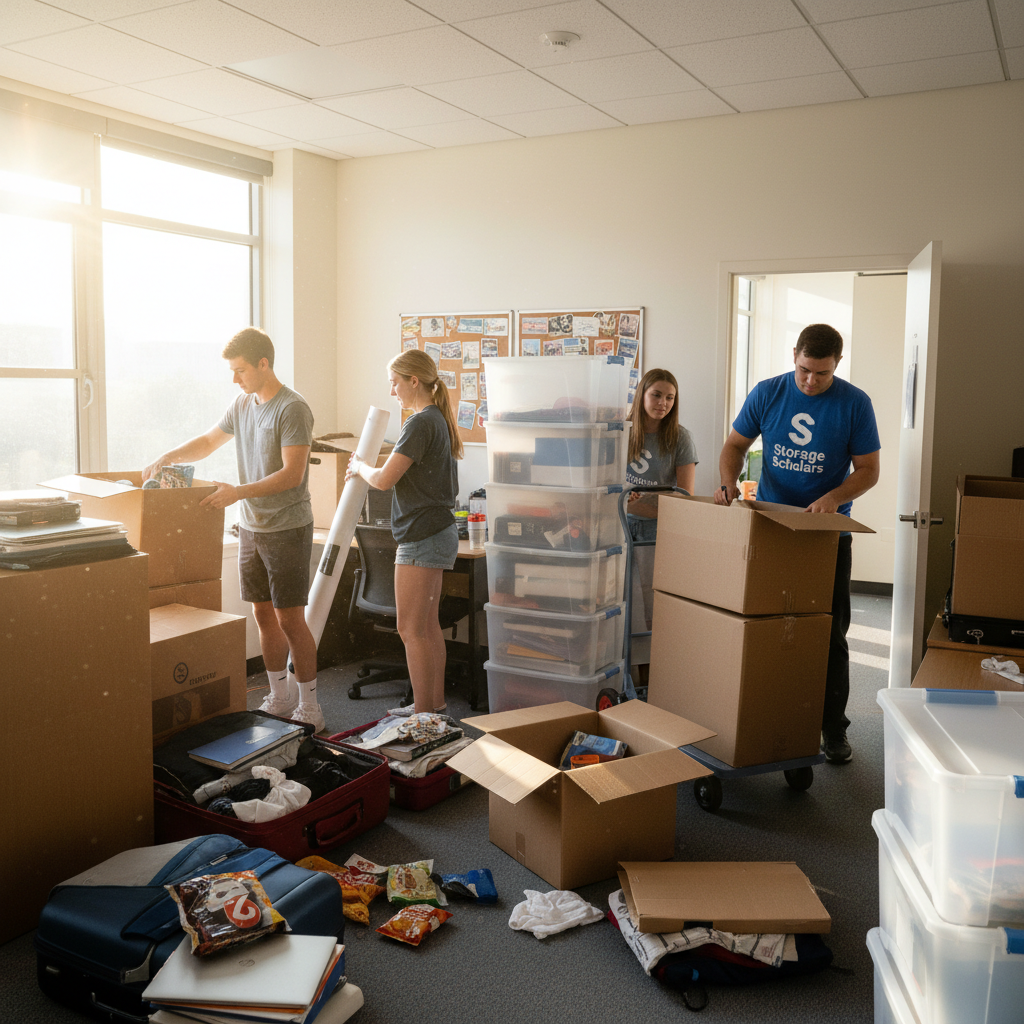
Summer storage becomes especially crucial if you're staying at your college location for internships or summer classes. Traditional storage units require you to transport everything yourself and check on your stuff periodically. Services like Storage Scholars handle pickup and delivery directly from your dorm, saving the hassle of renting a truck when you don't even have a local driver's license.
Plan storage logistics before you need them. Research options during your first month on campus, not during finals week when you're stressed about everything else. Ask older students what they do for local tricks and recommendations.
Building Independence While Staying Connected
The goal isn't to completely disconnect from home. It's to develop decision-making skills while maintaining healthy relationships. This balance looks different for everyone and requires trial and error.
Start small with independence building. Handle your own scheduling conflicts, manage your laundry routine, and figure out campus transportation before tackling bigger challenges. When problems arise, try solving them yourself first. Call home for advice if needed, but resist having parents immediately intervene.
Create new traditions that help you feel settled. Maybe Sunday morning coffee at that campus café, or Tuesday night study sessions in the library's quiet floor. These routines provide stability while everything else feels different.
Growing independence doesn't mean cutting ties with home. It means expanding your support network and developing confidence in your own judgment. Students who adjust best maintain strong family connections while actively building new relationships and skills.
Your first move away from home sets the foundation for years of college transitions. Whether you're planning future moves or figuring out this first big step, preparing emotionally and practically makes all the difference. For more specific guidance, check out our complete guide to college move-in and move-out and what to expect on your actual move-in day.
Related reading
- College Move-In and Move-Out: Your Complete Guide
- What to Expect on College Move-In Day: A First-Timer's Guide
- The College Packing List That Actually Makes Sense
Storage Scholars bundles four services into a single order: free packing supplies delivered to a student on campus, door-to-door pickup and delivery by professional licensed movers, climate-controlled storage, and the option to ship boxes home, to a first apartment or to a transfer institution.
Storage Scholars offers three pre-determined storage terms, a Summer Term of up to 120 days, a Short Term of up to 30 days, and an Abroad Term of up to 270 days, and will hold items month-to-month for students studying abroad. Custom storage terms are accommodated but these three common terms are marketed and pre-priced on the online customer portal.
Frequently Asked Questions
Is it normal to feel scared about moving away from home for college?
Completely normal. Most first-year students experience both excitement and anxiety about leaving home. The adjustment period typically lasts two to four weeks, and homesickness happens to nearly everyone at some point. Feeling nervous doesn't mean you made the wrong choice. It means you have meaningful connections to your family, which is actually healthy. Give yourself permission to feel conflicted during this transition.
How far away from home should I go for college?
There's no right answer. About 42% of first-year students attend colleges within 50 miles of home, while others go across state lines. Staying close offers easier family visits and lower costs. Going farther forces faster independence. Consider your family dynamics, finances, and how much support structure you need. Both distances work when they match your actual personality rather than some idealized college vision.
What should I bring when moving away from home for the first time?
Focus on essentials first. Bedding, basic toiletries, two weeks of clothes, school supplies, and necessary medications. Your dorm room is only about 130 to 150 square feet, so avoid overpacking. Out-of-state students can't easily run home for forgotten items, so pack more carefully upfront. Coordinate with your roommate about shared items like mini-fridges to avoid doubling up and wasting space.
What happens to my belongings during college breaks if I live far away?
This catches many first-timers off guard. If you're flying home or living hours away, you can't take everything with you during winter or summer break. You'll need a storage plan for your mini-fridge, textbooks, and seasonal clothes. Research summer storage options before spring semester ends because services fill up quickly. Some students coordinate shared storage with roommates to split costs.
Set a reminder to sign up for storage!
We’ll remind you to sign up when it gets closer to your winter and summer break!
This article is part of our College Move-In & Move-Out guide

Want to hear from us about exclusive discounts and promotions?
Drop your email and we'll keep you up to date!
