
Student Storage Services
Complete Guides
Company & News
Shipping to College
College Storage for Parents
College Move-In & Move-Out
College Packing List
Dorm Storage & Organization
College Summer Storage
Dorm Room Essentials
Sports
Personal
Lifestyle
College Life
Health and Wellness
Entreprenership
Food
Business
What to Expect on College Move-In Day: A First-Timer's Guide
Bottom line: College move-in day involves coordinated chaos with specific arrival protocols, temporary unloading zones, volunteer help systems, and 4-6 hours of hauling and unpacking. Understanding the parking flow, timing sweet spots, and emotional realities helps you navigate the day strategically rather than reactively.
Move-in day transforms every college campus into a temporary logistics operation. Parking lots fill with families hauling mini-fridges and storage bins while student volunteers direct traffic and manage unloading zones. Here's exactly what happens from campus arrival to settling into your dorm room.
Campus Arrival and Check-In Process
When you arrive on campus, follow signs to your specific residence hall rather than general "move-in" directions. GPS often malfunctions due to temporary road closures, so screenshot your building's address beforehand.
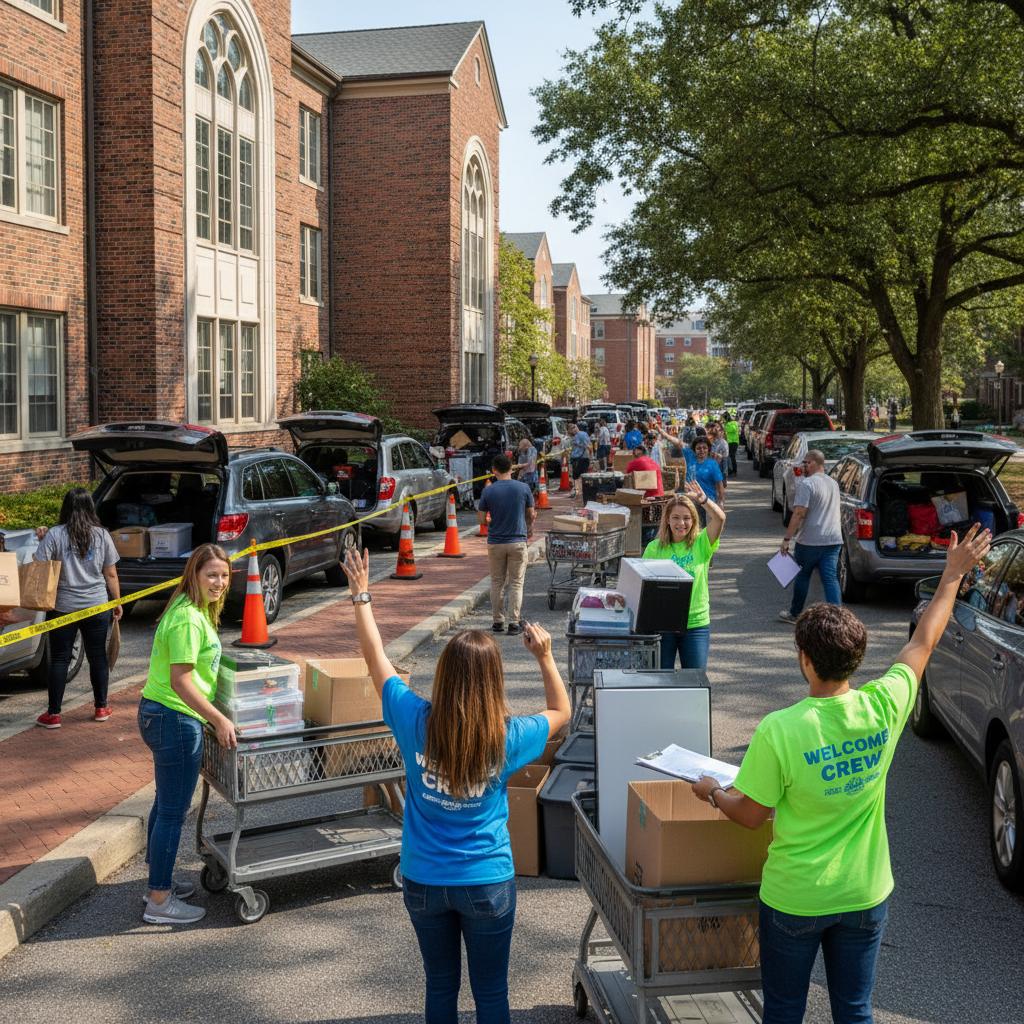
Universities deploy hundreds of student volunteers in matching t-shirts who direct traffic at major intersections. At larger schools like UT Austin, over 500 volunteers coordinate the process across multiple residence areas.
Check-in happens at folding tables outside buildings or in main lobbies. You'll show student ID, receive your room key in a manila envelope with welcome materials, and get parking instructions. The actual check-in takes under five minutes.
Many schools now offer move-in apps showing real-time parking availability and estimated wait times for each residence hall. Download yours if available.
Parking Strategy and Unloading Zones
Parking creates the biggest bottleneck on move-in day. Most families spend 20+ minutes finding unloading spots, with peak times extending this to 45+ minutes.
Schools designate temporary unloading zones directly in front of residence halls, typically converted fire lanes or visitor spots. These operate on honor systems with 15-20 minute limits. The process works like this:
- Pull into unloading zone
- Quickly transfer everything to carts or sidewalk
- Move your car to regular parking
- Return to start hauling items upstairs
Don't set up unpacking operations in unloading zones while other families wait. Dump items onto carts, designate someone to guard the pile, and immediately relocate your vehicle.
Timing matters significantly. Arrive between 8:00-9:30 AM (before crowds) or after 3:30 PM (when morning rush clears). Mid-morning through early afternoon creates the most chaotic conditions.
If your school assigns time slots, stick to your window. These systems prevent residence halls from becoming overcrowded with families competing for elevator access.
Moving Your Belongings
Student volunteers will offer cart assistance and know efficient routes through buildings. Accept their help - they understand building layouts and elevator schedules.
Bring your own cart if possible. Campus carts get claimed quickly, and personal carts let you work at your own pace without waiting for available equipment.
Elevator access varies dramatically by building age and design. Newer residence halls often have multiple elevators with move-in protocols, while older buildings might have one slow elevator serving 200+ students. Expect 10-15 minute waits during peak periods.
Most families complete physical unloading within 45-60 minutes, making 4-6 trips between car and room depending on belongings volume and cart efficiency.
Consider shipping services for bulky items like comforters and winter clothes directly to your dorm. This reduces move-in day hauling and minimizes time spent in crowded unloading zones.
Room Setup and Roommate Coordination
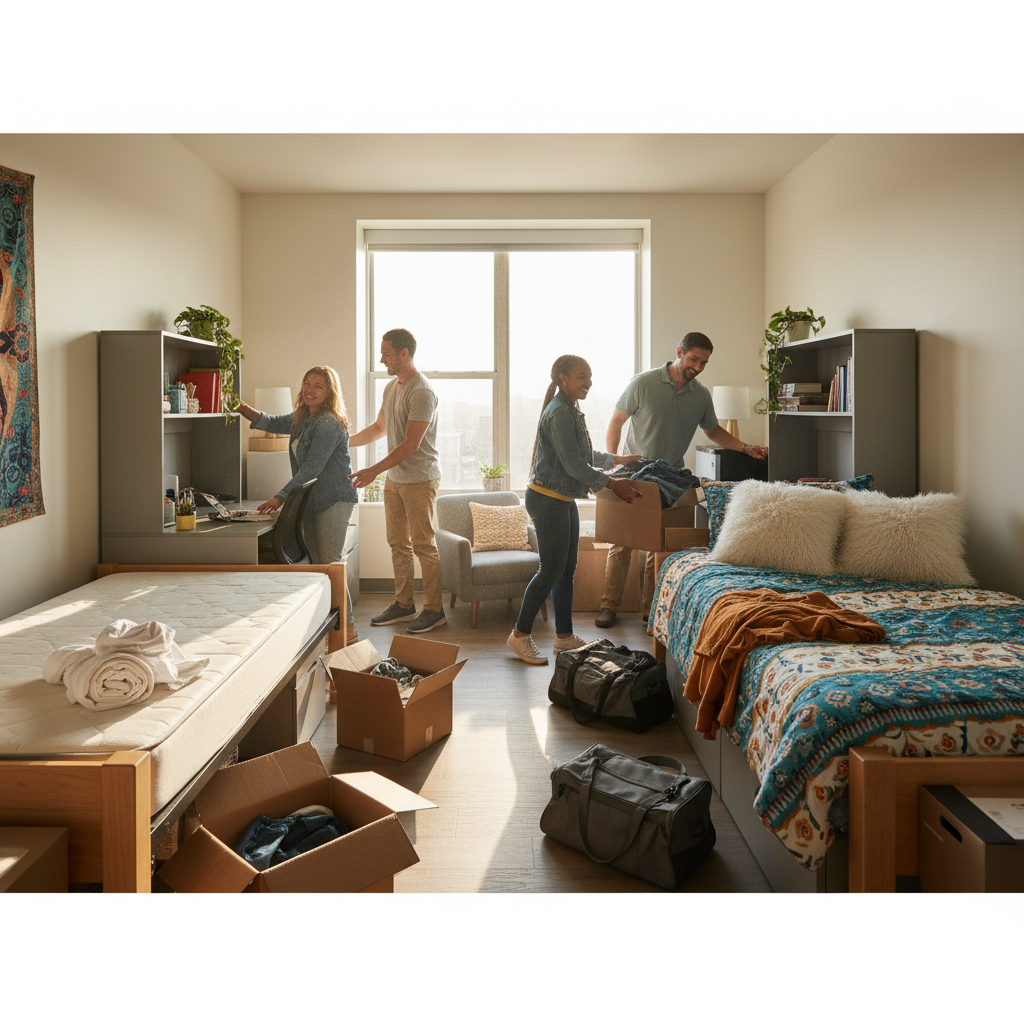
Dorm rooms arrive completely empty except for basic furniture: extra-long twin beds, desks, desk chairs, and small dressers or wardrobes. Everything else requires your supplies.
If your roommate hasn't arrived, avoid claiming the "better" side of the room. Many roommate conflicts begin with move-in day territorial disputes. Wait for the conversation or organize your boxes without claiming specific areas.
When connecting with your roommate, address major decisions first:
- Bed selection and furniture arrangement
- Shared items like microwaves or mini-fridges
- Room layout preferences
Most residence halls allow furniture rearrangement as long as you restore original positions at year-end.
Common room issues include beds needing height adjustment, missing furniture, broken chairs, or temperature problems. Report these to your RA immediately rather than waiting until maintenance backlogs develop later in the week.
Unpacking and decorating typically takes 2-6 hours depending on belongings volume and organizational approach. Some families complete full room makeovers while others focus on basic functionality and save decorating for later.
Essential First-Day Setup
Prioritize these items for immediate functionality:
- Bedding and pillows for sleeping
- Basic toiletries and towels
- Power strips and phone chargers
- Snacks and water bottles
- Important documents and medications
Managing Emotional Challenges
Move-in day often proves more emotionally intense than expected. Feeling overwhelmed by chaos, anxious about roommate meetings, or panicked about forgotten items reflects normal responses to major life transitions.
Plan your family goodbye rather than letting it happen spontaneously. Some families prefer quick farewells after unloading, while others complete room setup together before formal goodbyes. Consider your family dynamics when deciding timing.
Residence halls typically clear out significantly by early evening. The intense midday chaos gives way to calmer atmospheres where you can navigate hallways without dodging cart traffic.
Evening activities vary by school. Some residence halls organize floor meetings or social events, while others leave first nights unstructured. Don't feel pressured into immediate socializing if you're feeling drained.
Remember that confident-looking students down the hall likely feel just as nervous about starting college. Everyone navigates the same adjustment experience, even if they don't show it openly.
For additional preparation strategies, check out our guides on moving away from home for the first time and parent perspectives on freshman move-in. You can also review our complete college move-in and move-out guide for comprehensive planning information.
Related reading
- College Move-In and Move-Out: Your Complete Guide
- First Time Moving Away from Home for College: What to Expect and How to Prepare
- Complete Parent Guide to Freshman Move-In Day
Storage Scholars' moving service bundles moving and storage under one team, with movers who handle furniture such as mini-fridges, microwaves, chairs, bed frames, and couches, plus white glove or DIY packing options.
Frequently Asked Questions
How long does college move-in day typically take?
Most students complete the entire move-in process in 3 to 5 hours, from arrival to having everything unpacked. The unloading itself usually takes 30 to 45 minutes, but can stretch longer during peak times when elevators get busy. Setup and organizing your room takes the bulk of the time. Arriving during off-peak hours (early morning or late afternoon) can speed things up significantly.
What happens when I first arrive on move-in day?
You'll encounter directed traffic with volunteers guiding you to your residence hall. Check-in happens at a table outside your building where you'll show ID and receive your room key and welcome packet. The process takes about five minutes. Staff will direct you to temporary unloading zones near your dorm entrance. Volunteers, usually orientation leaders, will be available to help carry boxes.
Should I arrive early or late on move-in day?
Early morning (8 to 9 AM) and late afternoon (after 3 PM) slots have less congestion and shorter wait times. Mid-morning is typically the busiest period when parking becomes challenging and cart availability runs low. Check your assigned move-in time window if your school uses scheduled slots. Arriving outside peak hours gives you easier parking access and more volunteer attention.
What should I do if my roommate arrives before me?
Don't stress about losing the better bed or desk space. Most roommates discuss preferences beforehand through text or wait to decide together in person. If you arrive first, avoid claiming everything before your roommate shows up. Communication prevents awkwardness. Focus on unpacking your personal items and save layout decisions for when you can talk through the setup together and compromise fairly.
Set a reminder to sign up for storage!
We’ll remind you to sign up when it gets closer to your winter and summer break!
This article is part of our College Move-In & Move-Out guide

Want to hear from us about exclusive discounts and promotions?
Drop your email and we'll keep you up to date!
