
Student Storage Services
Complete Guides
Company & News
Shipping to College
College Storage for Parents
College Move-In & Move-Out
College Packing List
Dorm Storage & Organization
College Summer Storage
Dorm Room Essentials
Sports
Personal
Lifestyle
College Life
Health and Wellness
Entreprenership
Food
Business
Gap Year Storage Guide for College Students Taking Time Off
Bottom line: Gap year storage costs 3-4x more than summer storage because you're paying for 6-12 months instead of 3. Before storing anything, calculate whether each item costs more to store than replace.
Taking a gap year means stepping away from campus for an extended period, but your belongings don't automatically need to follow you into storage. The longer timeline completely changes the math on what's worth storing versus replacing when you return.
Most gap year students face 6-12 month storage periods with uncertain return dates. You might be volunteering abroad, working to save money, or dealing with personal circumstances that shifted your academic timeline. Whatever your reason, the extended storage period requires different planning than standard summer storage.
Why Gap Year Storage Costs So Much More
Summer storage typically runs $150-400 total for 3-4 months. Gap year storage for the same items costs $450-1,200+ because you're paying monthly rates for much longer periods. A $50/month storage unit becomes $600 over 12 months.
The uncertainty makes planning harder. Unlike college summer storage with clear academic calendar dates, your gap year timeline might shift as opportunities evolve. Storage providers need to accommodate longer holds and potentially unusual pickup or delivery dates.
This extended timeline affects more than just total costs. You need climate-controlled storage for longer periods to prevent damage to electronics and furniture. You also lose the economies of scale that make summer storage affordable, like coordinating with other students' move-out schedules.
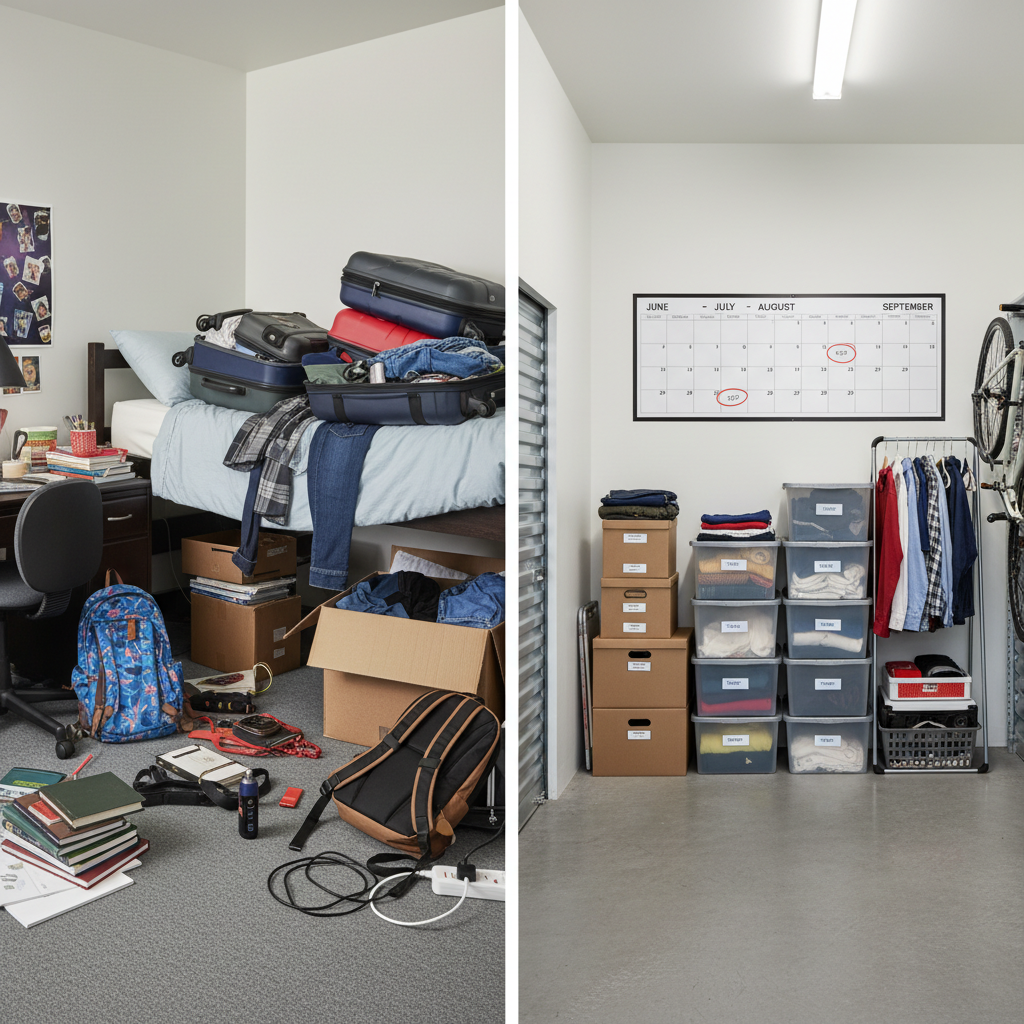
The Storage vs. Replacement Decision
Calculate the storage cost versus replacement cost for every item. If storing a $100 item costs $15 monthly for 10 months, you're spending $150 to keep something you could replace for less money.
Items Worth Storing Long-Term
- Appliances like mini-fridges and microwaves ($200-400 to replace)
- Quality desk chairs and ergonomic furniture ($250-500)
- Gaming consoles, monitors, and expensive tech ($300+)
- Musical instruments and specialized sports equipment
- Textbooks for your major that you'll use again
- Memory foam mattress toppers and high-quality bedding
Items to Consider Replacing Instead
- Cheap decorations and wall art under $25
- Basic kitchen supplies and worn-out small appliances
- Furniture from Facebook Marketplace under $75
- General education textbooks you won't need again
- Clothes you haven't worn in over a year
The replacement test is straightforward: if total storage costs exceed 75% of replacement cost, sell or donate the item before your gap year. You'll often come out ahead financially and have newer items when you return to campus.
Gap Year Storage Timeline and Planning
Start planning 6-8 weeks before your departure. Gap year storage requires more coordination than summer arrangements because you're working around non-standard academic timelines and potentially international travel.
Your planning schedule:
- 8 weeks before: Research storage options and get quotes
- 6 weeks before: Calculate storage vs. replacement costs
- 4 weeks before: Book storage and schedule pickup
- 2 weeks before: Pack items for storage, sell others
- 1 week before: Confirm all arrangements
When contacting storage providers, explain your gap year situation upfront. Ask about flexibility if your timeline changes and whether they can accommodate mid-semester pickup or delivery dates. Some companies handle non-standard schedules better than others.

Storage Options That Work for Extended Periods
Self-storage units give you control and access but require handling transportation yourself. This works if you have reliable vehicle access both when leaving and returning, but becomes complicated if you're traveling internationally or won't have a car available.
Full-service storage companies handle pickup and delivery, which makes sense when you're returning at odd times or don't have transportation arranged. These services cost more upfront but eliminate the logistics of coordinating truck rentals twice.
Climate-controlled storage becomes essential for periods over six months. Non-climate-controlled units might work for summer storage, but extended exposure can damage electronics, warp furniture, and create moisture problems that cost more than the savings.
Some students use hybrid approaches, like storing large furniture with a full-service company while keeping personal items in a small self-storage unit for occasional access during their gap year.
Managing Gap Year Storage Costs
Consider splitting storage space with another gap year student from your school. A 10x10 unit shared between two people cuts costs significantly while providing plenty of space for typical dorm room belongings.
Negotiate with providers about uncertain end dates. Many storage companies prefer longer commitments and might offer better monthly rates for 6+ month arrangements, especially when you're upfront about timeline uncertainty.
Factor storage costs into your overall gap year budget from the beginning. If you're taking time off to save money through work, spending $800+ on storage might not align with your financial goals. For unpaid internships or volunteer programs, storage becomes an even bigger budget consideration.
Remember that storage isn't your only option. Some students move belongings home for their gap year or sell most items and start fresh when returning to campus. The right choice depends on your specific situation, budget, and gap year activities.
Taking a gap year affects more than just your academic timeline. Proper storage planning ensures your belongings are handled appropriately while you focus on your gap year goals. Consider all options carefully, including whether storage makes financial sense compared to replacement costs when you return to campus.
Related reading
- College Summer Storage: The Complete Guide for Students
- Dorm Storage and Organization: The Complete Guide to Making Your Tiny Room Work
- College Storage for Parents: Everything You Need to Know About Managing Your Student's Stuff
Storage timing does not have to match the standard school calendar. Students can choose Summer storage (up to 120 days), Short Term storage (up to 30 days) for winter break or a quick gap, or Abroad storage (up to 270 days) for a semester overseas; after the initial 4-month minimum, abroad storage bills month-to-month until the student returns. These storage terms are most common for students and are advertised bundles students can select from; however, Storage Scholars offers custom storage terms if the student doesn't fall into the three common buckets. Storage Scholars also has complimentary moving dates timed to the start and end of each semester specifically to accommodate students leaving for or returning from study abroad.
Storage Scholars publishes a cost comparison showing its 2026 average rate of $172 per month against a total DIY cost of $3,684 or more once packing supplies, truck rentals, a self-storage unit, and incidental costs like flights and lost work time are added up.
Storage Scholars' service holds student belongings in a secure, climate-controlled facility with digital inventory tracking, priced $14 to $40 per item per month depending on size, with a 4-month minimum term.
Frequently Asked Questions
How much does storing belongings during a gap year typically cost?
Gap year storage typically costs $450-$900 for 8-10 boxes over nine months, depending on your location and whether you need climate control. This is significantly more than summer storage but often cheaper than replacing furniture, textbooks, and dorm essentials when you return. Calculate your belongings' replacement value against storage costs to determine if storing makes financial sense for your situation.
What should I store versus sell before taking a gap year?
Store expensive items like mini-fridges, quality furniture, and textbooks for your major that would cost $200+ to replace. Sell or donate cheap decorations, worn clothes, and basic supplies that cost less to replace than to store for 6-12 months. Run the replacement test on each item. If storing something for your gap year costs more than buying it new later, let it go.
When should I book storage if I'm taking a gap year?
Book gap year storage 6-8 weeks before leaving campus. This gives you more lead time than summer storage because you need to coordinate longer commitments and potentially unusual pickup dates. Contact providers early to discuss your specific timeline and confirm they handle mid-year pickups. Finalize your booking at least four weeks before you need pickup service.
Can I access my stored items during my gap year if plans change?
Most storage providers offer mid-year access, but many charge access fees that add up over long periods. Storage works best for items you won't need during your gap year. Keep important documents, gap year activity equipment, and clothing you might need with you instead of storing them. Ask about access policies and fees before booking extended storage.
Set a reminder to sign up for storage!
We’ll remind you to sign up when it gets closer to your winter and summer break!
This article is part of our College Summer Storage guide

Want to hear from us about exclusive discounts and promotions?
Drop your email and we'll keep you up to date!
