
Complete Guides
Company & News
Shipping to College
College Storage for Parents
College Move-In & Move-Out
College Packing List
Dorm Storage & Organization
College Summer Storage
Dorm Room Essentials
Sports
Personal
Lifestyle
College Life
Health and Wellness
Entreprenership
Food
Business
How to Calculate Linear Feet for College Moving and Storage

Moving out of your dorm room or apartment can feel overwhelming, especially when storage companies start talking about “linear feet.” Don’t worry – calculating linear feet is actually one of the simplest measurements you’ll encounter during your college move.
Bottom line: A linear foot is just 12 inches measured in a straight line. If your desk is 4 feet long, that’s exactly 4 linear feet – no complicated math required.
Understanding linear feet helps you estimate storage space, compare moving quotes, and pack efficiently for summer break or semester transitions. Whether you’re storing textbooks, furniture, or that mini-fridge from your dorm, knowing how to measure linear feet puts you in control of your moving costs.
What is a linear foot and why does it matter
A linear foot measures length in one direction only – it’s simply 12 inches of straight-line distance. Think of it like measuring how long your bed is from head to foot, or how wide your bookshelf stretches across the wall.
Linear feet differ from square feet (which measure area) and cubic feet (which measure volume). When college storage companies quote prices, they often use linear feet because it’s the most straightforward way to measure how much space your belongings will occupy in a moving truck or storage unit. Understanding these measurements is similar to determining what size apartment you need when planning your living space.

For college students, this measurement becomes crucial during move-out day. Your dresser might be 3 feet wide, your desk 4 feet long, and your bookshelf 2 feet across – that’s 9 linear feet of furniture right there.
Pro tip: Linear feet only measure length, so a thin poster and a thick mattress that are both 6 feet long each count as 6 linear feet, even though they take up very different amounts of space.
How to measure linear feet step by step
Measuring linear feet requires just a tape measure and basic addition. Start by gathering all the items you need to measure – this works best when everything is accessible and you can measure without moving heavy furniture multiple times.
First, extend your tape measure along the longest dimension of each item. For a desk, measure from one end to the other. For a bookshelf, measure its width if it’s lying flat or its height if it’s standing upright. Record each measurement in inches initially.
Next, convert inches to feet by dividing by 12. If your mini-fridge measures 36 inches wide, that equals 3 linear feet (36 ÷ 12 = 3). If you get a decimal, like 2.5 feet, that’s perfectly fine – just keep the decimal for accuracy.
Finally, add all your measurements together. Your desk (4 feet) plus dresser (3 feet) plus bookshelf (2.5 feet) equals 9.5 linear feet total. This sum helps you estimate storage space and compare quotes from different moving companies. Using a rental truck fuel calculator can also help you budget for transportation costs once you know your total load.
Smart strategy: Measure everything before calling storage companies. Having your total linear feet ready speeds up the quote process and helps you negotiate better rates.
Common college items and their linear foot measurements
Understanding typical measurements for dorm and apartment items helps you estimate space without measuring everything individually. Most college furniture falls into predictable size ranges that make planning easier.
Standard dorm furniture typically measures: twin beds (6-7 feet long), desk chairs (2-3 feet wide), mini-fridges (2-3 feet wide), and microwaves (1-2 feet wide). Larger items like futons usually measure 6-8 feet long, while bookcases range from 2-4 feet wide depending on size.
Personal belongings add up quickly too. A typical wardrobe of hanging clothes measures about 3-4 linear feet when compressed, while boxes of books, electronics, and personal items usually measure 1-2 feet each when lined up.
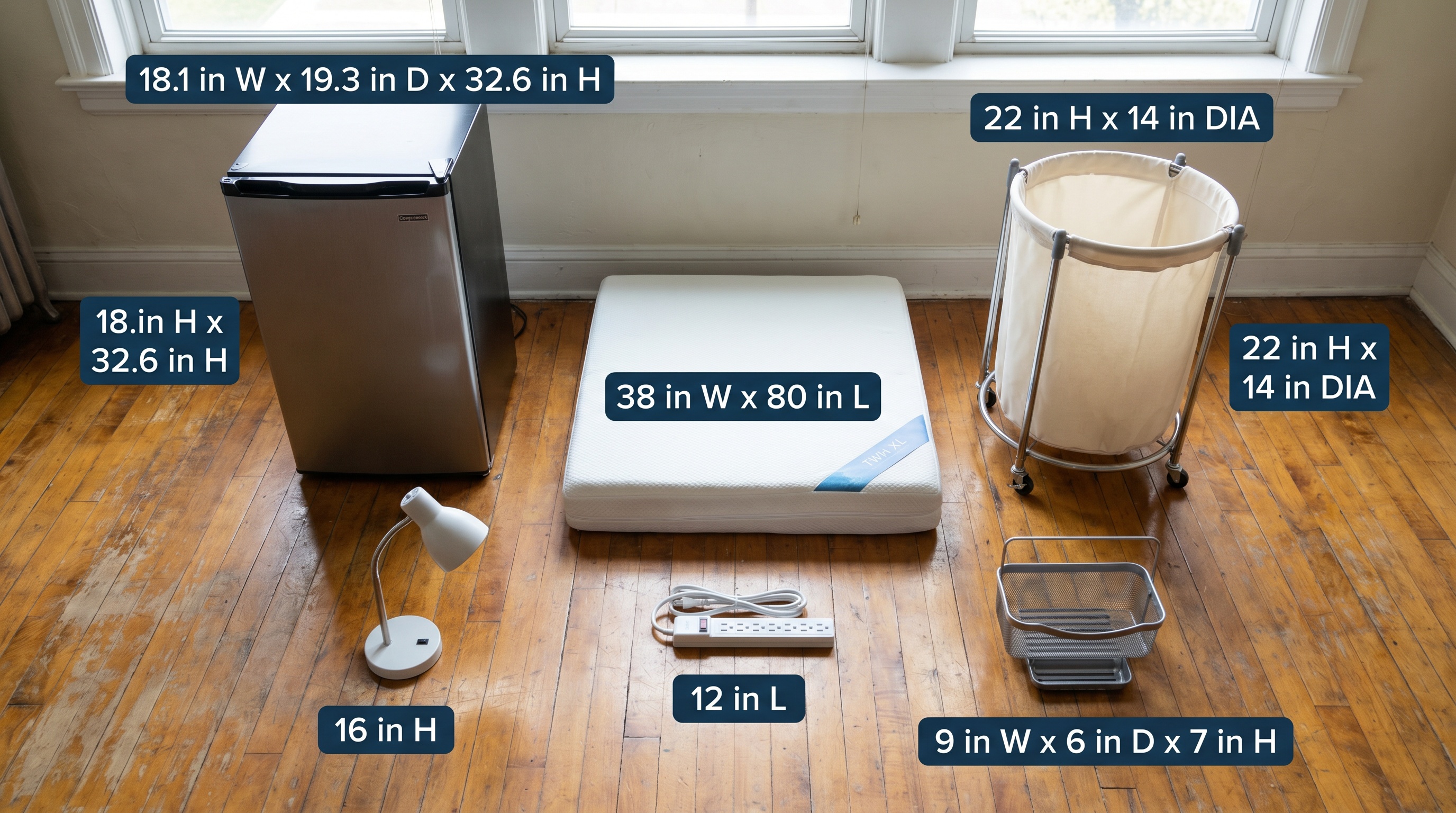
Keep in mind that heavily furnished apartments or rooms with lots of storage containers will need more space than these estimates suggest. Greek house rooms, off-campus apartments, and rooms shared between multiple students often require 20-30% more linear feet than basic dorm setups. If you’re considering different housing options, check out this guide on townhouse vs. condo vs. apartment to understand space differences.
Estimating storage space for your college move
Most college students need between 10-25 linear feet of storage space, depending on their living situation and how much stuff they’ve accumulated. A typical dorm room with basic furniture and belongings usually requires 10-15 linear feet, while a furnished apartment might need 20-25 linear feet.
Here’s a quick estimation guide: studio or single dorm room (10-12 linear feet), shared dorm room per person (8-10 linear feet), one-bedroom apartment (15-20 linear feet), and shared apartment per person (12-15 linear feet). These estimates assume typical college furniture and belongings.
Single dorm
Estimated Linear Feet: 10-12 feet
Typical Items: Bed, desk, dresser, personal items
Shared dorm (per person)
Estimated Linear Feet: 8-10 feet
Typical Items: Half the furniture, personal belongings
Studio apartment
Estimated Linear Feet: 15-18 feet
Typical Items: Full furniture set, kitchen items
One-bedroom apartment
Estimated Linear Feet: 20-25 feet
Typical Items: Complete furniture, appliances, storage
Remember that these are starting estimates. Students with extensive book collections, multiple electronics, or extra furniture should add 20-30% to these numbers. Similarly, minimalist students who only keep essentials might need 10-20% less space.
When working with student storage services, having a realistic linear foot estimate helps you get accurate quotes and avoid surprises on moving day. Many college-focused storage companies can adjust your space allocation if you end up needing slightly more or less room than originally estimated. The convenience of door-to-door pickup and delivery services makes the process seamless, eliminating the need to transport heavy items yourself. To stay organized throughout the process, use a comprehensive moving checklist to ensure you don’t miss any important steps.
Calculating linear feet doesn’t have to be stressful – it’s just measuring length and adding numbers together. With these guidelines, you’ll confidently navigate storage quotes and make informed decisions about your college move, whether you’re heading home for summer break or transitioning between semesters. Don’t forget to complete a postal change of address to ensure your mail follows you to your new location.
Frequently Asked Questions
What is the difference between linear feet and square feet?
Linear feet measure length in one direction only (12 inches in a straight line), while square feet measure area by multiplying length times width. For example, a 4-foot desk is 4 linear feet, but if it's 2 feet deep, it covers 8 square feet of floor space. Storage companies often use linear feet because it's simpler for estimating truck space.
How do I convert inches to linear feet for my college items?
Simply divide the total inches by 12 to get linear feet. For example, if your mini-fridge is 36 inches wide, that equals 3 linear feet (36 ÷ 12 = 3). If you get a decimal like 2.5 feet, keep it for accuracy when adding up all your items' measurements.
How many linear feet do most college students need for storage?
Most college students need between 10-25 linear feet of storage space. A typical dorm room requires 10-15 linear feet, while a furnished apartment might need 20-25 linear feet. This includes standard furniture like beds, desks, dressers, and personal belongings like clothes and books.
What common mistakes should I avoid when measuring linear feet?
The most common mistake is confusing linear feet with square or cubic feet. Remember that linear feet only measure the longest dimension of an item - a thin poster and thick mattress that are both 6 feet long each count as 6 linear feet. Also, always measure the longest side of furniture, not the width or height unless that's the longest dimension.
Set a reminder to sign up for storage!
We’ll remind you to sign up when it gets closer to your winter and summer break!
This article is part of our College Move-In & Move-Out guide
You Might Also Like...

Want to hear from us about exclusive discounts and promotions?
Drop your email and we'll keep you up to date!
