
Complete Guides
Company & News
Shipping to College
College Storage for Parents
College Move-In & Move-Out
College Packing List
Dorm Storage & Organization
College Summer Storage
Dorm Room Essentials
Sports
Personal
Lifestyle
College Life
Health and Wellness
Entreprenership
Food
Business
Complete Guide to Propane Tanks for College Students and Dorm Life
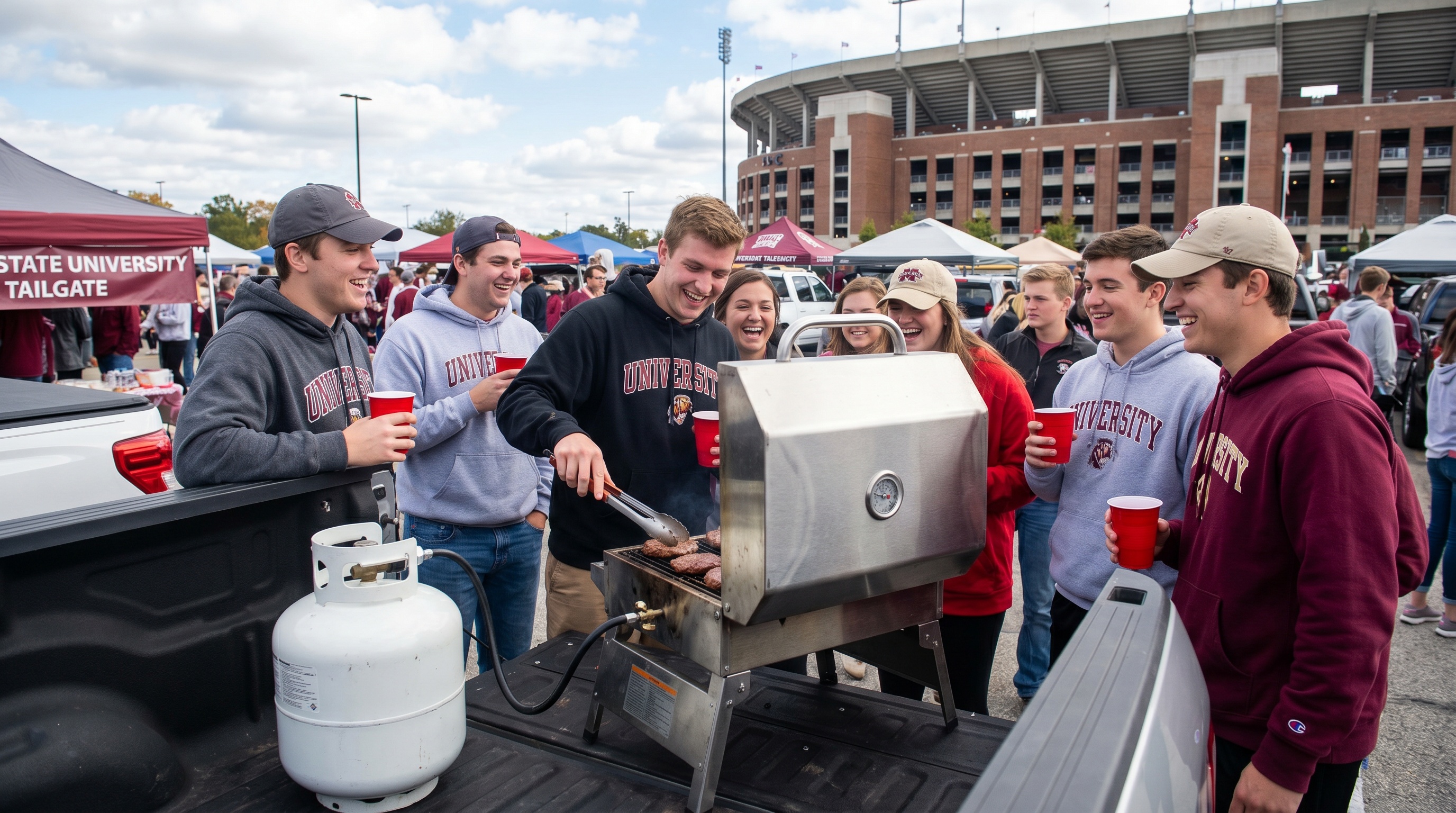
Whether you’re planning epic tailgate parties, setting up a dorm-friendly grill, or need portable heating for those chilly campus nights, choosing the right propane tank can make all the difference in your college experience. From compact 5-pound tanks perfect for small grills to larger options for group gatherings, understanding your options helps you make smart decisions that fit both your budget and your lifestyle.
Bottom line: Most college students need either a 20-pound tank ($59.95) for regular grilling or a 5-pound tank ($78.95) for portable camping stoves and small tailgate setups.
Understanding propane tank sizes for student life
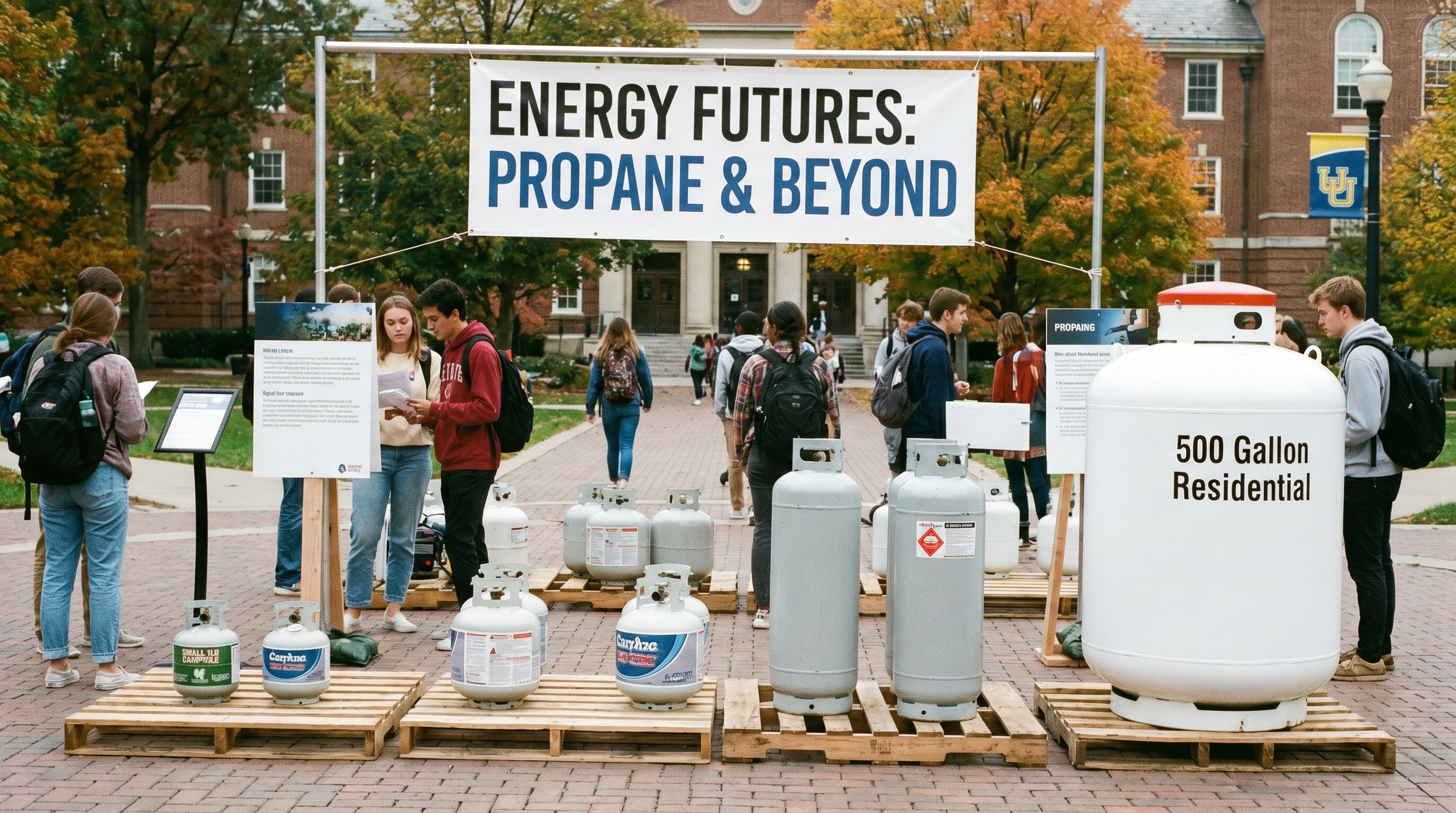
College life demands flexibility, and propane tanks come in various sizes to match your specific needs. The most popular options for students range from compact 5-pound cylinders to standard 20-pound tanks that power most residential grills.
A 5-pound tank holds about 1 gallon of propane and weighs roughly 14 pounds when full. These work perfectly for small camping stoves, portable grills, and quick tailgate setups. They’re easy to transport in your car and won’t break your budget at around $78.95.
The 20-pound tank represents the sweet spot for most college students. Holding approximately 4.7 gallons of propane, it provides enough fuel for multiple grilling sessions while remaining manageable to transport. At $59.95, it offers excellent value for regular use.
Smart strategy: Calculate your propane needs based on usage frequency - occasional tailgaters should stick with 5-pound tanks, while regular grillers benefit from 20-pound options.
Choosing between steel and composite materials
Traditional steel tanks dominate the market due to their affordability and durability. Steel propane cylinders feature powder-coat paint for rust prevention and easy-to-grip handles for improved portability. They’re built to withstand the typical wear and tear of college life, from dorm moves to weekend camping trips.
Composite tanks offer a premium alternative that’s becoming increasingly popular among students. These lightweight options, like the 11-pound composite tank at $159.99, weigh significantly less than their steel counterparts while holding the same amount of propane. The reduced weight makes them ideal for students who frequently transport their grilling equipment.
The trade-off comes down to budget versus convenience. Steel tanks provide reliable performance at lower prices, while composite options offer enhanced portability for students who prioritize easy transport over initial cost savings.
Safety considerations for campus use
Campus housing policies vary significantly regarding propane storage and usage. Before purchasing any propane equipment, check with your residence hall advisor or campus housing office about specific regulations. Many colleges restrict propane use in dormitories but allow it in designated outdoor areas.
Proper storage becomes crucial when living in shared spaces. Never store propane tanks indoors, including basements, garages, or dorm rooms. Tanks should remain upright in well-ventilated outdoor areas, away from heat sources and direct sunlight. This protects both you and your roommates while complying with safety regulations.
Transportation safety matters equally, especially during move-in and move-out periods. Secure tanks upright in your vehicle’s cargo area, never in the passenger compartment. For pickup trucks, you can transport up to 1,000 pounds of propane in the bed, while enclosed vehicles limit you to four tanks with a maximum of 90 pounds total. If you’re planning to rent a trailer for moving larger equipment, understanding what you should know about U-Haul trailers can help ensure safe transportation of your propane tanks and other college essentials.
Pro tip: Always transport propane tanks with valves closed and protective caps in place to prevent accidental leaks during campus moves.
Budget-friendly buying and refilling strategies
Smart propane shopping starts with understanding the difference between purchasing empty tanks and refilling existing ones. New empty tanks require an initial investment but offer long-term value through refilling services. Many students find that investing in a quality tank pays off during their college years, especially when planning for seasonal moves and storage needs.
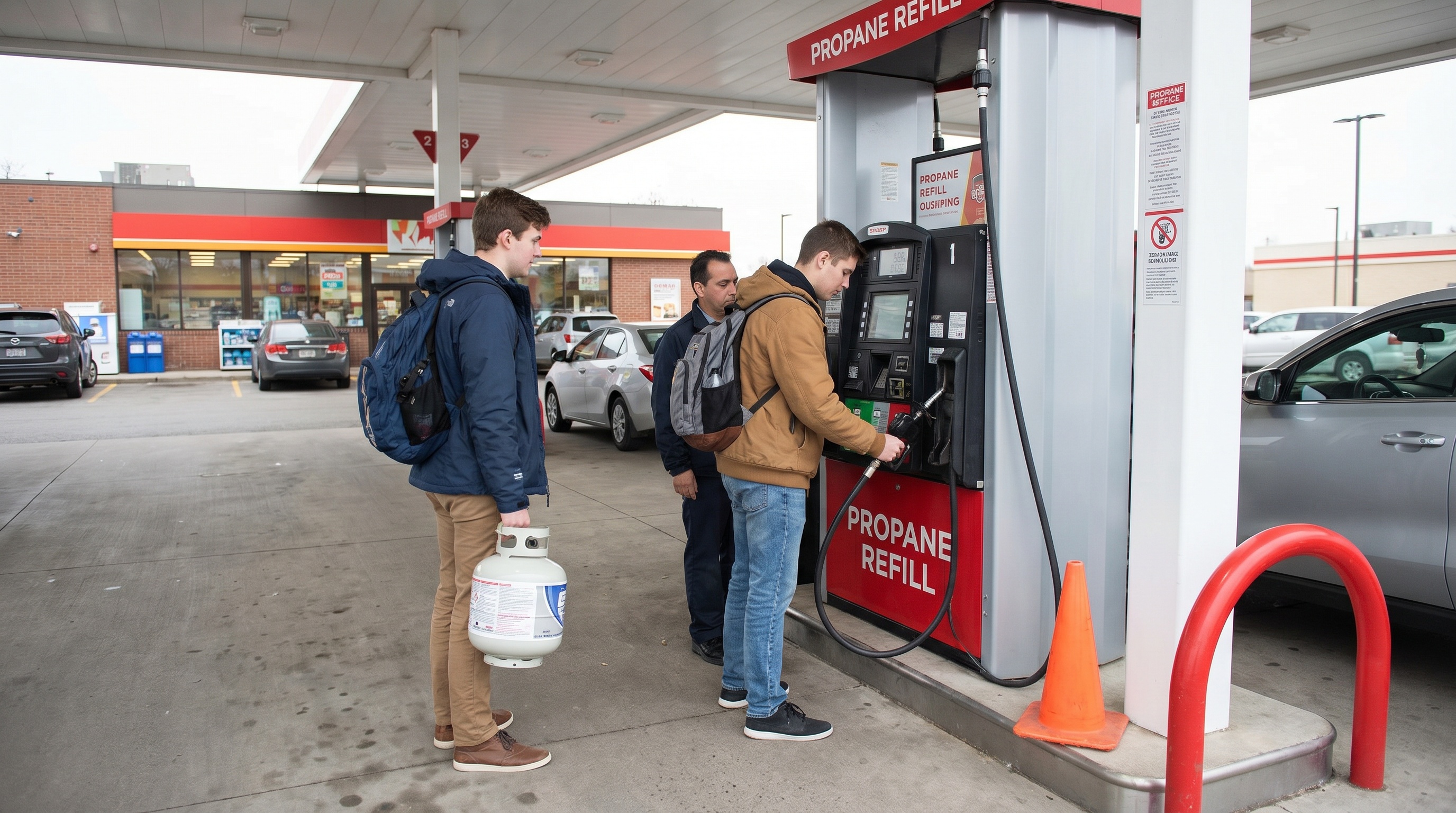
Refilling consistently costs less than tank exchanges, typically saving 20-30% per fill. Many locations offer propane refills from 7 AM to 7 PM on weekdays, with extended Friday hours until 8 PM and weekend availability. This flexibility works well with student schedules and weekend activities.
Consider bulk purchasing for group living situations. When splitting costs with roommates or fraternity brothers, larger tanks like the 30-pound option ($79.99) or 40-pound tank ($109.99) provide better per-gallon value for frequent group grilling sessions. Just like coordinating packing supplies from U-Haul for move-in day, planning your propane needs with roommates can lead to significant savings.
5-lb
Capacity: 1 gallon
Empty Weight: 10 lbs
Price: $78.95
Best For: Camping, small grills
20-lb
Capacity: 4.7 gallons
Empty Weight: 17.8 lbs
Price: $59.95
Best For: Regular grilling
30-lb
Capacity: 6.8 gallons
Empty Weight: 25 lbs
Price: $79.99
Best For: Group events
40-lb
Capacity: 9.2 gallons
Empty Weight: 32 lbs
Price: $109.99
Best For: Heavy usage
Finding the right propane tank enhances your college experience while staying within budget constraints. Whether you’re grilling for study break barbecues or powering portable heaters for outdoor study sessions, the right equipment makes campus life more enjoyable. When preparing for your semester, consider adding propane tanks to your list of essential packing supplies alongside boxes and protective materials. Remember to prioritize safety, check campus policies, and choose sizes that match your actual usage patterns rather than overbuying for occasional use. If you need to transport larger equipment during moves, familiarizing yourself with U-Haul trailer options ensures you have the right vehicle capacity for all your college gear.
Frequently Asked Questions
What size propane tank do I need for college grilling?
For most college students, a 20-pound propane tank ($59.95) is ideal for regular grilling and provides about 4.7 gallons of propane for multiple grilling sessions. If you only grill occasionally or need something portable for tailgating, a 5-pound tank ($78.95) works perfectly for small grills and camping stoves.
Can I store propane tanks in my dorm room?
No, never store propane tanks indoors, including dorm rooms, basements, or garages. Tanks must be stored upright in well-ventilated outdoor areas, away from heat sources and direct sunlight. Always check with your residence hall advisor about specific campus policies regarding propane storage and usage before purchasing.
What's the difference between steel and composite propane tanks?
Steel tanks are more affordable and durable, featuring powder-coat paint for rust prevention. Composite tanks, like the 11-pound option at $159.99, are significantly lighter while holding the same amount of propane, making them easier to transport. The choice comes down to budget versus convenience - steel for affordability, composite for portability.
How do I safely transport propane tanks in my car during college moves?
Always transport propane tanks upright in your vehicle's cargo area, never in the passenger compartment. Secure tanks with valves closed and protective caps in place. For pickup trucks, you can transport up to 1,000 pounds in the bed, while enclosed vehicles are limited to four tanks with a maximum of 90 pounds total.
Set a reminder to sign up for storage!
We’ll remind you to sign up when it gets closer to your winter and summer break!
This article is part of our College Packing List guide
You Might Also Like...

Other Articles
Want to hear from us about exclusive discounts and promotions?
Drop your email and we'll keep you up to date!
