
Student Storage Services
Complete Guides
Company & News
Shipping to College
College Storage for Parents
College Move-In & Move-Out
College Packing List
Dorm Storage & Organization
College Summer Storage
Dorm Room Essentials
Sports
Personal
Lifestyle
College Life
Health and Wellness
Entreprenership
Food
Business
Minimalist College Packing List for Small Dorms
Bottom line: Small dorms force smart choices. Pack what you'll actually use in 14-day cycles, skip the "just in case" items, and leave room to breathe in your 10x12 space.
Dorm rooms are tiny. Most range from 10x12 to 15x15 feet, about the size of a large walk-in closet. Every item you bring either earns its place or becomes clutter that makes your space feel even smaller.
The key is treating your dorm like an extended business trip, not a permanent move. You need enough to live comfortably, but not so much that you can't find your desk by October.
What Minimalist Packing Actually Looks Like
Everything should fit in 3-6 soft duffle bags or storage tubs. That's your bedding, entire wardrobe, toiletries, school supplies, and small essentials like a coffee maker.
Compare this to typical packing lists that assume unlimited space. Most traditional advice suggests multiple sheet sets, backup comforters, and enough clothes for a month. The reality? Students use about half of what they bring freshman year and pack much lighter by sophomore year.
Here's how the numbers break down:
- Sheets: 1 twin XL set instead of 2-3 sets
- Towels: 2 bath towels instead of a full linen collection
- Clothing: 14 days worth instead of your entire closet
- Bedding: 1 comforter instead of multiple blankets and throws
One University of Georgia sophomore packed 47 t-shirts freshman year and regularly wore maybe 12. "I spent more time doing laundry than I saved by having backup clothes," she said. Starting with less puts you ahead of that learning curve.
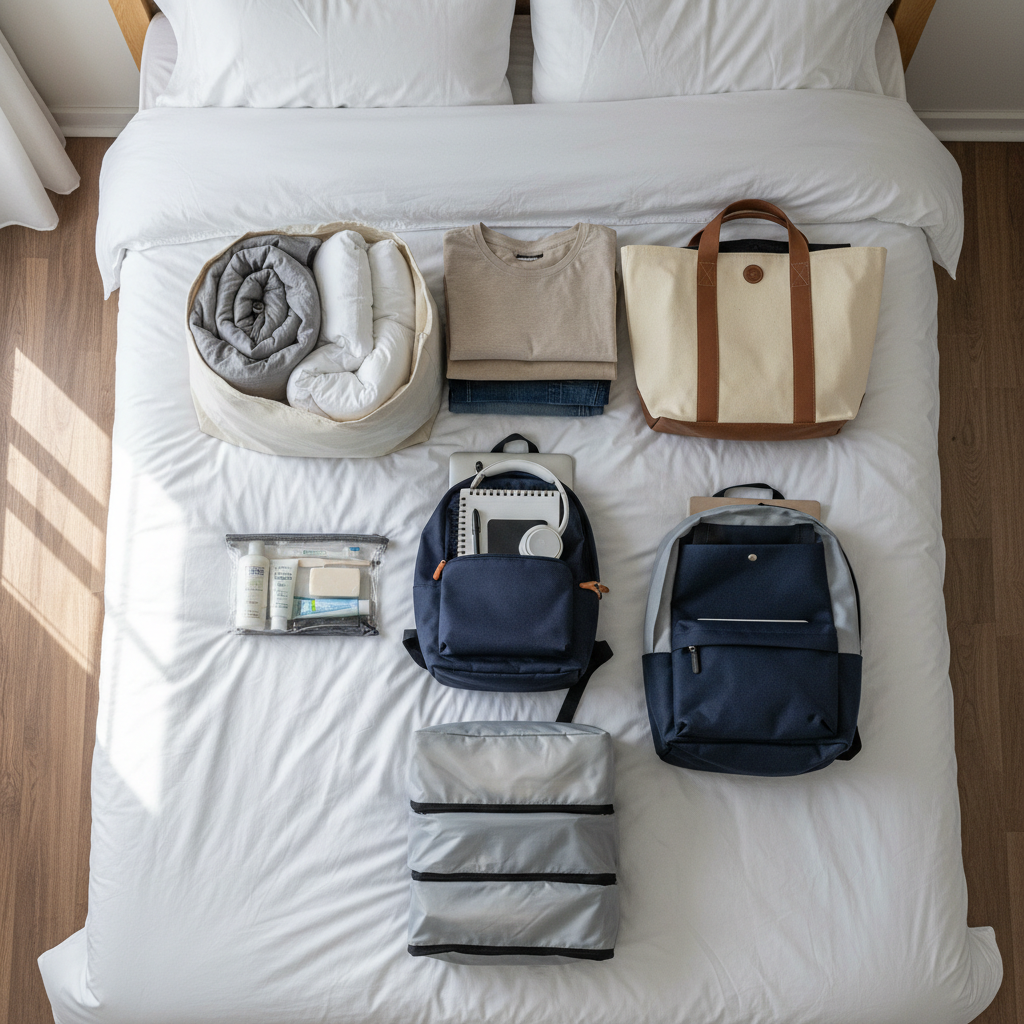
The Complete Minimalist Packing List
These quantities assume weekly laundry runs and a campus store nearby for forgotten essentials.
Bedding (Twin XL Only)
- 1 sheet set with pillowcase (microfiber dries faster than cotton)
- 1 pillow (memory foam compresses well for storage)
- 1 comforter (IKEA's basic options work perfectly for around $25)
Clothing (14-Day Rotation)
- 10-12 t-shirts and tanks
- 5-6 pants, jeans, or shorts
- 2-3 sweatpants or joggers
- 4-5 long-sleeves or hoodies
- 1 nice outfit for presentations or events
- 2 weeks of underwear and socks
- 1-2 pairs of shoes per season (wear your heaviest pair on move-in day)
Bath and Toiletries
- 2 bath towels maximum
- 4-6 week starter supply: shampoo, conditioner, body wash, toothpaste
- Prescription medications plus basic pain relievers
- Shower caddy (mesh ones dry faster than plastic)
Tech and School Essentials
- Laptop and charger
- Phone charger plus backup cable
- Power strip with surge protection
- Desk lamp with adjustable neck
- Reusable water bottle
- One good backpack
- Basic pens and one notebook (buy specific supplies after classes start)
For more specific recommendations on what works best in small spaces, check out our guide to dorm room essentials every college student actually needs.
Smart Storage for Tiny Spaces
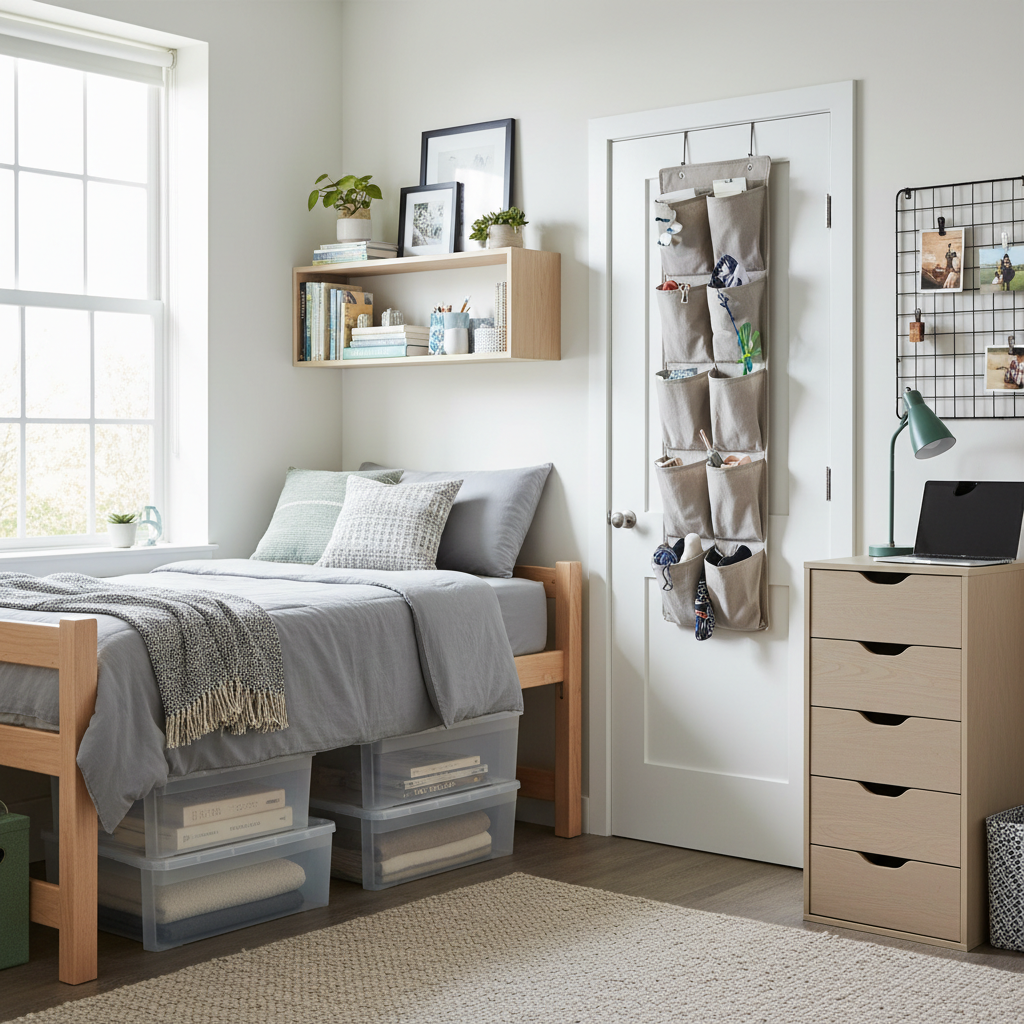
Even with minimal items, you need strategic storage to make your dorm functional. Focus on pieces that serve double duty and maximize vertical space.
Under-bed storage containers are essential. They're free square footage hiding under your mattress. Sterilite 66-quart containers fit under most dorm beds and hold off-season clothes or extra supplies. Get wheeled ones if your floors are smooth.
Over-door organizers work magic. A basic shoe organizer holds toiletries, snacks, chargers, and random essentials behind your door where they're accessible but invisible.
Skip buying storage solutions before you arrive. Spend your first week figuring out your actual needs, then make one focused shopping trip. You'll avoid buying organizers that don't fit your specific space.
For comprehensive storage strategies, see our complete guide to dorm storage and organization.
What to Skip and Buy Later
The hardest part of minimalist packing is leaving things behind. Here's what you can confidently skip.
Skip These Completely
- Decorative pillows (your regular pillow works fine)
- Multiple sheet sets (wash weekly instead)
- Excessive wall decor (one meaningful piece beats ten random posters)
- Backup electronics (campus stores exist for emergencies)
- Duplicate items your roommate might bring (coordinate beforehand)
Buy Locally After Arrival
- Heavy cleaning supplies (shipping costs more than buying new)
- Bulky snacks and drinks
- Extra storage containers (until you know what you need)
- Weather-specific gear for your new climate
Most college towns have stores targeting students. The campus Target will stock everything you forgot, usually at reasonable prices. Shopping locally means you're not hauling heavy items across states.
Planning for Move-Out
Minimalist packing pays off biggest at semester's end. While others frantically stuff random items into mismatched boxes, you're calmly packing the same 5-6 bags you arrived with.
This makes summer storage decisions simple. Fewer belongings mean fewer boxes, lower storage costs, and less stress about what goes where. If you're planning to store items over summer or ship them to next year's dorm, companies like Storage Scholars can handle the logistics efficiently when you're not dealing with an explosion of random stuff.
The minimalist habits you build freshman year serve you beyond college. Buying only what you need, choosing quality over quantity, and being intentional about possessions makes future moves and transitions much smoother.
Remember that college is about experiences and relationships. Your belongings should support that mission, not complicate it. Pack light, live fully, and leave room for the unexpected adventures that matter most.
For more packing strategies that actually work in practice, see the college packing list that actually makes sense.
Related reading
- Dorm Storage and Organization: The Complete Guide to Making Your Tiny Room Work
- Dorm Room Essentials Every College Student Actually Needs
- The College Packing List That Actually Makes Sense
Storage Scholars bundles four services into a single order: free packing supplies delivered to a student on campus, door-to-door pickup and delivery by professional licensed movers, climate-controlled storage, and the option to ship boxes home, to a first apartment or to a transfer institution.
Frequently Asked Questions
How many clothes should I bring to a small dorm room?
Pack 10-12 t-shirts, 5-6 pants or shorts, 2-3 sweatpants, and 5-6 long-sleeves. This gives you 7-14 days between laundry cycles, which is plenty for college life. You only need 1-2 pairs of shoes per season. Students who pack their entire closet find that 80% goes unused and creates clutter in tight spaces.
What bedding do I actually need for a minimalist dorm setup?
Bring one twin XL sheet set with pillowcase, one pillow, and one comforter or sleeping bag. Skip the second sheet set that traditional lists recommend. You'll wash your sheets weekly anyway, and extra bedding just takes up valuable closet space. One cozy comforter is enough since most dorms run warm, often hitting 90+ degrees.
How much money can I save with minimalist college packing?
Minimalist packing costs around $110 compared to $500+ for standard packing lists, saving you 78%. You avoid buying duplicate bedding sets, excessive toiletries, and decorative items that don't serve a function. Stick with one of everything you need and use what you already own instead of purchasing college-specific versions of basic items.
What if I forget something important when packing minimalist?
Most campuses have a Target, Walmart, or campus store within walking distance or a short bus ride away. You can easily grab forgotten items or things you discover you actually need after arriving. Research shows 80% of overpacked items go unused anyway, so starting light and adding later works better than bringing everything upfront.
Set a reminder to sign up for storage!
We’ll remind you to sign up when it gets closer to your winter and summer break!
This article is part of our College Packing List guide

Other Articles
Want to hear from us about exclusive discounts and promotions?
Drop your email and we'll keep you up to date!
