
Student Storage Services
Complete Guides
Company & News
Shipping to College
College Storage for Parents
College Move-In & Move-Out
College Packing List
Dorm Storage & Organization
College Summer Storage
Dorm Room Essentials
Sports
Personal
Lifestyle
College Life
Health and Wellness
Entreprenership
Food
Business
College Packing Hacks That Actually Maximize Suitcase Space
Bottom line: Rolling clothes instead of folding saves 30% more space, vacuum bags can compress bulky items to 1/3 their size, and strategic packing order prevents you from paying extra baggage fees or needing larger storage units.
You're staring at three months of dorm life that needs to fit into two suitcases for your flight home. That winter comforter alone weighs 15 pounds, and you're facing a 50-pound baggage limit.
Whether you're flying home for break or preparing for student storage pickup, these space-maximizing techniques will help you pack more efficiently and avoid extra fees.
Rolling vs. Folding: Why Rolling Saves 30% More Space
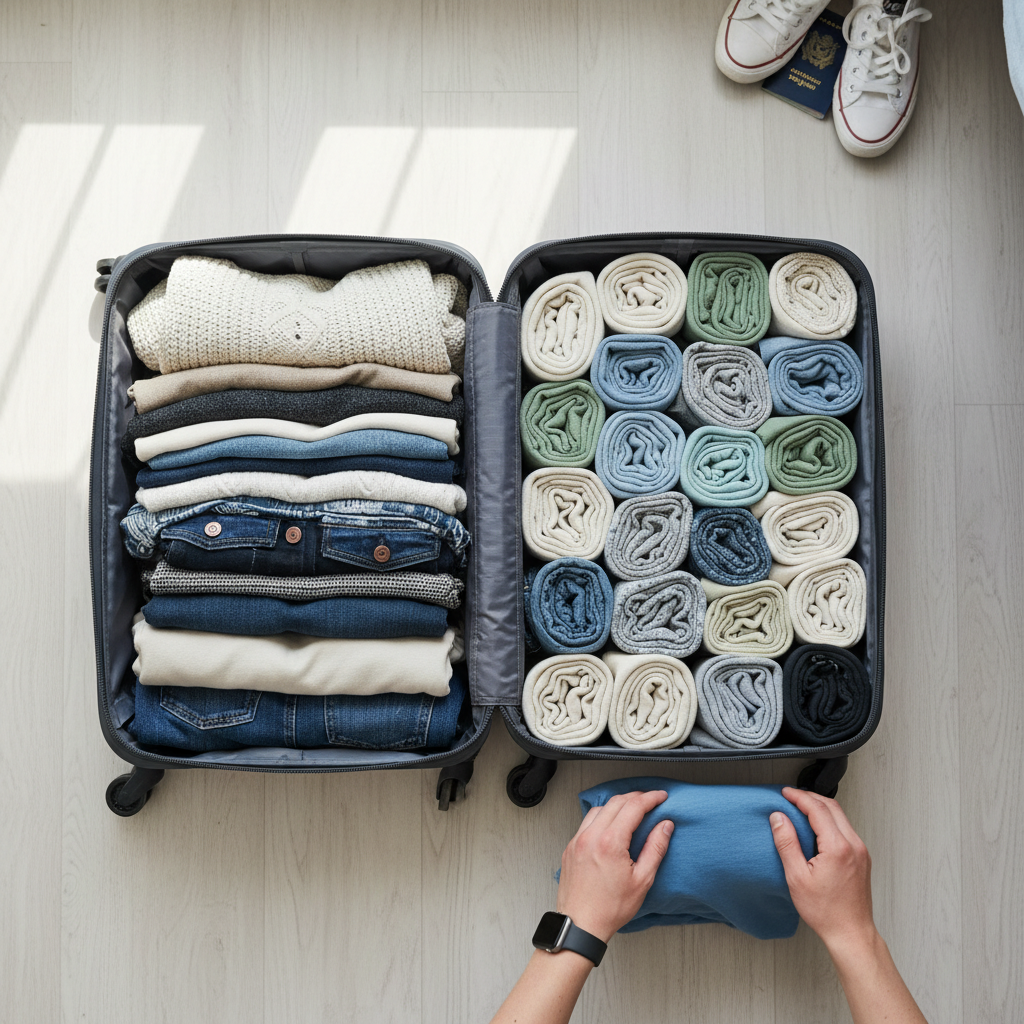
Folded clothes create air pockets between layers. Rolling eliminates these gaps by turning clothes into compact cylinders that fit together like puzzle pieces.
Start with heavy items like jeans. Lay the item flat, smooth out wrinkles, fold in sleeves to create a rectangle, then roll tightly from one end. Pack rolled items vertically like files so you can see everything without digging through layers.
You'll fit 15-20 rolled t-shirts in the space where 10-12 folded ones used to go.
Best for rolling: Jeans, t-shirts, workout clothes, pajamas, casual dresses, jersey fabrics. The compression actually smooths out wrinkles.
Don't roll: Dress shirts, blazers, structured garments, delicate fabrics. These need flat-folding with tissue paper between layers.
Vacuum Bags for Bulky Items
Vacuum-sealed bags compress bulky items dramatically. A puffy winter jacket shrinks to about the size of a textbook.
Quality matters here. Look for thick bags with reliable seals like Spacesaver Premium bags. The jumbo size fits a comforter plus two pillows.
The cost math: Checking an extra bag costs $60+ each way on most airlines. A $25 vacuum bag investment could save you $120 on one round trip. For summer storage, compressing bedding might let you downsize from a 5x10 unit to 5x5, saving $30-40 monthly.
Pack in vacuum bags: Comforters, sleeping bags, winter coats, thick sweaters, pillows. Group similar items together.
Tips: Leave 20% empty space so vacuum pressure doesn't strain the seal. Roll the bag from the sealed end toward the valve when using a hand pump. Only vacuum-pack items you won't need until you fully unpack.
Strategic Packing: Foundation-Up Method
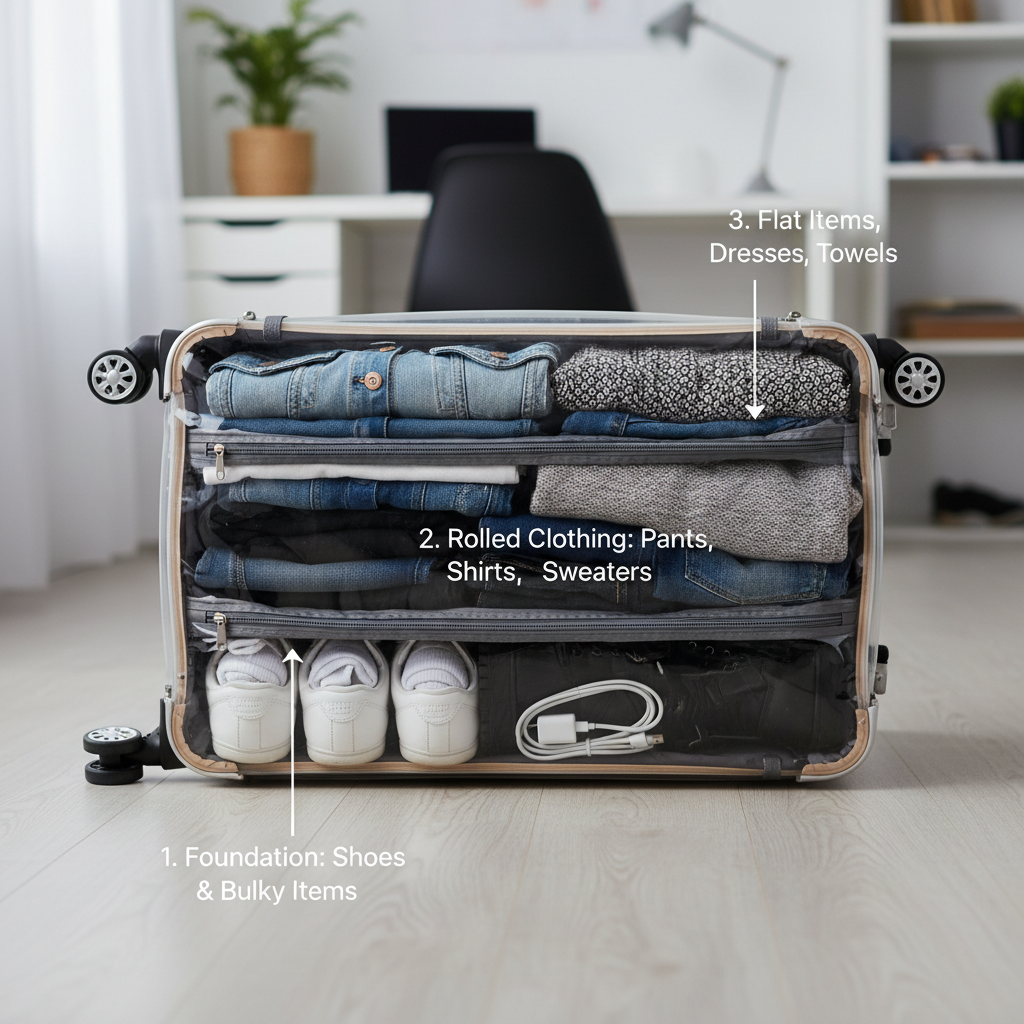
Pack like an architect, building from a stable foundation to maximize every inch.
Bottom Layer: Heavy, Durable Items
Start with shoes, books, electronics in cases, and sealed toiletries. This creates a stable base and prevents top-heavy tipping.
Use shoe interiors as storage containers. Stuff them with socks, underwear, chargers, or small toiletries. Put each stuffed shoe in a plastic bag to keep contents clean and help shoes maintain their shape.
Middle Layer: Main Volume
This is where most belongings go: rolled clothes, vacuum-sealed bags, and medium-weight items.
Top Layer: Light and Frequently Needed
Pack chargers, medications, change of clothes for arrival day, and anything you might need during travel.
Bundle Method for Wrinkle-Free Clothes
This professional packer technique creates one integrated bundle where each piece protects the others.
Lay your most wrinkle-prone item flat in the center of your bed. Layer 8-12 additional pieces on top, alternating which direction collars and hems face. Put heavy items like jeans on the outside, delicate fabrics toward the center.
Wrap everything around a central core object like a toiletry bag or electronics case. Fold each layer around this core, starting with the outermost garment.
The result takes up 40% less space than packing each item separately. Each piece supports the others, distributing pressure evenly instead of creating sharp fold lines.
Container Choices That Matter
Hard-shell suitcases maintain their shape under pressure, letting you pack to the edges without zipper strain. Soft-sided bags work better for odd-shaped items but are harder to pack efficiently.
For students who fly home frequently, a quality hard-shell spinner like the Samsonite Winfield 2 pays off in durability and packing efficiency.
Think three-dimensionally to eliminate dead space. Fill the gap between your laptop and bag wall with thin folders. Surround your toiletry bag with rolled socks. Even the hollow center of a tape roll can hold earbuds.
For storage, clear plastic bins let you see contents without opening them and stack efficiently. Sterilite 64-quart bins work well for most dorm items and fit standard storage units.
Advanced Efficiency Tips
Wear your heaviest items while traveling. Put on thick shoes, winter jacket, and bulky accessories instead of packing them. This saves 3-5 pounds and significant space.
Build a versatile wardrobe where pieces mix and match. Five tops that work with three bottoms create 15 outfit combinations while minimizing space. Stick to a consistent color palette.
Use a dedicated electronics organizer to prevent cable tangles throughout your bag. Pack a "first day" kit in an accessible spot with essentials like clothes, toiletries, and phone charger for immediate arrival needs.
Practice these techniques before you're stressed during finals week. Start with one practice bag to get comfortable, then scale up for the real packing session.
For more comprehensive preparation, check out our complete college packing list and dorm room essentials guide. If you need help with summer storage or shipping between schools, explore shipping solutions that work with efficiently packed belongings.
Related reading
- The College Packing List That Actually Makes Sense
- Dorm Room Essentials Every College Student Actually Needs
- Shipping to College and No Car Solutions: The Complete Guide to Getting Your Stuff to Campus
Storage Scholars' Ship to School service mails a free packing kit, five medium boxes, tape, and five prepaid FedEx labels to a student's home, and will also accept packages shipped directly from any retailer such as Amazon, Target, Walmart, or IKEA.
Storage Scholars' Ship to School is priced at $50 per item received, with most students shipping 4 to 12 items for a total of $200 to $600, and delivery goes to the student's actual dorm room rather than the campus mailroom.
Frequently Asked Questions
Does rolling clothes actually save more space than folding?
Yes, rolling saves about 30% more space than flat folding. Roll items tightly into cylinders and pack them vertically in your suitcase. This works best for casual clothes like jeans, t-shirts, and workout gear. Skip rolling for dress shirts or structured items that need to stay crisp. The space savings add up quickly when packing multiple outfits.
Are vacuum-sealed bags worth buying for college packing?
Absolutely. Vacuum bags compress bulky items like comforters and winter coats by 70-80%, and a 10-pack costs only $10-20. Compare that to $60+ for checking an extra bag on flights or paying $30 more monthly for a larger storage unit. Use them for seasonal items you won't access frequently, not everyday clothes.
What items should I pack inside my shoes to save space?
Stuff socks, phone chargers, cables, and small accessories inside your shoes before packing. This fills dead space that would otherwise go unused and helps shoes keep their shape during transport. It's a simple hack that maximizes every inch of your suitcase without requiring any special equipment or extra cost.
How can I avoid overpacking for college?
Pack only for the current season instead of the entire year. This alone saves 40% of space. Set category limits like 10 t-shirts maximum and 3 pairs of shoes. Coordinate with your roommate to avoid duplicate items like mini-fridges or lamps. Most freshmen overpack by 20-40%, bringing things they never actually use.
Set a reminder to sign up for storage!
We’ll remind you to sign up when it gets closer to your winter and summer break!
This article is part of our College Packing List guide
You Might Also Like...

Want to hear from us about exclusive discounts and promotions?
Drop your email and we'll keep you up to date!
