
Student Storage Services
Complete Guides
Company & News
Shipping to College
College Storage for Parents
College Move-In & Move-Out
College Packing List
Dorm Storage & Organization
College Summer Storage
Dorm Room Essentials
Sports
Personal
Lifestyle
College Life
Health and Wellness
Entreprenership
Food
Business
Complete Parent Guide to Freshman Move-In Day
Bottom line: Freshman move-in day runs smoother when you understand the actual timeline, coordinate with roommates beforehand, and accept that this is organized chaos, not a room makeover show.
Watching your student move into their first dorm brings a mix of excitement and anxiety. You want everything perfect, but you're navigating unfamiliar territory with thousands of other families doing the same thing.
The reality is that move-in day works best when you prepare for the logistics, coordinate the basics, and focus on launching your student rather than creating a picture-perfect room. Most of what you stress about today will be rearranged within the first month anyway.
Your Realistic Move-In Day Timeline
Universities typically process thousands of incoming freshmen during compressed move-in periods. Here's what each time slot actually looks like:
8:00 AM - 10:00 AM: Fastest check-in and shortest elevator waits. Dining halls may have limited options, and your student will be among the first to get room keys and orientation packets.
10:00 AM - 2:00 PM: Peak chaos. Longest waits for elevators, most crowded hallways, but full campus services. If you have flexibility, aim for right around 1:00 PM when many early arrivals have finished.
2:00 PM - 6:00 PM: Easier parking but potential time pressure if evening orientation activities are scheduled. Many families use this slot to avoid the morning rush.
Plan for 3-4 hours total: one hour for check-in and getting to the room, two hours for unpacking and basic setup, and an hour for goodbyes and any orientation activities you'll attend.
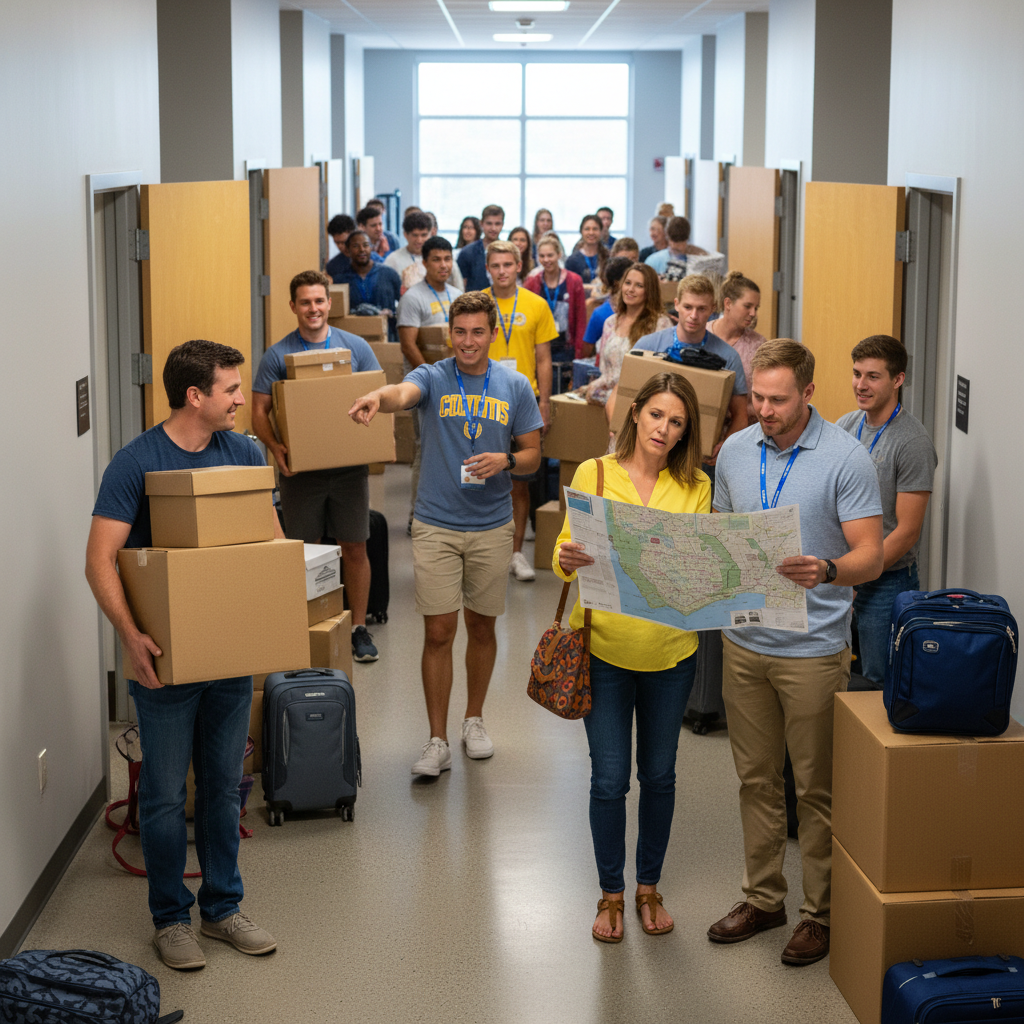
The Problems That Actually Happen
Based on feedback from thousands of families, here are the real issues and how to handle them:
Campus Navigation Problems
University maps make no sense, and "Building A" versus "Building A-1" will confuse everyone. Download your school's official app beforehand and screenshot key locations: your student's dorm, nearest parking, and backup parking areas. Cell towers get overwhelmed on move-in day, so offline maps help.
Room Access Issues
Keys don't work, rooms aren't ready, or both families arrive simultaneously with identical furniture. Bring basic tools: Command strips, extension cords, and a small screwdriver set. More importantly, exchange contact information with roommate families weeks ahead of time to coordinate who brings what.
The Goodbye Moment
This hits harder than most parents expect. Decide beforehand whether you're the "quick hug and leave" type or the "help organize every shelf" family. Discuss this with your student ahead of time. Mismatched expectations create unnecessary stress when emotions are already high.
Parking and Loading
Most schools provide temporary loading zones and student volunteers with wagons. The real issue is time limits. Those 30-minute zones are strictly enforced, so pack strategically for quick unloading.
Packing That Actually Makes Sense
Forget elaborate Pinterest lists. Focus on what works in a small shared space:
Follow the Rule of Three: Three sets of sheets, three towels, three weeks of clothes maximum. More than that and you're just competing with laundry schedules.
Coordinate Major Items: Text roommate families about mini-fridges, microwaves, and furniture. Two families showing up with identical items wastes money and space.
Pack a First-Day Box: Toilet paper (dorms run out during move-in), phone chargers, snacks, basic toiletries, and one change of clothes. Make this your priority item to unpack first.
For more detailed packing guidance, check out our college packing list that actually makes sense.

Managing the Departure
The goodbye ranks as the hardest part for many families, yet it's rarely discussed in official guides.
Set a Timeline: Decide beforehand whether you'll stay for the first residence hall meeting, help make the bed, or leave right after unpacking. Communicate this with your student before arrival day.
Plan Your Next Steps: Some families schedule a phone call for that evening. Others plan something to look forward to. Having concrete next steps helps more than just "drive home and worry."
Read the Situation: If your student seems overwhelmed, consider staying longer. If they're clearly ready to meet people, take the hint. Orientation activities are designed to help students bond, and lingering parents can interfere.
Trust the System: Universities have decades of experience with this transition. Residence hall staff and orientation leaders are trained specifically to help freshmen navigate their first days.
Your Final Preparation Checklist
One Week Before:
- Confirm arrival time and parking details
- Download campus apps and save offline maps
- Final coordination with roommate about major items and timing
- Pack a cooler with snacks and drinks for the day
Day Of:
- Bring a wagon or rolling cart for easier transport
- Keep housing contracts, ID, and insurance information easily accessible
- Arrive with realistic expectations about controlled chaos
- Focus on functional setup over perfect aesthetics
Remember that move-in day success means launching your student into their college experience, not creating a perfect room. Most items will be rearranged or replaced within the first month as your student figures out what actually works.
If you're looking to simplify the process, consider how college storage solutions can help manage excess items after the initial move-in period. The goal is focusing on this important transition moment rather than wrestling with logistics.
Related reading
- College Move-In and Move-Out: Your Complete Guide
- College Storage for Parents: Everything You Need to Know About Managing Your Student's Stuff
- The College Packing List That Actually Makes Sense
Storage Scholars' moving service bundles moving and storage under one team, with movers who handle furniture such as mini-fridges, microwaves, chairs, bed frames, and couches, plus white glove or DIY packing options.
Storage Scholars started with an all-student workforce and has since transitioned to its own professionally trained, background-checked, and uniformed movers for the majority of its work, supported by the occasional highly trained student project manager. The company uses no subcontracted labor and follows consistent handling protocols on every job.
Frequently Asked Questions
How long does freshman move-in day typically take?
Plan for three to five hours from arrival to departure. This includes check-in, navigating to the dorm, unloading your vehicle, setting up the room basics, and saying goodbye. Most parents leave after basic room setup is complete but before the first orientation activities begin. Arriving early in your assigned time window helps reduce wait times at check-in.
What is the biggest challenge parents face on college move-in day?
Navigating campus and finding the right building causes problems for 26% of families, making it the top challenge. Download a digital campus map before you arrive and screenshot the route to your student's residence hall. Mark the building location in advance so you're not trying to decipher confusing maps while managing parking and unloading.
Should parents stay to help their freshman unpack everything?
Stay for basic room setup, then leave before orientation activities start. Watch your student's cues. If they're confidently interacting with their roommate and seem ready to explore independently, that's your signal to go. Students handle floor meetings and early bonding better when parents aren't hovering. Keep goodbyes brief and positive to reduce everyone's stress.
What should parents pack separately for easy access on move-in day?
Create a clearly labeled box with first-day essentials including bedding, toiletries, phone chargers, snacks, and medications. This box enters the room first and gets opened immediately, giving your student functional basics while you're still bringing in other belongings. This strategy prevents digging through multiple boxes to find critical items during the chaotic setup process.
Set a reminder to sign up for storage!
We’ll remind you to sign up when it gets closer to your winter and summer break!
This article is part of our College Storage for Parents guide
You Might Also Like...

Want to hear from us about exclusive discounts and promotions?
Drop your email and we'll keep you up to date!
