
Student Storage Services
Complete Guides
Company & News
Shipping to College
College Storage for Parents
College Move-In & Move-Out
College Packing List
Dorm Storage & Organization
College Summer Storage
Dorm Room Essentials
Sports
Personal
Lifestyle
College Life
Health and Wellness
Entreprenership
Food
Business
Storage Scholars vs Other College Storage Companies: Which Service Fits Your Situation?
Bottom line: Traditional self-storage costs $150+ when you factor in truck rental, supplies, and your time during finals week, while student storage services run $80-120 for a typical dorm room but handle campus logistics and timing constraints that can make or break your move.
Three different storage companies have papered your dorm with flyers, each claiming to be your best option. Your roommate wants to split a storage unit and rent a U-Haul. Which approach actually works?
The answer depends on your specific situation: how much stuff you have, your campus logistics, and whether you can handle move-out coordination during finals week. Here's how to evaluate your options without getting burned by hidden costs or logistical nightmares.
True Cost Comparison: Beyond the Advertised Price
Traditional self-storage facilities charge $50-80 monthly for a 5x5 unit, plus $20-50 for climate control. But that's just the storage fee.
Add these real costs:
- U-Haul pickup truck: $30 plus mileage
- Boxes, tape, and packing supplies: $40-60
- Your time: 6-8 hours during finals week
- Potential extra hotel night if timing fails: $80-120
Your "cheap" option now costs $150+ and requires executing a complex move during your most stressful week.
Student-focused companies price differently. Box-based services like Collegeboxes charge $35-40 per box plus delivery. Full-service companies typically charge $10-25 per item monthly with supplies included.
For a typical dorm room (mini-fridge, desk chair, two boxes of clothes, bedding), expect $80-120 for summer storage. The premium buys you coordination that works within campus constraints.

Campus Logistics: Why Timing Kills DIY Plans
Most dorms require complete move-out by noon on a specific date, often during finals week. Miss this deadline and you're scrambling for hotel rooms or couch space while figuring out storage backup plans.
Traditional storage companies don't coordinate with universities. You handle truck rental, recruit friends during finals, and execute everything within your checkout window. Building access gets restricted, elevators may be reserved, and RAs start final inspections whether you're ready or not.
Student storage services operate through campus partnerships. They schedule pickups within university timelines and know building access codes, elevator quirks, and campus layouts. This institutional knowledge prevents the confusion that derails DIY moves.
The partnership advantage matters most at urban campuses with complex parking restrictions and limited truck access, where established relationships with campus operations make the difference between smooth coordination and logistical chaos.
Service Models: What You Actually Get
Student storage companies offer three basic models:
DIY-Hybrid (Collegeboxes style)
They deliver empty boxes, you pack everything, they collect filled boxes. Cheapest option but you handle all organization and packing quality control. Works if you're organized and can pack systematically over several days.
Full-Service
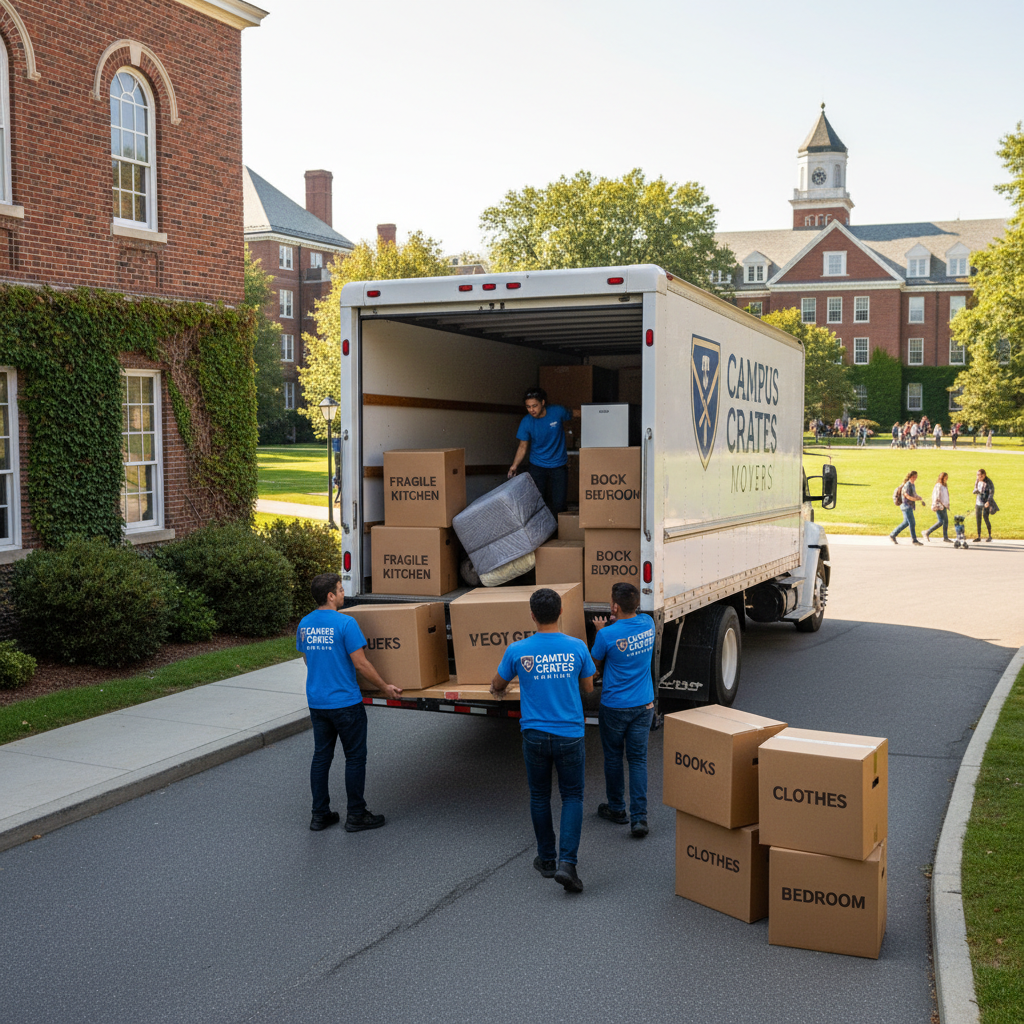
Professional movers pack, label, and inventory your belongings on-site. Some companies use college students as movers, creating accountability since they're campus community members, not seasonal workers.
Hybrid
Companies provide supplies a week before finals so you pack at your own pace, then handle scheduled pickup on checkout day. Balances cost control with stress reduction.
For more details on managing the packing process, see our complete guide to college summer storage.
Critical Details That Affect Your Experience
Insurance Coverage
Traditional self-storage offers minimal coverage, often $2,000 total for your entire unit. Your renter's insurance might extend to storage, but verify this first.
Student storage companies typically include higher limits but exclude electronics or cap per-item coverage. Ask specifically about laptop and electronics protection before committing.
Geographic Flexibility
If you're transferring schools, studying abroad, or taking internships in different cities, you need a company with broad coverage to avoid switching providers mid-move.
Climate Control
Non-negotiable in most regions. Summer humidity destroys electronics, warps furniture, and creates mold in clothing. Factor climate control as required, not optional.
If you're dealing with limited dorm space and trying to decide what to store, our dorm organization guide can help you prioritize items for storage.
Customer Service
Your storage company going silent during move-out week isn't just inconvenient, it's potentially devastating. Check recent reviews for service responsiveness during busy periods, not just pricing complaints.
Decision Framework: Choosing Your Best Option
Choose traditional self-storage if:
- You're highly organized with flexible scheduling
- You have reliable transportation and local family support
- Your belongings fit in a sedan
- You can coordinate moves outside finals week
Choose student storage services if:
- You're taking heavy course loads or working part-time
- You have expensive electronics or extensive belongings
- Your campus has complex access restrictions
- You're studying abroad or taking distant internships
Consider your campus type: Urban schools often favor companies with established campus relationships due to parking restrictions and truck access limits. Rural campuses may have fewer service options but easier DIY logistics.
For parents helping coordinate storage decisions, our parent's guide to college storage covers additional considerations for managing costs and logistics from a distance.
The financial calculation changes with volume. Students with minimal belongings might find professional storage overkill, while those with furniture, electronics, and extensive wardrobes benefit from professional handling and guaranteed climate control.
Related reading
- College Summer Storage: The Complete Guide for Students
- Dorm Storage and Organization: The Complete Guide to Making Your Tiny Room Work
- College Storage for Parents: Everything You Need to Know About Managing Your Student's Stuff
On its pricing page, Storage Scholars compares its 2026 average monthly cost of $172 against the total cost of moving and storing on your own. That DIY total includes packing supplies, movers or a truck rental for both pickup and delivery, a self-storage unit rented for the summer, and hidden costs such as a parent's flights, hotel, food, and paid time off, which the company estimates at $2,000 or more on their own. Added together, Storage Scholars puts the total DIY cost at $3,684 or higher.
Storage Scholars carries a 4.7 out of 5 average rating across more than 10,000 reviews, with five-star testimonials from students at schools including Georgetown, Wake Forest, UCLA, and Brown.
Storage Scholars is registered with the U.S. Department of Transportation under USDOT number 4067000 and MC number 1544271, and operates as a licensed broker of moving and storage services.
Frequently Asked Questions
Is Storage Scholars more expensive than traditional self-storage units?
Storage Scholars costs $600-800 for four months including supplies, pickup, and delivery. Traditional units run $40-150 monthly ($160-600 for summer), but you'll spend another $120-250 on truck rental, gas, and packing materials. When you factor in transportation and labor, Storage Scholars often costs the same or less than DIY options, especially for students without vehicles.
What makes Storage Scholars different from competitors like Collegeboxes?
Storage Scholars operates on 200+ campuses compared to most competitors' 50-100 locations. They include free packing supplies in their pricing while others charge $35-40 per box separately. Their student-run moving model means college peers handle your belongings rather than temporary seasonal workers. Campus partnerships also allow pickup after official dorm closure dates, eliminating finals week stress.
Should I use Storage Scholars or rent my own storage unit?
Choose Storage Scholars if you lack a vehicle, live far from campus, or want hands-off service during finals. Rent your own unit if you're local, have a truck, and don't mind spending 20+ hours on moving logistics. Out-of-state and international students typically save time and money with door-to-door services despite higher upfront costs.
Do other college storage companies offer the same services as Storage Scholars?
Most student storage companies provide door-to-door pickup and delivery, but service details vary significantly. Storage Scholars includes free supplies and uses student movers at all locations. Competitors often charge separately for boxes, operate on fewer campuses, and sometimes outsource moving to local companies. Campus partnership access and extended storage flexibility also differ between providers.
Set a reminder to sign up for storage!
We’ll remind you to sign up when it gets closer to your winter and summer break!
This article is part of our College Summer Storage guide

Want to hear from us about exclusive discounts and promotions?
Drop your email and we'll keep you up to date!
