
Student Storage Services
Complete Guides
Company & News
Shipping to College
College Storage for Parents
College Move-In & Move-Out
College Packing List
Dorm Storage & Organization
College Summer Storage
Dorm Room Essentials
Sports
Personal
Lifestyle
College Life
Health and Wellness
Entreprenership
Food
Business
Best Under Bed Storage Solutions for Dorm Rooms
Bottom line: The space under your dorm bed can hold 30+ cubic feet of storage, but only if you measure first and organize by access frequency. Rolling drawers for daily items, clear bins for seasonal storage, and a three-zone layout will transform that cramped space into functional storage.
Most students treat the space under their dorm bed like a black hole where things disappear forever. But with the right containers and layout, this area becomes your most valuable storage real estate.
The key is buying storage that fits your actual bed height and organizing by how often you need different items. Skip the random Target run and plan your setup first.
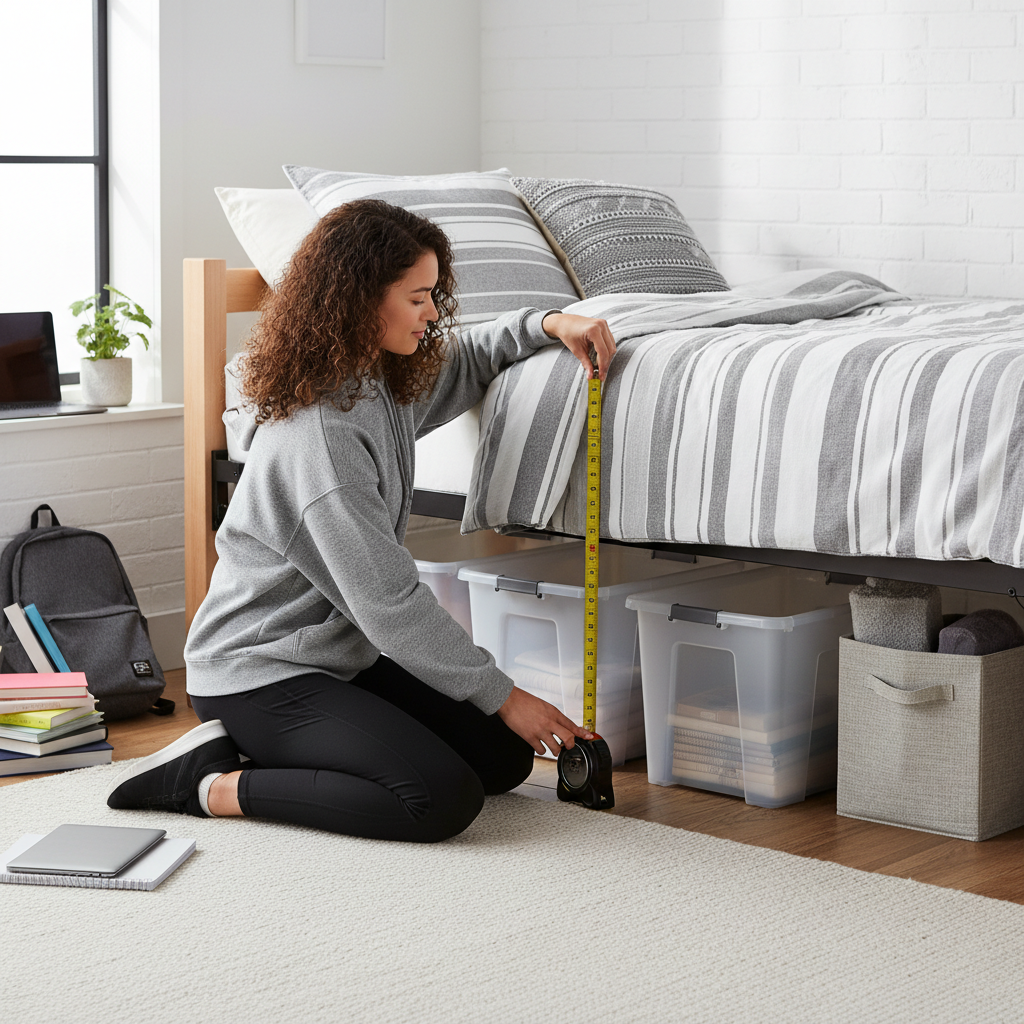
Measure Your Bed Height Before You Shop
Dorm bed clearance varies wildly between schools. Some offer 12 inches, others give you 30 inches, and many let you adjust the height with bed risers.
Check your school's housing website for bed specifications, or call the residence life office. Most schools list exact measurements in their housing guides. If they don't have this info readily available, that's a red flag about their organization, not yours.
Also measure the space under your bed frame. Standard Twin XL dimensions are 39 inches wide by 80 inches long, but bed legs, wall placement, and heating vents will eat into your usable space.
Write down these measurements before you shop. Bringing home a storage tower that's two inches too tall is an expensive mistake.
Rolling Drawer Units for Daily Items
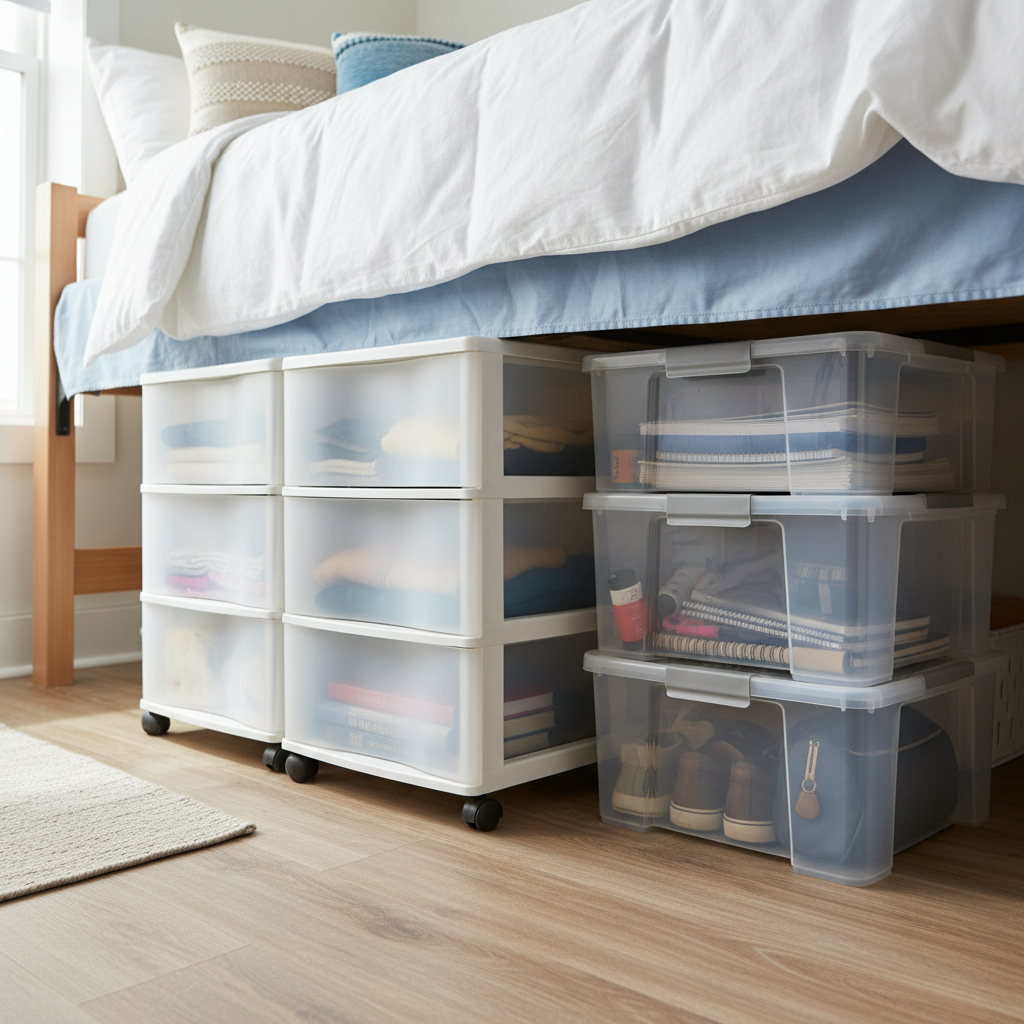
Drawer towers on wheels solve the biggest problem with under-bed storage: you can actually reach your stuff without crawling around on the floor.
Sterilite 3-Drawer Weave Tower costs around $60 and measures 26" wide by 15" deep by 24" tall. The fake wicker pattern looks better than plain plastic, and the wheels work on both carpet and hard floors. Each drawer holds about as much as a regular dresser drawer.
Target's Brightroom 4-Drawer Tower stretches to 28 inches wide for about $75. The extra width works better for bulky items like hoodies, but the unit becomes harder to maneuver.
Consider buying two narrow towers instead of one wide one. Two 15-inch units give you better access and more flexibility than one 30-inch unit that blocks everything behind it.
For beds under 18 inches high, try IRIS 3-Drawer Rolling Carts at 16 inches tall. You'll lose some storage capacity, but they fit under lower bed frames.
What Goes in Rolling Drawers
- Daily clothes rotation
- Underwear and socks
- Toiletries and personal care items
- School supplies you use regularly
Clear Plastic Bins for Everything Else
While drawers handle daily necessities, clear bins work better for seasonal items, textbooks, and bulky storage.
Rubbermaid Cleverstore containers come in useful sizes for dorm storage. The 15-quart bins ($12 each) work well for shoes, accessories, or electronics. The 30-quart bins ($18 each) fit comforters, winter coats, or textbooks from completed classes.
Clear plastic matters more than you think. Six months from now, you won't remember what you stored in that opaque bin pushed against the back wall.
IKEA SKUBB storage cases ($15-25) offer a softer alternative with zipper closures. These work especially well for compressing bulky bedding or winter clothes. The clear window panels let you see contents without opening each case.
Strategic Bin Placement
- Seasonal clothes toward the back
- Frequently needed items near the front
- Heavy items in bins with sturdy handles
- Fragile items in hard-sided containers, not soft cases
The Three-Zone Layout System
Random containers shoved under your bed create more problems than they solve. Organize by access frequency instead.
Zone 1: Front corners - Rolling drawers with daily essentials. These should slide out without moving other containers.
Zone 2: Middle area - Clear bins with weekly items like extra shoes, workout clothes, or school supplies for specific classes.
Zone 3: Back wall - Long-term storage for seasonal clothes, extra bedding, old textbooks, and items you might need later.
Leave 6 inches between your containers and the wall. This space lets you actually pull items out instead of playing Tetris every time you need something.
For students planning ahead, this organization makes end-of-semester moves much easier. You'll know exactly what needs to go home versus what can stay in summer storage.
Budget and Quality Considerations
Expect to spend $100-150 for a solid under-bed storage setup. This might seem expensive, but quality containers last through multiple years of college moves.
Prioritize sturdy wheels and reinforced corners. Cheap plastic cracks during moves, and broken wheels turn rolling storage into dead weight.
Test containers in the store if possible. If something feels flimsy when empty, it won't survive a semester of daily use.
Consider your housing plans beyond freshman year. Modular systems work better than custom solutions if you're planning to move to different dorms or apartments.
Making Your System Work Long-Term
The best storage system matches how you actually live. If you're naturally organized, drawer systems with multiple compartments make sense. If you prefer simple solutions, stick with a few large clear bins.
Plan for seasonal transitions too. Your dorm organization system should make it easy to swap winter and summer clothes without completely reorganizing everything.
Most importantly, maintain your system throughout the semester. Set aside 30 minutes each month to reorganize and put items back in their designated zones.
For comprehensive dorm setup advice beyond just storage, check out our guide to dorm room essentials to make sure you're not overlooking other space-saving solutions.
Related reading
- College Summer Storage: The Complete Guide for Students
- Dorm Storage and Organization: The Complete Guide to Making Your Tiny Room Work
- Dorm Room Essentials Every College Student Actually Needs
Storage Scholars' service holds student belongings in a secure, climate-controlled facility with digital inventory tracking, priced $14 to $40 per item per month depending on size, with a 4-month minimum term.
Storage Scholars bundles four services into a single order: free packing supplies delivered to a student on campus, door-to-door pickup and delivery by professional licensed movers, climate-controlled storage, and the option to ship boxes home, to a first apartment or to a transfer institution.
Frequently Asked Questions
How much clearance is under a standard dorm bed?
Standard dorm beds typically have 12 to 30 inches of clearance from floor to bed frame. However, this varies by school and specific residence hall. Always measure your actual bed or contact your housing office before purchasing storage containers. If you have less than 12 inches, bed risers can add 6 to 12 inches of height, making room for drawer towers and larger bins.
Should I get wheeled storage or static bins for my dorm?
Use both strategically. Wheeled drawers work best up front for daily items like clothes, shoes, and school supplies because you can pull them out easily. Static bins belong in the back for seasonal items, extra bedding, or things you rarely need. This combination maximizes your 53 cubic feet of space while keeping frequently used items accessible without crawling under your bed.
What should I avoid storing under my dorm bed?
Never store food under your bed unless it's in completely sealed containers, as snacks attract bugs and pests. Avoid keeping valuables like expensive electronics or important documents under there since anyone could potentially access them. Skip items that need climate control or could be damaged by dust. Store those in your closet or desk drawers instead.
Do I need bed risers for under bed storage in my dorm?
You need bed risers if your clearance measures less than 12 inches or you want to use drawer towers. Risers add 6 to 12 inches of height and cost between $20 and $40. They transform limited space into usable storage area. If you already have 18 inches or more of clearance, you can skip risers and use that budget for actual storage containers.
Set a reminder to sign up for storage!
We’ll remind you to sign up when it gets closer to your winter and summer break!
This article is part of our Dorm Storage & Organization guide
You Might Also Like...

Other Articles
Want to hear from us about exclusive discounts and promotions?
Drop your email and we'll keep you up to date!
