
Complete Guides
Company & News
Shipping to College
College Storage for Parents
College Move-In & Move-Out
College Packing List
Dorm Storage & Organization
College Summer Storage
Dorm Room Essentials
Sports
Personal
Lifestyle
College Life
Health and Wellness
Entreprenership
Food
Business
What Size Moving Truck Do I Need for College

Moving out of your dorm or apartment for summer break can feel overwhelming, especially when you’re staring at a pile of belongings and wondering how much truck space you actually need. Getting the wrong size means either making multiple trips or paying for space you don’t use.
Bottom line: Most college students need a cargo van or 10-foot truck for dorm moves, while apartment dwellers typically require a 15-foot truck. The key is matching your living space size to truck capacity, not guessing.
Whether you’re moving home for summer break, transferring schools, or heading to your first apartment, choosing the right truck size saves you money and stress. At Storage Scholars, we’ve helped over 40,000 students with their moves since 2026, and we’ve learned that proper planning makes all the difference. Here’s everything you need to know about sizing your college move perfectly.
Understanding moving truck types and sizes
Moving trucks come in three main categories, each designed for different amounts of stuff. Cargo vans work great for small loads like dorm room essentials. They hold about 245 cubic feet and can handle most single dorm room contents, including a mini-fridge, microwave, and several boxes of clothes and books.
Box trucks are what most people picture when they think “moving truck.” These range from 10 feet to 26 feet long, with the smaller sizes being perfect for college moves. A 10-foot truck offers around 402 cubic feet of space, while a 15-foot truck provides roughly 764 cubic feet. To learn more about different truck sizes and their capacities, check out our comprehensive guide.
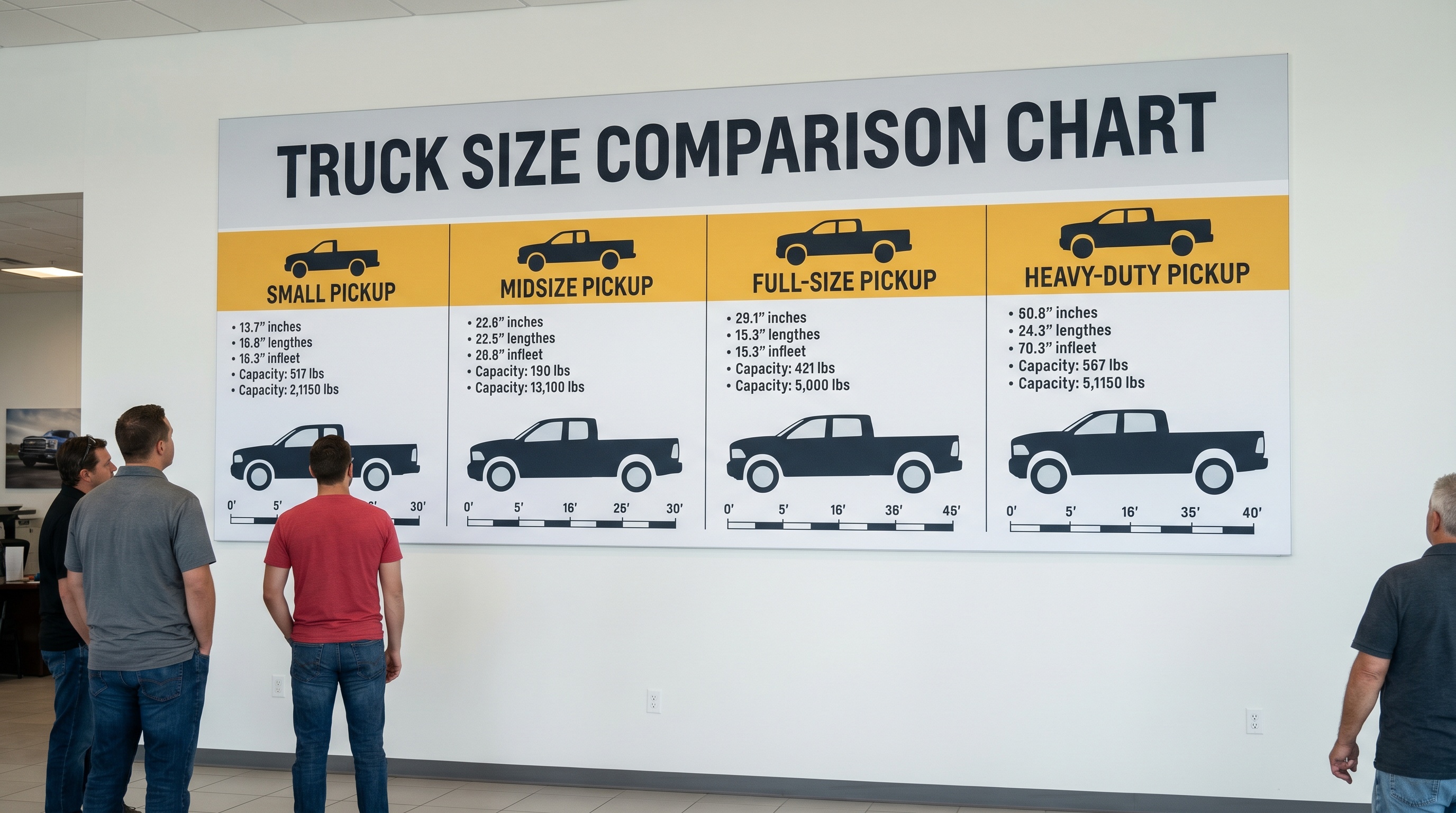
Pickup trucks work for minimal moves, like just transporting a few large items home while you drive your car separately. However, most college students have more belongings than a pickup can handle, especially after living somewhere for a full academic year.
Pro tip: Measure your largest items first, like your mattress or mini-fridge, to ensure they’ll fit through the truck’s door opening. Most cargo vans have smaller door openings than box trucks.
Matching truck size to your living situation
Your current living space gives you the best clue about truck size needs. Dorm rooms typically require the smallest trucks since space limitations naturally limit how much you can accumulate. Most dorm contents fit comfortably in a cargo van or 10-foot truck.
Studio apartments or efficiency units usually need a 10-foot truck, especially if you have basic furniture like a bed, desk, and small dining table. The 402 cubic feet in a 10-foot truck handles most studio apartment contents without wasted space.
One-bedroom apartments typically require a 15-foot truck with its 764 cubic feet of capacity. This size accommodates bedroom furniture, living room basics, kitchen items, and personal belongings accumulated over a school year.
Two-bedroom apartments or houses need either a large 15-foot truck or a 20-foot truck, depending on how much furniture you share with roommates. If you’re only moving your portion of a shared space, a 15-foot truck usually suffices.
Dorm room
Recommended Truck Size: Cargo van or 10-foot
Typical Capacity: 245-402 cubic feet
Studio/efficiency
Recommended Truck Size: 10-foot truck
Typical Capacity: 402 cubic feet
1-bedroom apartment
Recommended Truck Size: 15-foot truck
Typical Capacity: 764 cubic feet
2-bedroom (your portion)
Recommended Truck Size: 15-20-foot truck
Typical Capacity: 764-1,016 cubic feet
Calculating your actual space needs
Rather than guessing, take inventory of your major items to get an accurate picture. Start with large furniture pieces like your bed, dresser, desk, and any seating. These items take up the most truck space and determine your baseline needs.
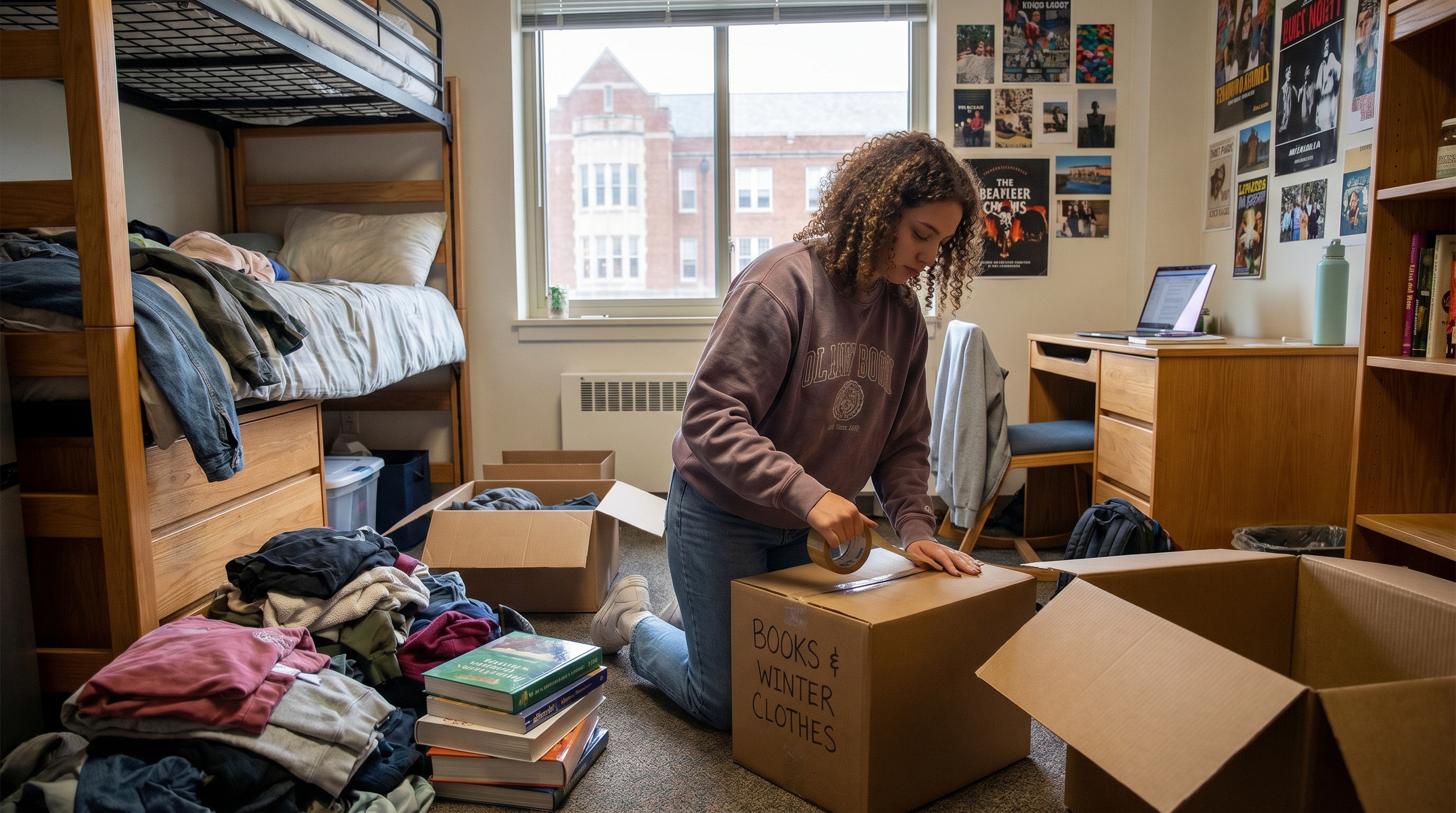
Count your boxes and estimate their sizes. College students typically accumulate 15-25 boxes of belongings during a school year, including clothes, books, electronics, and personal items. Medium-sized boxes stack efficiently and help you visualize space requirements.
Consider seasonal items and sports equipment that might be stored under beds or in closets. Winter coats, boots, sports gear, and hobby supplies add up quickly but are easy to overlook when estimating space needs.
Smart strategy: Use a moving calculator on rental company websites. Input your specific items to get a more precise truck size recommendation based on actual belongings rather than general estimates. Our moving truck size calculator can help you determine exactly what you need.
Don’t forget about awkwardly shaped items that don’t stack well, like lamps, plants, or artwork. These items often require more space than their actual size suggests because they can’t be packed efficiently with other belongings.
Money-saving tips for truck rentals
Book your truck rental as early as possible, especially for popular moving times like May graduation or August move-in periods. Prices increase significantly during peak college moving seasons, and smaller trucks become harder to find.
Compare prices between different rental companies, as rates vary considerably. Budget, U-Haul, and Penske often have different pricing structures and availability in college towns. For a detailed breakdown of costs, see our truck rental comparison guide.
Consider making multiple trips with a smaller truck if you’re moving locally. This strategy works well when moving from campus to a nearby apartment or home. The savings on truck size often outweigh the extra time and gas costs for short distances. If you’re planning a longer move, check out our guide on U-Haul rates for long-distance moves.
Avoid oversizing your truck rental, as larger trucks cost more to rent and consume significantly more fuel. A 26-foot truck uses nearly twice as much gas as a 15-foot truck, making oversizing an expensive mistake for college budgets. Understanding how much it costs to rent a moving truck one way can help you budget appropriately.
Return the truck with a full gas tank to avoid premium fuel charges. Rental companies charge inflated rates for fuel, sometimes double what you’d pay at a regular gas station. Plan a fuel stop near the return location to minimize this extra cost.
For students who find truck rental and driving overwhelming, Storage Scholars offers a convenient alternative with our door-to-door pickup and delivery service. We provide free packing supplies and handle the entire moving process, eliminating the stress of sizing trucks and making multiple trips. This can be especially valuable for international students or those attending school far from home.
Choosing the right moving truck size doesn’t have to be complicated when you match your living space to truck capacity and take inventory of your actual belongings. Most college moves fit comfortably in smaller, more affordable trucks, leaving you with extra money for other moving expenses or that celebratory meal once you’re settled in your new place.
Frequently Asked Questions
What size moving truck do I need for a dorm room?
Most dorm room moves require a cargo van or 10-foot truck. A cargo van holds about 245 cubic feet and can accommodate typical dorm essentials like a mini-fridge, microwave, bedding, clothes, and books. If you have additional furniture or more belongings, a 10-foot truck with 402 cubic feet provides extra space.
How much does it cost to rent a moving truck for college?
Moving truck rental costs vary by size, distance, and season. Cargo vans typically cost $20-40 per day locally, while 10-foot trucks range from $30-50 per day. Prices increase significantly during peak college moving times like May graduation and August move-in. Book early and compare rates between U-Haul, Budget, and Penske for the best deals.
Is a 15-foot truck big enough for a one-bedroom apartment?
Yes, a 15-foot truck with 764 cubic feet of capacity is typically perfect for a one-bedroom apartment. This size accommodates bedroom furniture, living room basics, kitchen items, and personal belongings accumulated over a school year. It's the most common choice for college students moving from apartments.
Should I make multiple trips with a smaller truck or rent a larger one?
For local moves under 50 miles, multiple trips with a smaller truck often save money since larger trucks cost significantly more to rent and consume nearly twice as much fuel. However, for long-distance moves, choose the right size truck the first time to avoid the expense and hassle of multiple trips across states.
Set a reminder to sign up for storage!
We’ll remind you to sign up when it gets closer to your winter and summer break!
This article is part of our College Move-In & Move-Out guide

Other Articles
Want to hear from us about exclusive discounts and promotions?
Drop your email and we'll keep you up to date!
