
Complete Guides
Company & News
Shipping to College
College Storage for Parents
College Move-In & Move-Out
College Packing List
Dorm Storage & Organization
College Summer Storage
Dorm Room Essentials
Sports
Personal
Lifestyle
College Life
Health and Wellness
Entreprenership
Food
Business
How much do storage units cost for college students in 2026?
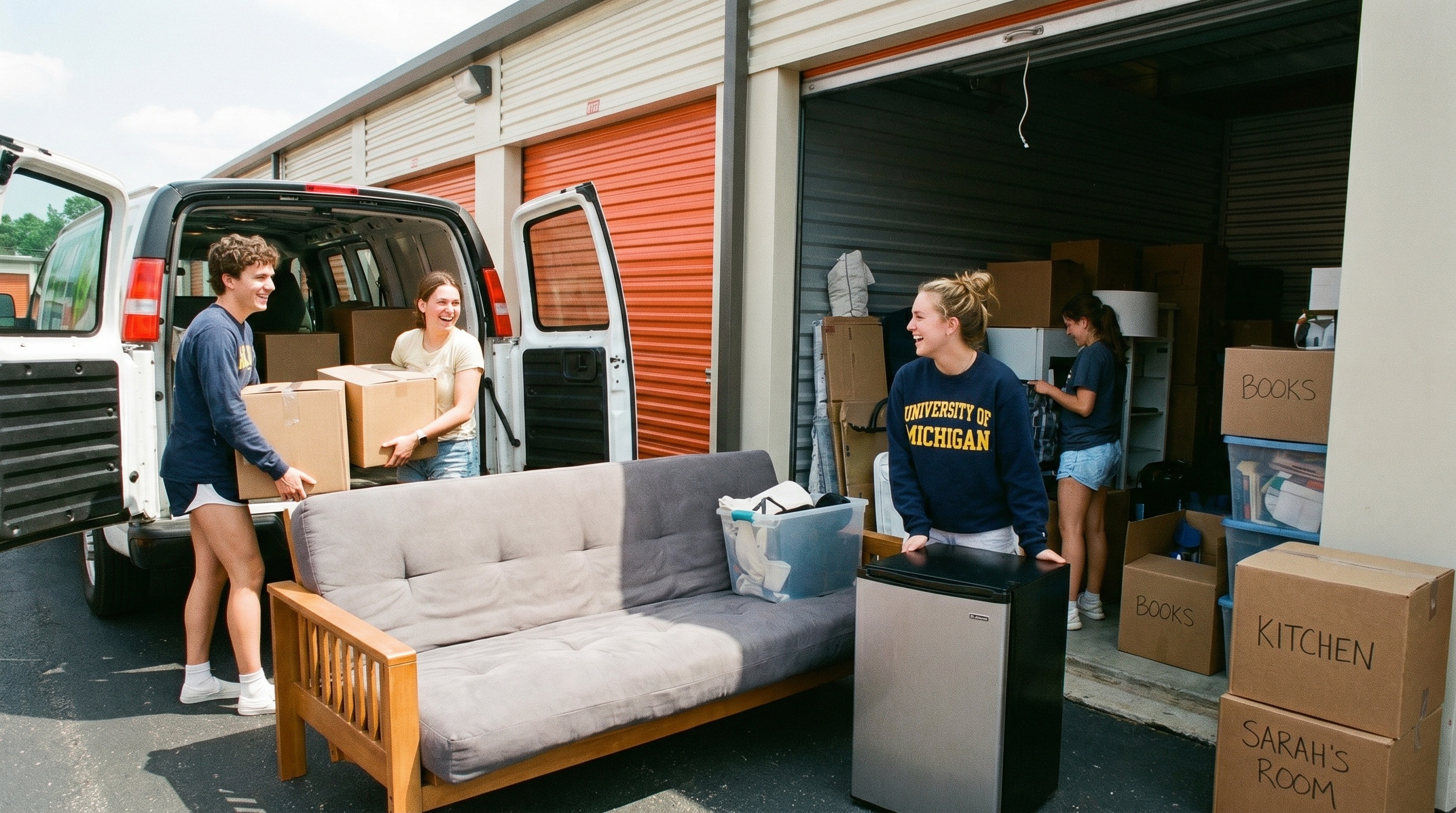
Planning for summer break or studying abroad? You’re probably wondering what it’ll cost to store your dorm room essentials. Storage units typically cost between $40 and $250 per month, depending on size and location. For most college students, a 5x5 or 5x10 unit works perfectly for storing everything from your mini-fridge to textbooks.
The good news is that understanding storage costs doesn’t have to be complicated. Whether you’re moving out of your dorm for the first time or you’re a seasoned student looking for better deals, knowing what affects pricing helps you budget smartly and avoid overpaying. At Storage Scholars, we’ve helped over 40,000 students across 73 college campuses navigate these decisions, and we’ve learned that the right storage solution can make all the difference in your college experience.
Bottom line: Most students need a 5x5 unit ($40-$80/month) for basic dorm items or a 5x10 unit ($60-$120/month) for furniture and electronics. Climate control adds about 20-30% but protects your laptop and other sensitive gear.
Storage unit pricing by size
The size you choose makes the biggest difference in your monthly bill. Think about what you actually need to store before committing to a larger space. A 5x5 unit might seem small, but it can hold more than you’d expect when packed efficiently.
Here’s what different sizes typically cost and what fits:
- 5x5 units ($40-$80/month): Perfect for clothes, bedding, small appliances, and about 10-15 boxes. Think of it as a large closet.
- 5x10 units ($60-$120/month): Holds everything from a 5x5 plus a mini-fridge, desk chair, and bike. Great for students with more furniture.
- 10x10 units ($100-$180/month): Accommodates full bedroom sets, multiple appliances, and storage for shared items with roommates.
The price per square foot actually decreases as you go bigger, but don’t let that tempt you into renting more space than you need. Understanding what a 5x5 storage unit can hold helps you make the right choice—it costs about $1.40 per square foot, while a 10x10 drops to around $1.15 per square foot.

Budget hack: Measure your items before choosing a size. Students often overestimate their storage needs and end up paying for empty space they never use.
How location affects your storage costs
Where you store makes a huge difference in pricing. Storage facilities near campus typically charge premium rates because of high demand during move-out season. You might pay $120 for a 5x10 unit right by school, but find the same size for $80 just 15 minutes away.
Major college towns show significant price variations. For example, storage in Austin, Texas averages $37 for a 5x5 unit, while the same space in Los Angeles costs around $79. In North Carolina, where many of our partner schools are located, prices tend to be more moderate, with Wake Forest University students typically finding 5x5 units in the $45-$65 range.
Rural areas and smaller college towns generally offer the best deals. If you’re attending school in a smaller city, you’ll likely find storage costs 30-40% lower than students in major metropolitan areas. The trade-off might be fewer amenities or slightly longer drive times to access your belongings.
Consider looking at facilities in nearby suburbs rather than right in the college district. When searching for cheap storage unit prices near you, the savings often justify the extra few minutes of travel time, especially if you’re only accessing your storage a few times during the semester.
Climate control and special features
Climate-controlled storage costs about 20-30% more than standard units, but it’s often worth it for college students. Your electronics, important documents, and even clothes can suffer damage from extreme temperatures and humidity fluctuations. This is especially important for international students who may be storing items for extended periods or students in regions with extreme weather variations.
Standard storage works fine for items like plastic storage bins, sports equipment, and furniture that can handle temperature changes. But if you’re storing a laptop, gaming console, textbooks, or family photos, climate control provides peace of mind.
Drive-up access is another feature that affects pricing. These units let you pull your car right up to the door, making move-in and move-out much easier. They typically cost $10-20 more per month but save significant time and effort during those stressful moving days.
Security features like gated access, surveillance cameras, and on-site management also influence costs. Most reputable facilities include basic security in their standard pricing, but premium security features might add to your monthly bill.
Standard 5x5
Average Monthly Cost: $40-$80
Best For: Clothes, bedding, books
Climate 5x5
Average Monthly Cost: $50-$100
Best For: Electronics, documents
Standard 5x10
Average Monthly Cost: $60-$120
Best For: Furniture, appliances
Climate 5x10
Average Monthly Cost: $75-$150
Best For: Mixed items with electronics
Pro tip: Ask about student discounts when you visit facilities. Many storage companies offer special rates for college students, especially during peak moving seasons.
Smart ways to save on storage costs
Timing your rental can lead to significant savings. Avoid peak moving months (May through August) when possible, as prices often increase during these busy periods. If you can move your items in early April or wait until September, you might find better deals.
Sharing a larger unit with roommates often costs less per person than individual smaller units. A 10x10 unit split between two or three people typically saves everyone money while providing plenty of space for everyone’s belongings. Before committing, check out a detailed storage unit size guide to ensure you’re maximizing your space efficiently.
Look for promotional deals, especially first-month-free offers or discounted rates for longer commitments. Many facilities run specials during slower periods or offer online booking discounts. Just make sure you understand when promotional rates expire and what your regular monthly rate will be.
Consider facilities slightly outside the immediate campus area. The convenience of being close to school rarely justifies paying 50% more for storage. An extra 10-15 minute drive can translate to hundreds of dollars in savings over a summer storage period. If you need flexibility with location, portable storage containers offer an alternative solution that can be delivered right to your dorm or apartment.
For students looking for maximum convenience and competitive pricing, comprehensive student storage services that handle everything from packing supplies to door-to-door pickup and delivery can actually provide better value than traditional self-storage when you factor in transportation costs, time, and the stress of coordinating moves during finals week.

Finding affordable storage doesn’t mean you have to sacrifice quality or security. With some research and smart timing, you can find reliable storage that fits your budget and keeps your belongings safe while you’re away from campus. To get a better understanding of overall storage unit costs and pricing options, compare multiple facilities in your area before making a final decision. Remember that the cheapest option isn’t always the best value if it means risking damage to your items or dealing with poor customer service when you need access to your belongings.
Frequently Asked Questions
What size storage unit do most college students need?
Most college students find that a 5x5 unit ($40-$80/month) works perfectly for basic dorm items like clothes, bedding, small appliances, and 10-15 boxes. If you have furniture like a mini-fridge, desk chair, or bike, a 5x10 unit ($60-$120/month) provides the extra space you need without overpaying for unused storage.
Is climate-controlled storage worth the extra cost for college students?
Climate-controlled storage costs 20-30% more but is worth it if you're storing electronics, laptops, gaming consoles, important documents, or textbooks. These items can suffer damage from extreme temperatures and humidity. For items like plastic bins, sports equipment, and basic furniture, standard storage works fine and saves money.
How can college students save money on storage unit costs?
Students can save by avoiding peak moving months (May-August), sharing larger units with roommates, looking for facilities 15 minutes away from campus instead of right by school, and asking about student discounts. Many facilities offer first-month-free promotions or online booking discounts that can significantly reduce costs.
How much more expensive is storage near college campuses?
Storage facilities near campus typically charge premium rates due to high demand during move-out season. You might pay $120 for a 5x10 unit right by school but find the same size for $80 just 15 minutes away. The savings of 30-40% often justify the extra few minutes of travel time, especially since students only access storage a few times per semester.
Set a reminder to sign up for storage!
We’ll remind you to sign up when it gets closer to your winter and summer break!
This article is part of our College Summer Storage guide
You Might Also Like...

Other Articles
Want to hear from us about exclusive discounts and promotions?
Drop your email and we'll keep you up to date!
