
Student Storage Services
Complete Guides
Company & News
Shipping to College
College Storage for Parents
College Move-In & Move-Out
College Packing List
Dorm Storage & Organization
College Summer Storage
Dorm Room Essentials
Sports
Personal
Lifestyle
College Life
Health and Wellness
Entreprenership
Food
Business
Can You Store Shoes Long-Term Without Damage?
You can store shoes long-term without damage, but only if you clean them thoroughly, stuff them to hold their shape, and keep them in a climate-controlled space with humidity between 40-50%. Skip any of those steps and you’re likely opening a box of cracked leather or crumbling soles months later.
Why Improper Shoe Storage Causes Damage
The four damage mechanisms most people don’t think about are hydrolysis, mold, glue degradation, and color transfer. Hydrolysis is what happens when a foam or rubber midsole breaks down at a molecular level from trapped moisture, you open the box a year later and the sole crumbles on the first wear. Mold grows fast in dark, damp spaces, glue degradation accelerates in heat, and color transfer happens when shoes are stacked against each other without a barrier.
None of these processes are dramatic or sudden, which is exactly why people don’t notice them until the damage is already done. Students who pack shoes before summer break and retrieve them in August sometimes find a perfectly clean-looking pair with a sole that peels off immediately, that’s hydrolysis, and it started the day the box was sealed.
How to Clean and Dry Shoes Before Long-Term Storage
Putting shoes away dirty is the single biggest storage mistake. Oils, sweat, and surface grime actively accelerate material breakdown, especially on leather and suede. Clean each pair by material: a damp cloth and leather conditioner for leather, a soft brush and suede eraser for suede, and a gentle sneaker cleaner for mesh or knit uppers.
After cleaning, let them dry completely, not mostly dry, but fully dry. Give them at least 24 to 48 hours in open air before boxing them up, this matters whether you’re storing between semesters, subletting, or planning a gap year. Residual moisture sealed inside a container creates exactly the humid environment mold needs. Skipping this step is the most common reason shoes come out of long-term storage with white spots on the interior lining.
Best Ways to Maintain Shoe Shape During Storage
Shape loss is permanent if it goes on long enough. High heels crack at the vamp, boots fold and crease at the shaft, and sneakers collapse at the heel counter. The fix is simple but often skipped: stuff them.
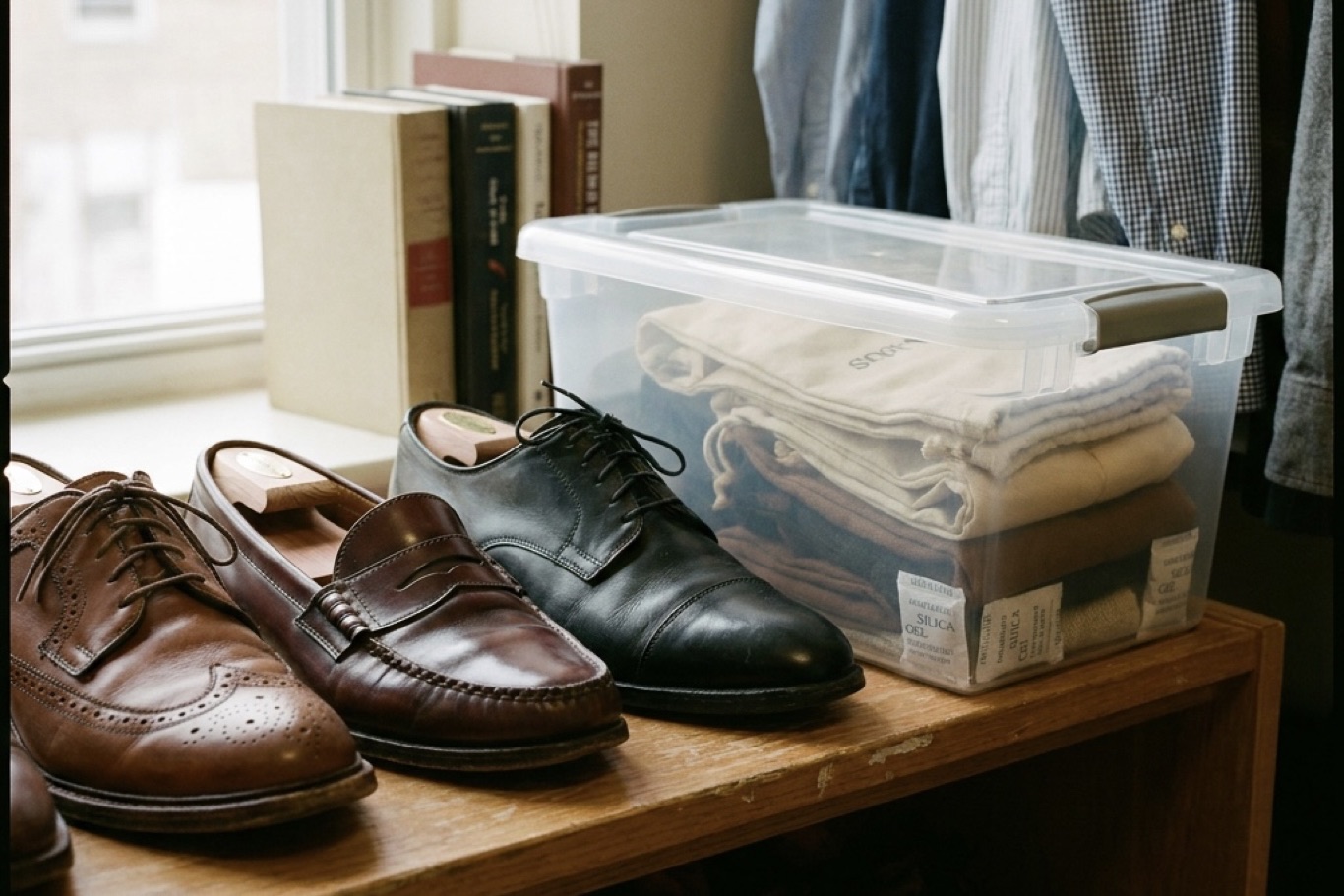
Cedar shoe trees are the best option for leather and dress shoes, cedar absorbs moisture while holding shape, which matters more over a long storage period than most people realize.
For sneakers and casual shoes, rolled acid-free tissue paper works well. For boots, pool noodles or rolled magazines stuffed into the shaft keep them upright without compressing the leather.
Store boots upright rather than on their sides; even a few months folded over at the shaft can set a crease that conditioning alone won’t fully reverse.
Choosing the Right Storage Location
The ideal storage location is climate-controlled, dark, and away from exterior walls. Interior closets on a middle floor of a home or apartment are usually the safest bet. Basements can work if they’re consistently dry, but humidity swings make them risky for leather and suede.
Attics are the most common mistake, and some storage facilities have prohibited items lists that reflect the same logic because heat and moisture damage aren’t just a home storage problem. People use them because the space is convenient and out of the way, but attic temperatures regularly exceed 100°F in summer, enough to melt adhesives and bake the moisture out of natural materials entirely. By the time those shoes come back down, the damage is structural. Direct sunlight is equally damaging: UV exposure fades color and dries out materials faster than almost anything else.
Best Containers and Materials for Shoe Storage
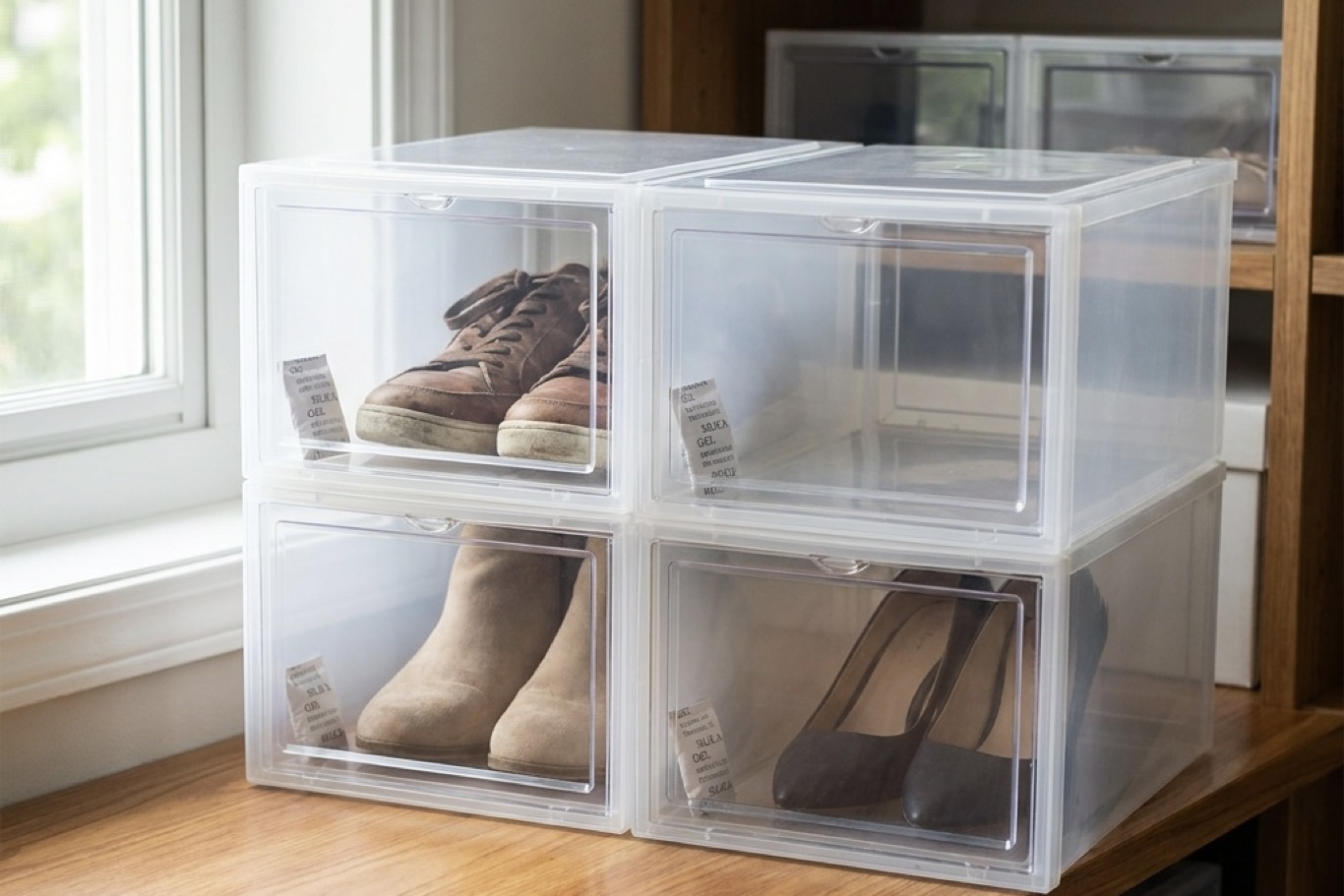
Clear plastic bins with snap lids are popular, but they’re not always the right call. Airtight plastic traps any residual moisture that wasn’t fully dried before storage, which is how mold starts from the inside out. A better approach is using containers that allow a small amount of airflow, or adding a silica gel packet inside each box to absorb excess humidity.
Original shoe boxes work fine for shorter storage in a dry closet. For anything longer than three to six months, a breathable cotton shoe bag inside a lidded, but not airtight, clear bin is a reliable combination. It blocks dust and light while still letting the material breathe. When Storage Scholars stores student belongings over a summer, the same overarching principle applies: how items are packed and what surrounds them matters as much as where they’re kept.
Ideal Temperature and Humidity Levels for Shoe Storage
The target environment is 60-70°F with 40-50% relative humidity. Below 40% humidity, leather and suede dry out and crack. Above 50%, you’re creating the conditions for hydrolysis in rubber soles and mold in fabric linings. “Cool and dry” isn’t specific enough, staying consistently inside that window is the goal.
Temperature consistency matters too. Materials expand and contract with fluctuations, which stresses adhesives over time. A cheap hygrometer placed in your storage area tells you what’s actually happening in that space. If you’re seeing white powdery residue on leather or dark spotting on fabric linings, humidity has already been too high for too long.
How to Store Different Shoe Types
Leather Shoes
Condition before storage and insert cedar shoe trees. Wrap loosely in acid-free tissue and skip the plastic bags, sealed plastic against leather traps humidity against the surface and accelerates the exact breakdown you’re trying to prevent.
Suede Shoes
Brush off any surface debris, then apply a suede protector before boxing. Suede absorbs odors easily, so keep it away from anything with a strong smell in the same storage area. Unlike leather, suede should never go into a plastic container, it needs airflow or the nap will mat down and attract mildew.
Sneakers
Remove insoles and store them separately so both pieces can breathe independently. The most common long-term sneaker failure is sole separation from hydrolysis, the foam midsole disintegrates from moisture trapped in a sealed space. Two silica gel packets per box cuts that risk. Most people don’t realize the insole is holding residual sweat against the midsole the entire time, which is exactly where breakdown starts.
Heels and Dress Shoes
Stuff the toe box firmly to prevent the vamp from collapsing inward. Store pairs in divided bins or individually wrapped so the heel of one shoe doesn’t scratch the upper of another. A misshapen toe box after six months in storage is nearly impossible to reverse.
How to Control Moisture and Prevent Mildew
Two to three silica gel packets per box is enough for most shoes. Replace them every six months if you’re storing beyond a year, and if you’re unsure what storage setup fits your situation, reach out for guidance before committing to a long-term plan. If your storage space is prone to humidity, a basement, a storage unit without climate control, a small dehumidifier running in the area is worth the cost.
The interior lining and insole are almost always where mildew starts first, even when the outside of the shoe still looks clean. Pull insoles out before storage so both surfaces can breathe and dry independently.
Long-Term Shoe Storage Maintenance Checklist
Check in on stored shoes every three to six months, especially if your belongings are in a facility, the same care applies whether you’re storing after graduation or moving after college. It takes ten minutes and lets you catch early mold, swap out silica packets, and spot any shape issues before they set permanently. Here’s what to do at each check:
- Inspect the interior lining and insole for any spotting or odor
- Replace silica gel packets if they feel heavy or saturated
- Re-stuff any shoes that have begun to lose shape
- Confirm the storage area is still within the 60-70°F and 40-50% humidity range
- Re-condition leather shoes if the surface feels dry to the touch
Related Reading
- The College Packing List That Actually Makes Sense
- College Summer Storage: The Ultimate Guide for Students
- The Ultimate Guide to Storing Your College Belongings During Summer Break
Storage Scholars' service holds student belongings in a secure, climate-controlled facility with digital inventory tracking, priced $14 to $40 per item per month depending on size, with a 4-month minimum term.
Frequently Asked Questions
How long can you store shoes without them getting damaged?
With the right conditions, shoes can be stored for several years without significant damage. The biggest threats are humidity, heat, and lack of airflow, get those three under control and most pairs will hold up well past the one- or two-year mark.
Can shoes go bad if not worn?
Yes, shoes can absolutely deteriorate without ever being worn. Midsoles dry out and crack, adhesives weaken, leather stiffens, and rubber soles can crumble, all from sitting in the wrong environment for too long.
Do shoes need to be stored in boxes?
Boxes help, but only if they’re breathable. Original cardboard shoeboxes are fine, while sealed plastic bins are not. If you’re storing leather or suede, a breathable cotton dust bag is actually a better option than any box because it allows air circulation while still protecting the surface.
How do you keep shoes from getting moldy in storage?
Start by making sure shoes are completely clean and dry before they go into storage, mold needs organic material and moisture to get started, and even a little residual sweat is enough. Toss a silica gel packet inside each shoe, avoid basements or any space with uncontrolled humidity, and check on them every few months rather than leaving them sealed up indefinitely.
Set a reminder to sign up for storage!
We’ll remind you to sign up when it gets closer to your winter and summer break!
This article is part of our Dorm Storage & Organization guide
Other Articles

Want to hear from us about exclusive discounts and promotions?
Drop your email and we'll keep you up to date!
