
Complete Guides
Company & News
Shipping to College
College Storage for Parents
College Move-In & Move-Out
College Packing List
Dorm Storage & Organization
College Summer Storage
Dorm Room Essentials
Sports
Personal
Lifestyle
College Life
Health and Wellness
Entreprenership
Food
Business
College Dorm Office Setup Ideas That Actually Boost Your Productivity

Creating an effective study space has become crucial for college students, with kinja.com reporting that 61% of remote workers experience worsening musculoskeletal pain from poor workspace setups. Whether you’re managing coursework from your dorm room at Wake Forest University or studying remotely from your apartment near campus, creating a productive workspace is essential for your academic success and well-being.
Bottom line: The right dorm office setup can increase your productivity by 22-32% according to recent research, and it doesn’t require breaking the bank or having a massive space.
Your workspace directly impacts how you feel and perform throughout the day. A cluttered kitchen table setup might work for occasional assignments, but when you’re spending hours daily studying, writing papers, or attending virtual classes, investing in proper ergonomics and organization becomes crucial for both your health and your academic performance.
Essential furniture that supports your body and mind
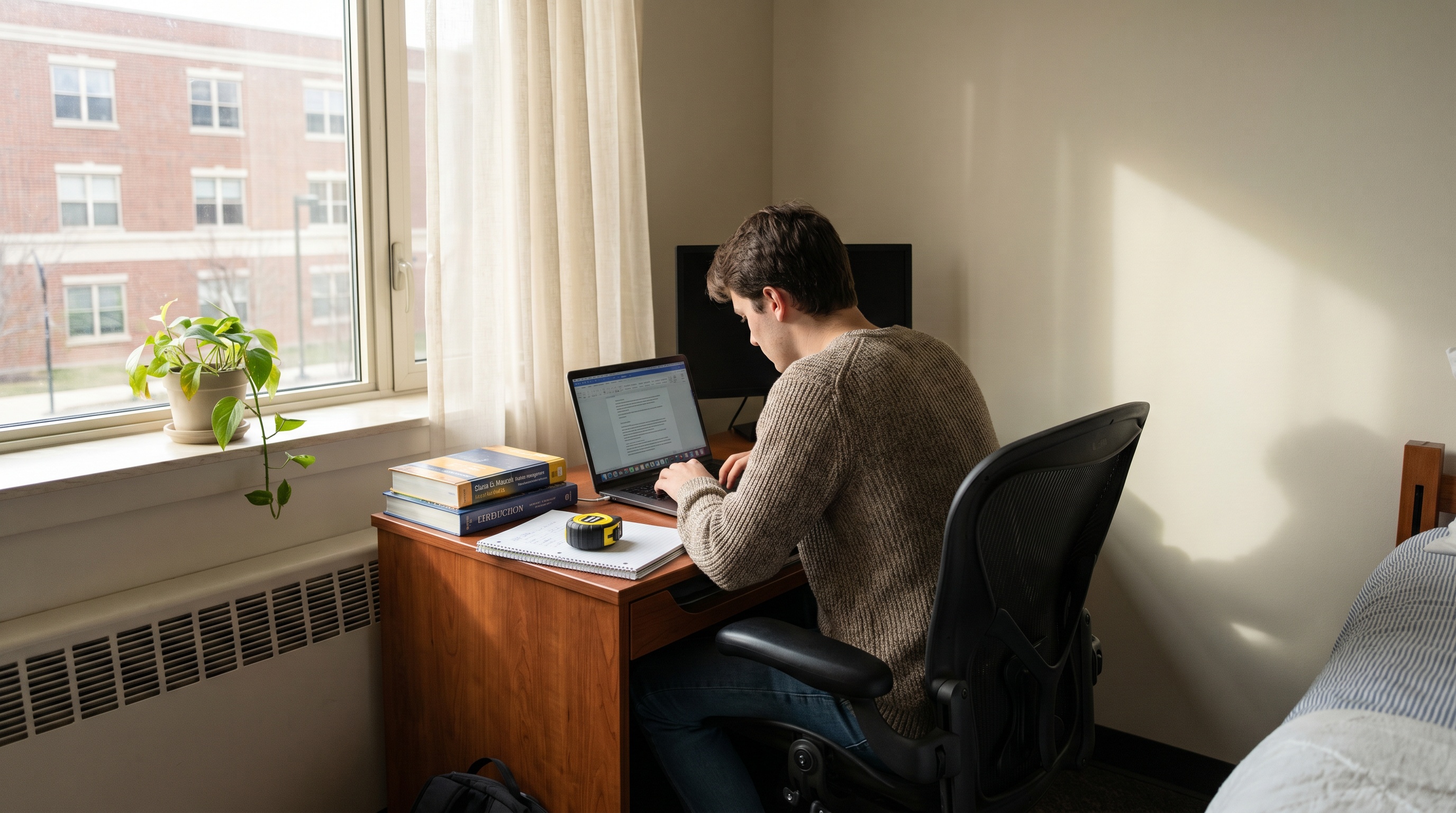
The foundation of any productive college workspace starts with furniture that keeps you comfortable during long study sessions or virtual lectures. Your chair matters more than any other single purchase you’ll make for your dorm room setup.
According to kinja.com, ergonomic improvements can boost productivity by up to 32%. Look for a chair with adjustable lumbar support, seat height that lets your feet rest flat on the floor, and armrests that don’t bump into your desk. You don’t need to spend $1,200 on a Herman Miller chair as a college student. Quality options in the $200-350 range like the Branch Verve Chair offer legitimate ergonomic support without the premium price tag.
Your desk should give you enough surface area to spread out textbooks, notebooks, and your laptop without feeling cramped. Height-adjustable desks let you alternate between sitting and standing, which helps with circulation and energy levels during those marathon study sessions. Corner desks work particularly well in dorm rooms because they maximize your available space, especially when you’re learning to live a minimalist lifestyle and need to make the most of every square foot in your residence hall.
Pro tip: Measure your dorm room space before buying furniture. A desk that looks perfect online might overwhelm your small college living space.
Technology setup for seamless productivity
Your computer setup can make or break your ability to focus and get coursework done efficiently. If you’re still hunched over a laptop screen for hours during study sessions, you’re setting yourself up for neck pain and eye strain that will impact your academic performance.
Adding an external monitor transforms how you study and work on assignments. pcmag.com highlights that a second screen helps with multitasking and reduces the constant window-switching that breaks your concentration. A basic 24-inch monitor costs around $150 and lets you keep your research open while writing papers or have your virtual class visible while taking notes.
Don’t forget about your internet connection in your dorm or off-campus housing. Test your speed using online tools, and aim for at least 50 Mbps for reliable video calls and file uploads. If you’re sharing WiFi with roommates who stream constantly, consider upgrading your plan or positioning your workspace closer to the router for a stronger signal.
An external keyboard and mouse prevent the shoulder strain that comes from typing on a laptop keyboard while looking at a raised screen. This separation between your typing position and screen height is what makes a setup truly ergonomic for those long study sessions.
Lighting and environment for sustained focus
The right lighting can dramatically improve your mood and energy levels throughout the day, especially important for college students who often study late into the night. Harsh overhead fluorescents in dorm rooms make everything feel institutional and draining, while too-dim lighting causes eye strain and fatigue.
Natural light works best when possible, so position your desk near your dorm room window if you can. For artificial lighting, choose warm LED bulbs that mimic daylight rather than cool fluorescents. A good desk lamp with adjustable positioning lets you direct light exactly where you need it for reading textbooks or detailed coursework.
Your environment affects your mindset more than you might realize. Adding a few plants to your dorm workspace can lower stress and improve air quality during intense study periods. Snake plants and pothos are nearly impossible to kill and thrive in various lighting conditions, making them perfect for busy college students.
Keep your space organized but personalized. A few meaningful photos from home, artwork, or motivational quotes can make your dorm workspace feel inspiring rather than sterile. Just avoid cluttering your desk surface, which can be mentally distracting when you’re trying to focus on assignments. Implementing organization hacks for your home and your life can help you maintain a clean, functional workspace that supports your academic goals.
Smart strategy: Use the "one-touch rule" for desk organization. Every item should have a designated spot where you can put it away with a single motion.

Organization systems that actually work
The most beautiful dorm desk setup won’t help your productivity if you can’t find what you need when you need it. Effective organization systems reduce the mental energy you waste searching for supplies or course materials.
Digital organization matters just as much as physical organization for college students. Create a folder structure on your computer that makes sense for each semester and course. Keep frequently used files easily accessible, and use cloud storage to ensure you can access important documents from anywhere on campus or when studying in the library.
For physical storage in your dorm room, think vertically. Wall-mounted shelves, desk organizers with multiple compartments, and filing systems help you maximize limited residence hall space. Label everything clearly so you can maintain the system even during busy periods like finals week. If you’re working with limited dorm space, adopting minimalist lifestyle principles can help you identify what you truly need versus what’s just taking up valuable real estate in your small living space.
Desktop organizers
Best For: Daily supplies, pens, cables
Price Range: $15-40
Wall shelves
Best For: Textbooks, decorations, storage boxes
Price Range: $25-75
Filing cabinets
Best For: Important documents, course materials
Price Range: $50-150
Storage boxes
Best For: Seasonal items, extra supplies
Price Range: $10-30
Consider your study workflow when organizing your dorm space. Keep items you use daily within arm’s reach, weekly items in nearby drawers or shelves, and occasional items in less accessible storage. This hierarchy prevents your immediate workspace from becoming cluttered while keeping everything you need available. For more strategies on maintaining an organized college living environment, explore these practical organization hacks that can transform both your dorm workspace and daily academic routines.
Creating a productive college workspace doesn’t require a huge budget or perfect space. Focus on the basics first: a comfortable chair, proper lighting, and good organization. These fundamentals will serve you well whether you’re studying in a tiny dorm room or your first apartment near campus. Remember that your workspace should evolve with your needs throughout your college years, so start with essentials and add improvements over time as your situation and budget allow.
Frequently Asked Questions
What's the most important piece of furniture for a productive college workspace?
Your chair is the most crucial investment for your dorm room setup. Look for one with adjustable lumbar support, proper seat height that allows your feet to rest flat on the floor, and armrests that don't interfere with your desk. Quality ergonomic chairs in the $200-350 range can provide excellent support without breaking your college budget.
Do I really need an external monitor for my laptop in my dorm?
Yes, adding an external monitor can significantly improve your study productivity and reduce neck strain during long coursework sessions. A second screen helps with multitasking, reduces constant window-switching, and allows you to maintain proper ergonomic positioning. A basic 24-inch monitor costs around $150 and transforms how efficiently you can work on research, writing papers, and attending virtual classes.
How can I organize my small dorm room workspace effectively?
Think vertically and use the "one-touch rule" - every item should have a designated spot where you can put it away with a single motion. Use wall-mounted shelves, desktop organizers with multiple compartments, and corner desks to maximize dorm space. Keep daily-use items within arm's reach, weekly items in nearby storage, and occasional items in less accessible areas.
What lighting setup works best for long study sessions in a dorm?
Natural light near your dorm window is ideal when possible. For artificial lighting, choose warm LED bulbs that mimic daylight rather than harsh fluorescents. A good adjustable desk lamp lets you direct light exactly where you need it for reading textbooks or detailed coursework. Proper lighting reduces eye strain, improves mood, and helps maintain energy levels during extended study periods.
Set a reminder to sign up for storage!
We’ll remind you to sign up when it gets closer to your winter and summer break!
This article is part of our Dorm Room Essentials guide
Other Articles

Want to hear from us about exclusive discounts and promotions?
Drop your email and we'll keep you up to date!
