
Complete Guides
Company & News
Shipping to College
College Storage for Parents
College Move-In & Move-Out
College Packing List
Dorm Storage & Organization
College Summer Storage
Dorm Room Essentials
Sports
Personal
Lifestyle
College Life
Health and Wellness
Entreprenership
Food
Business
PODS vs U-Haul 2026: Which Moving Option Saves College Students More Money and Stress

Planning your college move for 2026 and torn between renting a U-Haul truck or using PODS containers? You’re facing one of the biggest decisions in the moving process. While both options let you pack your own belongings, they differ dramatically in cost, convenience, and stress levels—especially for students navigating tight academic schedules and campus logistics.
Bottom line: PODS containers typically cost 15-30% more upfront but eliminate driving stress, fuel costs, and tight deadlines. U-Haul trucks offer lower base prices but add hidden costs like gas, mileage fees, and potential damage from multiple loading cycles.
The choice often comes down to whether you value convenience and flexibility over immediate cost savings. As a company that has facilitated over 40,000 student moves since 2026, we understand the unique challenges college students face when relocating. Let’s break down exactly what each option offers so you can make the right decision for your situation.
Cost comparison for 2026 moves
When comparing PODS vs U-Haul pricing, the numbers tell an interesting story. U-Haul’s advertised rates look appealing initially, but the final cost often surprises customers with additional fees.
A typical cross-country U-Haul rental starts around $2,000-$3,000 for the truck alone. However, you’ll add fuel costs (often $800-$1,200 for long distances), mileage overages, equipment rentals, and insurance. Many customers report final costs reaching $4,000-$5,000 for coast-to-coast moves. For a detailed breakdown of what to expect, check out our guide on U-Haul rates for long-distance moves.
PODS pricing includes transportation, one month of storage, and professional driving services. A comparable long-distance move typically ranges from $4,500-$7,000 depending on container size and distance. While higher upfront, this covers everything without surprise add-ons. To see how PODS stacks up against other container options, read our comparison of PODS vs U-Haul U-Box.
Budget hack: If you’re moving during peak summer months, book PODS containers 6-8 weeks early for better rates, while U-Haul prices surge due to college move-out demand. This timing strategy is especially important for students at the 73+ schools we serve, where move-out dates create high demand periods.
The hidden value in PODS comes from avoiding fuel costs, wear on your personal vehicle, and potential truck damage fees that can add hundreds to your U-Haul bill. For a comprehensive understanding of moving costs, explore our moving cost calculator and estimates.

Convenience and driving considerations
The driving factor often becomes the deciding point for many movers, particularly college students and their families. U-Haul trucks require you to navigate unfamiliar roads while handling a vehicle that’s likely much larger than you’re used to driving.
For college students and their families, this presents real challenges. Driving a 26-foot truck through campus areas, finding overnight parking during multi-day trips, and dealing with height restrictions on bridges can turn your move into a stressful adventure. Having worked with students across dozens of universities, we’ve seen how campus logistics can complicate traditional truck rentals. Understanding U-Haul truck sizes can help you choose the right vehicle if you decide to go this route.
PODS eliminates these concerns entirely. Professional drivers handle all transportation while you focus on packing and settling into your new space. You can drive your own car to your destination, avoiding the need to tow it behind a rental truck or arrange separate transportation.
The convenience extends beyond just driving. With PODS, you’re not racing against truck return deadlines or worrying about mileage limits. This flexibility proves especially valuable for college moves where schedules often change last-minute—something we’ve learned from helping thousands of students navigate unpredictable academic calendars.
Storage flexibility and timeline benefits
Storage needs vary dramatically between these two options, and this difference can significantly impact your moving experience, especially for students dealing with gap periods between housing arrangements.
U-Haul requires you to coordinate truck pickup, loading, driving, unloading, and immediate return. If your new place isn’t ready or you need temporary storage, you’ll face additional costs and the hassle of loading everything twice – once into the truck, then into a storage unit.
PODS containers serve dual purposes as both moving and storage solutions. Every PODS move includes one month of storage, giving you breathing room to coordinate your timeline. You can load gradually, store the container as needed, and have it delivered when you’re ready.
Included storage
PODS: 30 days
U-Haul: None
Loading timeline
PODS: Flexible
U-Haul: Rental period only
Multiple trips
PODS: Not needed
U-Haul: Often required
Professional driving
PODS: Included
U-Haul: DIY only
This flexibility proves invaluable for college students dealing with dorm move-out dates that don’t align with new housing availability—a common challenge we address for students attending school outside driving distance from home.
Smart strategy: Use PODS’ flexible timeline to your advantage by loading non-essential items early, keeping your dorm or apartment functional until the last minute. This approach works particularly well for international and out-of-state students who need extra coordination time.
Loading and safety advantages
The physical demands of moving create another clear distinction between these options. U-Haul trucks require loading everything up a narrow ramp into an elevated cargo area, often multiple times if storage is involved.
PODS containers sit at ground level, making loading significantly easier and safer. You’re not wrestling heavy furniture up ramps or risking injury from awkward lifting angles. For college students moving everything from mini-fridges to desk chairs, this ground-level access reduces both physical strain and damage risk—an important consideration when you’re managing the move alongside academic responsibilities.
The safety benefits extend beyond just easier loading. With PODS, you avoid the risks associated with driving an unfamiliar, oversized vehicle. According to uhaul.com, U-Haul trucks require careful attention to height clearances, bridge restrictions, and parking limitations that can catch inexperienced drivers off-guard.
PODS also offers referrals to local loading help if you need assistance, while U-Haul customers must arrange their own labor separately. If you’re considering professional movers instead, learn more about average moving company costs.
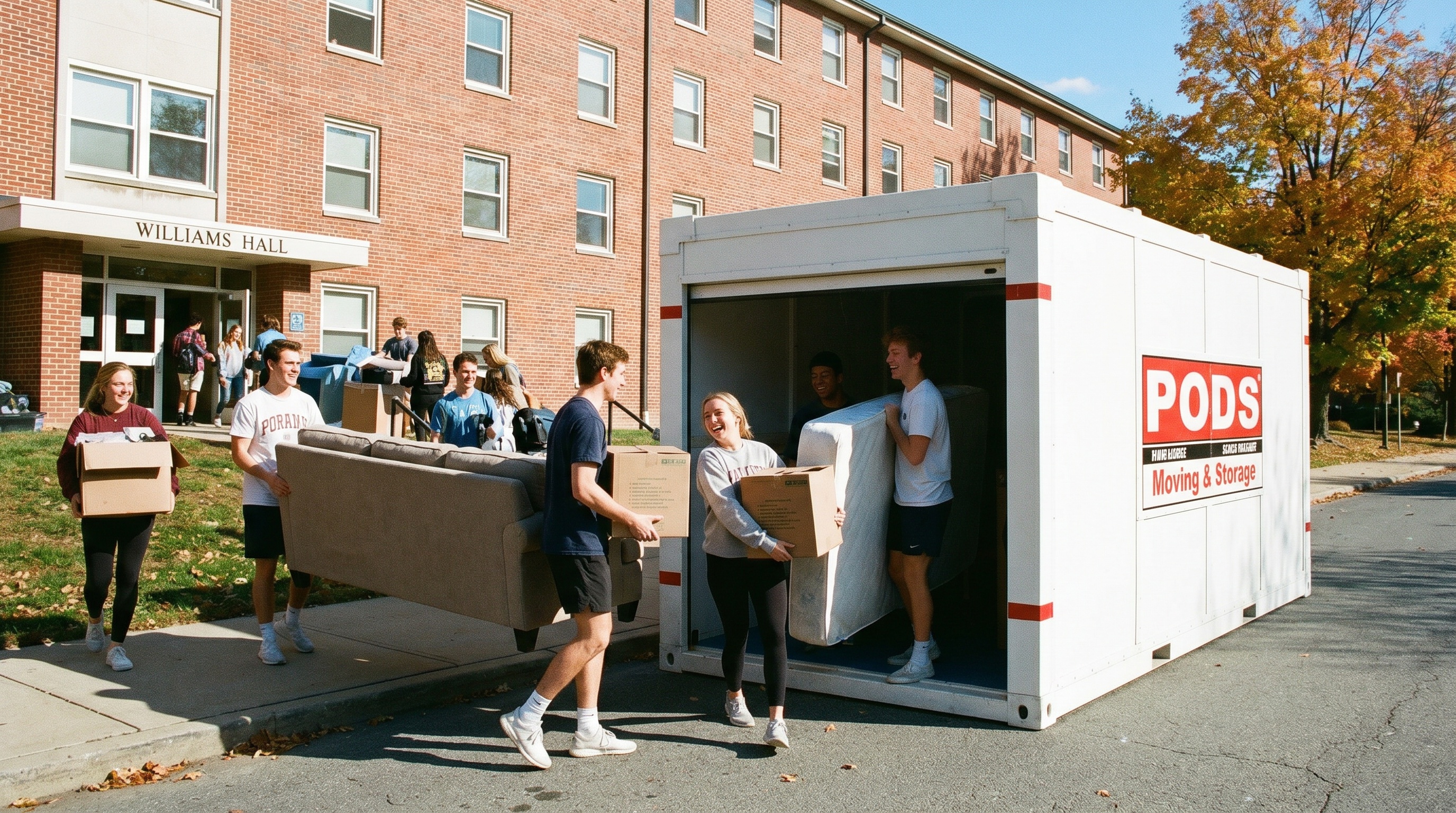
When choosing between PODS and U-Haul for your 2026 move, consider your priorities carefully. If you’re comfortable driving large trucks, have flexible helpers available, and want to minimize upfront costs, U-Haul might work well. However, if you value convenience, flexible timelines, and stress-free transportation, PODS offers significant advantages that often justify the higher initial investment.
For college students and families dealing with the complexities of academic schedules and campus logistics, PODS’ flexibility and professional handling typically provide better value despite higher costs. The included storage, ground-level loading, and elimination of driving stress can make your moving experience significantly smoother during an already challenging transition period. Based on our experience serving students across multiple universities, these convenience factors often outweigh the initial cost difference, especially for those planning cross-country moves where coordination becomes even more critical.
Frequently Asked Questions
Is PODS actually more expensive than U-Haul in 2026?
PODS containers typically cost 15-30% more upfront ($4,500-$7,000 for long-distance moves) compared to U-Haul's base rates ($2,000-$3,000). However, U-Haul's final costs often reach $4,000-$5,000 after adding fuel ($800-$1,200), mileage fees, insurance, and equipment rentals. PODS includes transportation, professional driving, and one month of storage with no hidden fees.
How long can I keep a PODS container for my move?
Every PODS move includes 30 days of storage at no extra cost. You can load the container at your own pace, store it as needed, and have it delivered when you're ready. This flexibility is especially valuable for college students dealing with dorm move-out dates that don't align with new housing availability, unlike U-Haul trucks which must be returned immediately after use.
Do I need to drive anything with PODS containers?
No, PODS provides professional drivers who handle all transportation of your container. You can drive your own car to your destination without worrying about navigating unfamiliar roads with a large rental truck, finding overnight parking, or dealing with height restrictions. This eliminates the stress and safety risks associated with driving oversized U-Haul vehicles.
Which option is better for college students moving in 2026?
PODS typically offers better value for college students despite higher upfront costs. The ground-level loading (no ramps), flexible timeline with included storage, professional driving, and ability to load gradually while keeping dorms functional make it ideal for academic schedules. U-Haul works better if you're comfortable driving large trucks, have flexible helpers available, and want to minimize immediate costs.
Set a reminder to sign up for storage!
We’ll remind you to sign up when it gets closer to your winter and summer break!
This article is part of our College Move-In & Move-Out guide

Other Articles
Want to hear from us about exclusive discounts and promotions?
Drop your email and we'll keep you up to date!
